
The year 2025 will be remembered as the moment the tectonic plates of the global chemical industry shifted irrevocably, driven by a profound transformation within China that sent shockwaves across international markets. What was once a predictable cycle of demand led by an insatiable Chinese economy gave way to a new and unsettling reality. As China pivoted from being the world’s foremost consumer to a self-sufficient and aggressive exporter, producers worldwide were forced to confront a landscape defined by structural oversupply, persistent logistical nightmares, and a desperate search for new growth frontiers. The long-held assumptions that underpinned global chemical strategy for decades were not merely challenged; they were shattered, leaving a fundamentally altered competitive arena in their wake. This analysis unpacks the critical developments of 2025, examining the domestic pressures that forced China’s hand and the far-reaching consequences that continue to reshape the industry.
The Great Pivot: China’s Domestic Transformation
The End of an ErDecelerating Demand
For years, the global chemical industry operated on the reliable premise of China’s boundless economic expansion serving as the primary engine for demand. In 2025, that engine sputtered, signaling a structural slowdown with long-term implications. This deceleration was not a cyclical dip but the result of powerful domestic headwinds that had been gathering for some time. The long-feared collapse of the country’s massive property bubble finally cascaded through the economy, erasing wealth and crippling a sector that was a major consumer of polymers and other chemical products. Compounding this was a demographic cliff; China’s rapidly aging population and declining birth rate began to exert a tangible drag on consumption growth, fundamentally altering the country’s economic trajectory. These macro trends were exacerbated by persistently high youth unemployment, which created a climate of economic anxiety among the younger generation, a group that should have been driving consumer spending. Instead, this uncertainty prompted a noticeable rise in precautionary savings, as households chose to build a financial buffer rather than spend on goods.
The chilling effect on consumer confidence was starkly reflected in the year’s economic data. By November 2025, retail sales figures showed a mere 1.3% year-over-year expansion, the slowest rate of growth recorded since the country abandoned its stringent COVID-19 restrictions in late 2022. This anemic performance confirmed that the Chinese consumer was in retreat, a development with direct and severe consequences for the chemical industry. The demand for polymers used in everything from household appliances and electronics to automotive parts and packaging weakened considerably. For international producers who had built their business models around supplying this once-insatiable market, the message was clear: the era of depending on China to absorb global surpluses was definitively over. The country’s internal economic challenges had effectively capped its domestic demand potential, forcing its own massive chemical industry to look outward and setting the stage for a dramatic reordering of global supply chains.
From Importer to Exporter: The Self Sufficiency Surge
Concurrent with its cooling domestic demand, China’s long-standing industrial policy aimed at achieving self-sufficiency in key chemical and polymer sectors reached a critical inflection point in 2025. This was not a sudden development but the culmination of years of massive state-sponsored investment in building out domestic production capacity. Driven by a strategic imperative to reduce its reliance on foreign imports and capture more value within its own borders, China relentlessly expanded its manufacturing footprint. This aggressive build-out meant that the country was no longer just satisfying its own needs but was increasingly positioned to supply the rest of the world. The narrative of China as the world’s factory was evolving; it was now becoming the world’s chemical plant as well, capable of producing a vast array of commodities and specialty products at a scale that few other nations could match. This transition marked a fundamental shift in its role within the global chemical ecosystem, transforming it from the industry’s largest customer into its most formidable competitor.
The polypropylene (PP) market served as the canary in the coal mine for this transformative trend. For years, global PP producers had viewed China as their most crucial export destination, with the country’s net imports peaking at a staggering 6.1 million tonnes in 2019. However, the data from 2025 revealed a dramatic and permanent reversal. Consensus forecasts had anticipated that China would still import a net of around 1.7 million tonnes for the year. The actual figures painted a vastly different picture; data for the first eleven months suggested the annual total would be closer to just 200,000 tonnes. This spectacular collapse in import demand confirmed that China had effectively closed its doors, having brought enough domestic capacity online to meet its needs. More significantly, it placed the nation on the precipice of becoming a net exporter of PP, a development that promised to flood regional and global markets with competitively priced material. This pattern, already seen in products like styrene and PTA, was now repeating itself in one of the world’s most widely used polymers, fundamentally reshaping global trade flows and pressuring margins for producers everywhere.
The Global Ripple Effect
The Export Tsunami
Faced with a sluggish domestic economy and vast new production capacities, China unleashed an export tsunami upon the world in 2025 to maintain its economic momentum. The sheer scale of this export drive was breathtaking, with the country on track to achieve a record-breaking annual trade surplus that surpassed the $1 trillion mark for the first time. This strategy was not just about volume but also about sophisticated redirection. While US tariffs remained a hurdle, Chinese exporters adeptly diverted goods toward the European Union and the rapidly growing markets of the developing world. Furthermore, a significant portion of this trade effectively circumvented direct tariffs through a strategy of transshipment and final assembly. Chinese-made components were shipped to countries like Mexico, Vietnam, and others across Southeast Asia, where they were assembled into finished products. These goods were then exported to the United States under a different country of origin, neutralizing the impact of the trade barriers and ensuring a continued flow of Chinese products into the American market. This multi-pronged approach demonstrated China’s ability to adapt to geopolitical pressures and maintain its central role in global manufacturing.
Beyond the sheer volume, 2025 marked the year China solidified its ambitions to dominate not just low- and medium-value manufacturing but also high-value, technology-intensive sectors. This was most evident in green industries, where Chinese companies made significant inroads against established Western competitors. A landmark moment occurred when Chinese automaker BYD’s global sales surpassed those of Tesla, signaling a major power shift in the electric vehicle (EV) market. This success story served as a blueprint for China’s broader strategy, with clear intentions to achieve similar dominance in the manufacturing of green chemicals, advanced materials, and related services. The West’s attempts to counter this surge with protectionist measures like anti-dumping duties proved largely ineffective. The reality was that global supply chains had become too deeply and critically intertwined with Chinese manufacturing for a full-scale economic decoupling to be feasible. The US, for instance, found its own trade actions constrained by its dependency on China’s near-monopoly on rare earth mineral processing, a critical input for countless high-tech and defense applications. This dependency underscored a new reality: China was no longer just a participant in the global economy but an indispensable and increasingly dominant force.
The Search for New Frontiers
The abrupt end of China’s role as the primary destination for chemical exports forced a painful but necessary strategic reorientation for producers across the globe. Companies in North America, Europe, the Middle East, and other parts of Asia, which had for years predicated their growth strategies on China’s immense appetite, found themselves at a crossroads. With that market now largely self-sufficient and rapidly becoming a major competitor, the urgent priority became the search for new frontiers of growth. Attention immediately shifted to the developing world outside of China, a vast and diverse region encompassing the continents of Africa, the nations of developing Asia, and countries like Turkey. With a combined population of 5.4 billion people—nearly four times that of China—this region represents an enormous, largely untapped reservoir of potential consumption growth. For global chemical companies, pivoting sales, marketing, and investment efforts toward these markets was no longer an option but a strategic imperative for survival and future prosperity.
This rebalancing of global focus is a long-term structural shift, not an overnight phenomenon. For the foreseeable future, China will continue to be a heavyweight in the chemical world, “punching well above its weight” due to its high per capita consumption rates and its sheer scale in millions of tonnes of demand and production. However, the trend of diversifying away from a singular dependency on the Chinese market became firmly entrenched in corporate strategy during 2025 and is expected to accelerate from 2026 onward. This pivot was subtly aided by an easing of the US-China trade war. As political realities set in, it became clear that competitively priced goods were essential for the global economy. With China increasingly walled off by tariffs, the developing world emerged as the natural alternative source. This dynamic led to a series of compromises and a gradual fading of trade hostilities, as policymakers recognized the deep integration of global manufacturing made a full-scale economic conflict untenable for all sides. The search for new markets was thus driven by both the push of China’s self-sufficiency and the pull of new opportunities in a recalibrating global trade environment.
Navigating a New Market Reality
The Age of Oversupply
The chemical industry in 2025 found itself mired in a deep and prolonged downturn, with the prospect of a new market upcycle looking like a very remote possibility. The challenging environment was the result of a perfect storm of negative factors that converged to create a historic supply-demand imbalance. On one side, the structural slowdown in China, the world’s most significant market, removed a critical pillar of global demand. On the other side, a colossal glut of new production capacity, much of it located in China and the Middle East, continued to come online, flooding the market with material. This lethal combination of disappointing demand and overwhelming supply crushed operating rates and profit margins for producers worldwide. Forecasts that had once predicted a cyclical recovery were pushed further and further into the future, with a consensus emerging that the industry was facing a protracted downturn that would last at least three more years, fundamentally altering the competitive dynamics for all players.
Using the propylene market as a representative example, the data from 2025 revealed the staggering depth of the oversupply crisis. To return the global market to a healthy historical average operating rate of 80%, a massive and painful correction would be required. Projections indicated that global capacity growth would need to slow to an average of just 1.4 million tonnes per year between 2026 and 2036. However, the current project pipeline told a different story, pointing to an actual average capacity growth of 4 million tonnes per year over the same period. This stark disparity between what the market needs and what is being built implies an inevitable and brutal reckoning. To restore any semblance of balance, enormous capacity closures will be necessary, particularly in higher-cost regions like Europe, South Korea, and parts of Southeast Asia that lack feedstock advantages. Barring a major and entirely unforeseen surge in global demand, the industry is now bracing for these historically low and challenging operating rates to persist for another 11 years, right through to 2036, guaranteeing a decade of intense competition and consolidation.
The Logistics Gauntlet
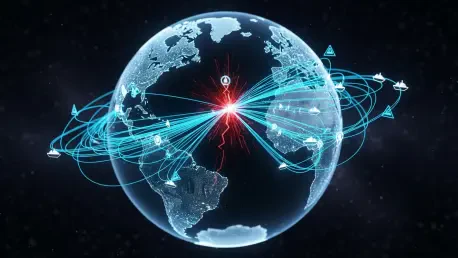
Against this turbulent backdrop of oversupply and shifting trade flows, access to cost-efficient and reliable logistics emerged in 2025 as a critical competitive advantage, separating the winners from the losers. The assumption of smooth, predictable global shipping was shattered by a series of persistent disruptions that injected unprecedented volatility into supply chains. The most prominent example was the crisis in the Red Sea, where attacks by Houthi rebels, which began in late 2023, continued to wreak havoc on one of the world’s most vital maritime trade arteries throughout 2025. This single point of failure demonstrated the fragility of the global logistics network and underscored how geopolitical events in one region could have immediate and severe consequences for industries thousands of miles away. For chemical companies, which rely heavily on bulk maritime transport, navigating this logistics gauntlet became a core component of their operational strategy.
The impact of the Red Sea crisis was profound and far-reaching. By October 2025, over 6,500 vessels had been forced to reroute away from the Suez Canal, causing a 60-70% collapse in revenue for the Canal Authority. Major shipping lines like Maersk and MSC diverted their fleets around Africa’s Cape of Good Hope, a much longer journey that added 10-14 days to transit times and caused fuel and insurance costs to skyrocket. A US-led military response, initially named Operation Prosperity Guardian and later intensified as Operation Rough Rider, struggled to fully secure the region. A fragile ceasefire brokered in May 2025 proved short-lived, with sporadic attacks resuming by the end of the year. As a result, shipping traffic in the region remained volatile and far below pre-crisis levels. The economic fallout was severe, leading to persistent supply chain delays for manufacturers, sustained inflationary pressure—with Shanghai-to-Rotterdam freight rates remaining 80% above pre-crisis levels—and an increased environmental footprint from the longer shipping routes. This new reality cemented logistics not as a simple cost center, but as a strategic function critical to survival.
A Call for Analytical Humility
The events of 2025 served as a powerful lesson in the complexities of the global chemical market, where long-standing paradigms were overturned with astonishing speed. The successful forecasts of China’s internal market slowdown, the strategic pivot to the developing world, persistent logistical chaos, and a prolonged industry downturn were validated by the year’s developments. However, the primary analytical miss was a significant underestimation of China’s sheer export capacity and, conversely, an overestimation of the West’s willingness or ability to erect meaningful trade barriers against it. The depth of China’s integration into global supply chains proved to be a more powerful force than political rhetoric, making a true economic decoupling unfeasible. This outcome underscored the inherent dangers of hubris in forecasting and highlighted the need for a more rigorous and humble analytical approach. In a world of increasing complexity and rapid change, the most robust analysis will come from those who actively stress-test their own beliefs, think statistically, and have the intellectual modesty to constantly question their core assumptions, thereby breaking free from intellectual echo chambers to see the world as it is, not as they expect it to be.