
The relentless global pursuit of efficiency and sustainability is fundamentally reshaping manufacturing, compelling industries to move beyond traditional materials and embrace lighter, stronger, and more environmentally conscious alternatives. This industrial pivot has created a powerful tailwind for advanced composites, particularly those derived from paper-pearl and various fibers, which offer a unique combination of performance and reduced environmental impact. At the heart of this transformation lies the sophisticated machinery required to mold these materials into complex, high-precision components. The market for injection molding systems specifically engineered for these composites is now on the cusp of a decade-long expansion, driven by the insatiable demand from sectors like automotive, aerospace, and consumer electronics. As manufacturers race to innovate, the technology enabling this shift is becoming a critical battleground for competitive advantage, with projections indicating a market poised to more than double in value, reaching well beyond $4.8 billion by the end of 2036. This growth is not merely a forecast but a reflection of a deep-seated change in how modern products are designed, built, and used.
Global Market Projections and Financial Outlook
A Decade of Robust Growth
The financial trajectory for the injection molding systems market dedicated to paper-pearl and fiber-based composites points toward a period of sustained and vigorous expansion. Current analyses forecast the market’s valuation will escalate from a baseline of approximately $2.17 billion in 2026 to a commanding $4.89 billion by the end of 2036. This remarkable projection translates into a total market value increase of 125.3%, signifying a dynamic and burgeoning industry landscape. Fueling this ascent is a compound annual growth rate (CAGR) of 8.5%, a figure that underscores the consistent and powerful demand expected over the next ten years. The primary forces propelling this growth are a confluence of factors, including significant technological advancements in materials science, a global manufacturing imperative for lightweight and durable components, and increasing environmental consciousness that promotes the adoption of sustainable composites over conventional plastics and metals. This synergy of innovation, industrial need, and regulatory pressure creates a fertile environment for the market’s continued upward momentum, establishing it as a key area of investment and development.
Key Growth Epicenters and Industry Leaders
While the market’s growth is global, it is distinctly concentrated in several key industrial regions that serve as epicenters for innovation and demand. North America, Europe, and the Asia-Pacific region are identified as the primary hubs, each contributing significantly to the global ecosystem through advanced manufacturing capabilities, robust research and development initiatives, and strong end-use industries. The competitive arena is populated by a dynamic mix of established industrial giants and highly specialized technology providers, all vying for market share. Leading players such as Sumitomo Heavy Industries, Ltd., Haitian International Holdings Limited, Milacron Holdings Corp., FANUC Corporation, and KraussMaffei Group are at the forefront, leveraging their extensive engineering heritage and global distribution networks. These companies are actively investing in next-generation molding platforms and integrated solutions to meet the increasingly sophisticated requirements of composite processing. The landscape is characterized by intense competition, driving continuous innovation in automation, multi-material capabilities, and processing efficiency as companies strive to deliver systems that offer superior performance, reliability, and value to manufacturers worldwide.
In-Depth Segmental Analysis
Precision Molding: The Leading Application
Within the various application types, the precision molding segment stands as the unequivocal leader, projected to command a substantial 42.1% of the total market share in 2026. This dominance is not incidental; it is a direct consequence of the inherent capabilities of precision molding systems to deliver the superior performance characteristics essential for modern manufacturing. These systems offer exceptional compatibility with advanced composites like paper-pearl and fiber-based formulations, enabling the production of components with extremely tight tolerances, intricate geometries, and high-quality surface finishes. Manufacturing engineers and composite processing formulators consistently show a strong preference for these systems, as they are indispensable for applications where accuracy and reliability are paramount. The momentum in this segment is further amplified by sustained industry investments in advanced molding technologies and the establishment of increasingly stringent composite processing application standards. As industrial professionals continue to prioritize the reliability of their material processing infrastructure and the consistent performance of composite parts, precision molding systems have become a foundational component of comprehensive manufacturing strategies, aligning perfectly with both functionality objectives and demanding performance requirements across multiple sectors.
The Automotive Sector: The Premier End-Use Industry
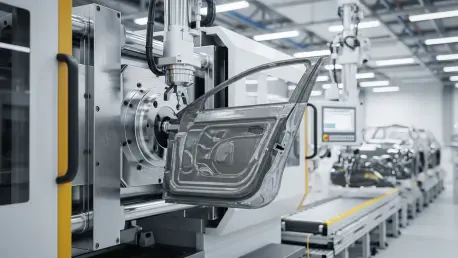
In the end-use landscape, the automotive sector is projected to be the largest consumer, accounting for a significant 39.7% of the market share in 2026. This figure underscores the critical role of the automotive industry as the primary application arena for composite-conscious users seeking superior processing performance and enhanced material compatibility. The sector’s relentless pursuit of vehicle light-weighting to improve fuel efficiency, reduce emissions, and extend the range of electric vehicles has made fiber-based composites an attractive and necessary alternative to traditional metals and plastics. Automotive facility users and component operators favor advanced injection molding systems for their proven ability to meet established performance benchmarks, ensure standardized composite compliance, and produce the durable, high-performance parts essential for modern vehicles. These systems are pivotal in manufacturing a wide array of components, from interior trims and structural elements to complex under-the-hood parts. As automotive manufacturers actively optimize their equipment selections to support composite-specific requirements, the demand for these specialized molding systems is set to remain the primary engine of market growth for the foreseeable future, simultaneously supporting material compliance standards and functionality optimization strategies.
Market Dynamics: Forces Shaping the Industry
Key Market Drivers and Restraints
The primary driver propelling the market forward is the accelerating adoption of lightweight materials, a trend most pronounced within the automotive industry but also gaining significant traction in aerospace and consumer goods. This shift, coupled with supportive government and industry-led composite manufacturing initiatives, creates a mandatory requirement for high-performance injection molding solutions across global manufacturing infrastructures. The urgent need for improved fuel economy and the industry-wide transition to electric mobility have made weight reduction a paramount engineering goal, directly fueling the demand for equipment capable of efficiently processing advanced, lightweight composites. However, a significant barrier to wider market penetration is the high capital investment cost associated with acquiring this specialized equipment. Furthermore, the technical complexity of integrating these advanced systems into existing manufacturing workflows can be a daunting challenge for many companies. These factors can limit adoption, particularly among small and medium-sized enterprises (SMEs) that may lack the financial resources or in-house technical expertise required for such a substantial technological upgrade, creating a nuanced dynamic of high demand constrained by accessibility.
Emerging Market Trends
Two transformative trends are currently reshaping the operational landscape of the composite molding market. The first is the decisive pivot towards ready-to-use, fully automated molding systems. These turnkey solutions are engineered to minimize operational complexity, reduce the need for specialized technical handling during deployment, and dramatically improve overall production efficiency and consistency. By addressing the persistent skills gap in advanced manufacturing and enhancing productivity, automation is making sophisticated composite processing more accessible to a broader range of companies. The second major trend is the growing focus on the development of specialized multi-material processing equipment. These versatile systems are designed to support multiple composite applications and adhere to various material compliance standards within a single platform. This technology allows manufacturers to produce complex, integrated components by combining different materials—such as a rigid fiber composite with a flexible thermoplastic elastomer—in a single, streamlined process. This capability offers unprecedented design freedom, enabling the creation of parts with enhanced functionality and optimized performance characteristics, thereby pushing the boundaries of what is possible in product engineering.
Geographic and Country-Level Market Analysis
High-Growth National Markets in North America and Asia
The global market exhibits distinct growth patterns across different regions, with several key countries in North America and Asia emerging as high-growth hotspots. The United States market is projected to exhibit exceptional growth, outpacing the global average with a CAGR of 9.2%. This robust expansion is fueled by the nation’s rapidly expanding automotive sector, strong industry standards that promote composite manufacturing standardization, and numerous initiatives supporting the development of advanced material technologies. In Asia, China’s market is forecast to expand at a formidable CAGR of 9.0%, supported by substantial and rising investment in its automotive industry, a rapidly growing awareness of composite technology benefits, and the expanding capabilities of its industrial distributors. Similarly, Japan is projected to grow at a CAGR of 8.4%, driven by its deeply entrenched manufacturing standards and a cultural emphasis on processing efficiency, particularly within its globally renowned automotive and electronics sectors. Not far behind, South Korea’s market is expected to grow at 8.2%, supported by its global leadership in composite material technology implementation and strong governmental support for innovative processing systems.
European Hubs of Manufacturing Excellence
Europe remains a bastion of advanced manufacturing and engineering, with several of its leading industrial nations poised for significant growth in the composite molding market. Germany, a global leader in engineering, is set to grow at a healthy CAGR of 8.7%. This is underpinned by the country’s unwavering commitment to advanced manufacturing technologies under the Industry 4.0 initiative, its world-class material processing research capabilities, and growing investment in innovative composite solutions. German manufacturers’ prioritization of processing performance and material reliability creates consistent and strong demand for premium injection molding systems. Meanwhile, the French market is projected to expand at a CAGR of 7.7%, driven by the nation’s emphasis on manufacturing precision, technology excellence, and the integration of advanced material systems. French manufacturers, particularly in the sophisticated aerospace and automotive sectors, prioritize high levels of processing performance and material control, making specialized injection molding systems essential components for achieving their ambitious manufacturing objectives. Both nations exemplify the European focus on quality and innovation that continues to drive the adoption of cutting-edge composite processing technologies.
Competitive Landscape and Leading Players
The Competitive Environment
The market is shaped by a dynamic and highly competitive environment, where established machinery conglomerates, specialized molding equipment manufacturers, and integrated manufacturing solution providers contend for market dominance. To maintain a competitive edge, these companies consistently channel significant investments into advanced processing technologies, the development of specialized molding platforms, and continuous product innovation. Furthermore, building and maintaining comprehensive global distribution and service networks is a critical strategy for delivering consistent, high-quality, and reliable systems that meet the evolving demands of a diverse industrial clientele. The competitive pressure spurs a cycle of innovation that benefits end-users by yielding more efficient, versatile, and automated solutions. This landscape is characterized not just by competition over price, but by a deeper contest centered on technological superiority, processing excellence, and the ability to provide holistic solutions that address the complex challenges of molding next-generation composite materials.
Key Industry Participants
The industry’s competitive ecosystem features a host of influential players who set the standards for performance and innovation. Prominent companies such as Sumitomo Heavy Industries, Ltd., Haitian International Holdings Limited, Milacron Holdings Corp., FANUC Corporation, and the KraussMaffei Group are among the leading forces in the market. These corporations, along with other key participants like Husky Injection Molding Systems Ltd., Engel Austria GmbH, and Arburg GmbH + Co KG, offer a broad range of manufacturing and commercial systems, all underpinned by a shared emphasis on processing excellence and a deep-rooted engineering heritage. For instance, companies like Sumitomo Heavy Industries, Ltd. distinguish themselves by providing integrated manufacturing automation solutions with a specific focus on composite technology applications and precision injection molding networks. This approach showcases a broader industry trend of moving beyond the sale of standalone machinery toward offering comprehensive, end-to-end solutions that help manufacturers optimize their entire production workflow for advanced composites. This strategic shift is having a lasting impact on how companies approach equipment acquisition and process integration.