
A profound recalibration is underway across Europe’s agricultural technology landscape, as the investment trends of early 2025 have revealed a decisive turn toward tangible, science-backed solutions designed for a resilient future. The era of speculative, all-encompassing platforms appears to be waning, replaced by a strategic and pragmatic deployment of capital into companies addressing the most pressing challenges in food production. This shift is not merely a reaction to a cautious global economic climate but a clear indicator of the sector’s growing maturity. Investors are now backing specialized innovations that promise not just technological novelty but also measurable improvements in efficiency, environmental stewardship, and economic viability for farmers and the entire food value chain. The largest funding rounds of the period paint a cohesive picture of an industry moving with purpose, prioritizing deep technical expertise and a grounded alignment with real-world agricultural needs.
A New Paradigm for Agritech Investment
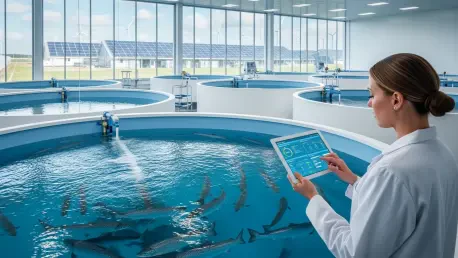
The consensus emerging from the continent’s leading agritech deals points toward a powerful new paradigm where economic success and environmental responsibility are inextricably linked. This dual focus marks a significant evolution, as investments are now strategically channeled into three interconnected pillars that collectively aim to build a more sustainable and efficient food system. The most dominant of these is an unwavering commitment to sustainable production and resource efficiency. Capital is increasingly flowing toward innovations that empower the agricultural sector to achieve greater output with fewer inputs, directly tackling issues like chemical dependency, greenhouse gas emissions, and water conservation. This trend is vividly demonstrated by the strong backing of companies developing bio-based alternatives to synthetic fertilizers and pesticides, pioneering land-based aquaculture to prevent marine ecosystem degradation, and creating novel feed additives to significantly curb methane emissions from livestock, all of which represent a fundamental rethinking of conventional farming practices. This focus underscores a market-wide recognition that long-term profitability in agriculture will depend on the ability to operate within planetary boundaries.
Further cementing this shift is a pronounced investor appetite for companies rooted in advanced biotechnology and rigorous scientific discovery, signaling the sector’s graduation from simple software applications to complex, defensible solutions. The “flight to quality” is evident in the substantial funding allocated to firms with strong intellectual property moats built on years of dedicated research and development. This deep-tech focus is propelling advancements in areas like proprietary biomolecule development, which enhances crop resilience to climate-induced stresses such as drought and extreme heat. Similarly, investments are accelerating the use of sophisticated gene expression analysis to provide unprecedented insights into livestock health and productivity, moving animal husbandry from a reactive to a proactive discipline. This trend highlights that the most valuable agritech innovations are those that can offer scientifically validated, difficult-to-replicate advantages, providing a durable competitive edge and promising transformative impacts on food production at a biological level.
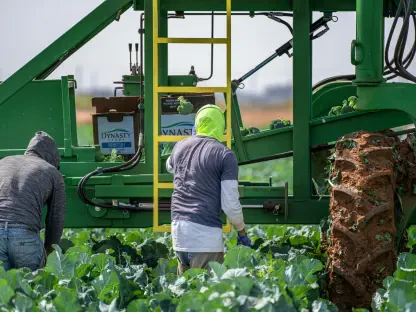
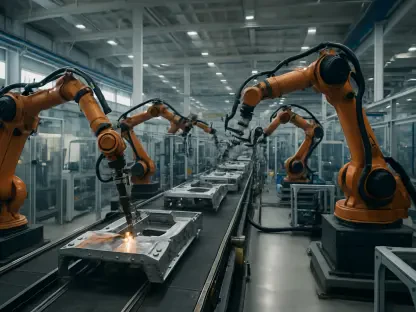
The third pillar supporting this new investment paradigm is the intelligent application of data and automation to create smarter, more responsive agricultural systems. The role of digital technology has evolved far beyond simple data collection; the emphasis is now squarely on translating vast datasets into clear, actionable insights that empower decision-making from the field to the consumer. Sophisticated artificial intelligence, machine learning algorithms, and the Internet of Things (IoT) are being integrated to optimize nearly every facet of the food supply chain, from precise input management for crops and herds to dynamic logistics and hyper-accurate demand forecasting. Concurrently, automation is emerging as a critical driver of efficiency and scalability, particularly within controlled-environment agriculture. By leveraging robotics and automated systems, vertical farms and indoor cultivation facilities are systematically reducing operational costs, overcoming labor shortages, and ensuring the consistent, year-round production of high-quality produce, making local food systems more viable than ever before.
Spotlight on the Trailblazers Forging a Greener Future
The leading investment rounds of the first half of 2025 serve as a compelling blueprint for this strategic pivot, with each deal highlighting a specific facet of the movement toward a more sustainable food system. The charge was unequivocally led by Iceland’s First Water, which secured a remarkable €39 million to expand its land-based Atlantic salmon farming operations. This landmark investment addresses the severe environmental criticisms of traditional aquaculture head-on by utilizing a closed-containment system that ensures high biosecurity and prevents waste from polluting marine ecosystems. By harnessing Iceland’s abundant renewable energy sources, First Water is setting a global standard for low-impact, high-quality protein production. This momentum in bio-solutions was powerfully echoed by investments in companies like Belgium’s Fyteko, which raised €13 million to scale its production of proprietary biomolecules that act as potent biostimulants. These nature-inspired compounds enhance crop performance and resilience against climate stress, enabling farmers to drastically reduce their reliance on synthetic chemicals. In a similar vein, BiocSol, also from Belgium, secured €4.4 million to advance its platform for developing biofungicides, further reinforcing the strong market demand for effective, biological alternatives to traditional crop protection methods.
Simultaneously, significant capital was directed toward companies using data and deep technology to tackle agriculture’s most stubborn climate and efficiency challenges. Türkiye’s Doktar raised €7.5 million to expand its comprehensive digital platform, which integrates proprietary software, IoT devices, and AI-driven models to provide farmers with precise, data-backed recommendations. This holistic service empowers users to optimize inputs like water and fertilizer, driving both cost savings and environmental benefits across the production cycle. Directly addressing one of agriculture’s largest contributions to climate change, Sweden’s Agteria Biotech secured €6 million to commercialize its patent-pending feed additive designed to substantially reduce methane emissions from cattle. This scalable and affordable solution represents a critical breakthrough in making the global livestock industry more sustainable. Further down the supply chain, Collie from the Netherlands raised €3.5 million for its AI-powered demand forecasting platform. By providing highly accurate predictions for the fresh produce market, Collie’s technology helps growers, distributors, and retailers optimize planning, dramatically reduce spoilage, and create a more efficient and less wasteful food system.
The pragmatic evolution of controlled-environment agriculture and the power of advanced biotechnology were also major themes in the recent funding landscape. Norway’s Avisomo raised €5 million to further develop its highly automated, modular vertical farming solutions, with a sharp focus on reducing operational costs and improving scalability to make indoor food production economically viable for large-scale retail integration. This practical approach was mirrored by Sweden’s BlueRedGold, which secured €2.73 million to pioneer the indoor cultivation of premium saffron. By using a technology-driven system, the company can guarantee year-round production of the high-value spice with consistent quality and a fraction of the water used in traditional farming. In the livestock sector, Ireland’s Antler Bio secured $4.3 million for its groundbreaking EpiHerd platform, which analyzes gene expression to offer dairy farmers deep insights into herd health and performance, enabling more precise and profitable management. Finally, the UK’s Fotenix raised £2.1 million for its advanced imaging technology that can detect crop diseases weeks before visible symptoms appear, empowering farmers with a powerful tool for early, targeted intervention that protects yields and minimizes chemical use.
The Lasting Impact of a Strategic Shift
The investment patterns observed in the first half of 2025 painted a clear and decisive picture of a European agritech sector that had entered a new phase of strategic maturity. The era defined by speculative, broad-stroke platforms gave way to a definitive “flight to quality,” where capital flowed to companies offering specialized, scientifically validated, and economically sound solutions to the core challenges of modern agriculture. The findings from this period indicated an industry-wide pivot toward sustainability, not as a peripheral marketing term, but as a central driver of innovation and value creation. Investments were strategically targeted at technologies proven to reduce environmental footprints, enhance the efficiency of resource use, and build systemic resilience against the mounting pressures of climate change. From sustainable aquaculture and methane-reducing feed additives to AI-optimized supply chains and bio-based crop protection, the flow of capital followed tangible progress that promised both robust profitability and a positive planetary impact. This focused investment approach suggested a strong and promising trajectory for a European agritech sector that had firmly committed itself to constructing the resilient and efficient food system of tomorrow.