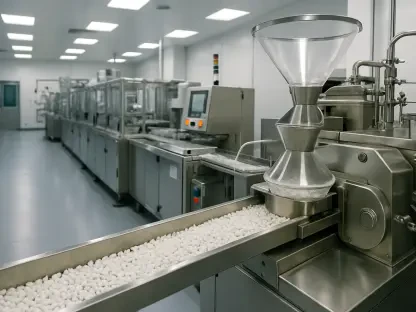

An executive order signed by President Donald Trump has ignited a sharp policy debate within his own administration, pitting the imperatives of national security and agricultural stability against the public health agenda championed by his own Secretary of Health and Human Services. The directive, which leverages the Defense Production Act to ramp up domestic manufacturing of glyphosate-based herbicides and their key component, elemental phosphorus, frames the issue as a matter of urgent national interest. Citing a critical need to secure the U.S. food supply and bolster military readiness, the order creates an unavoidable conflict with HHS Secretary Robert F. Kennedy, who has built a significant part of his public platform on raising alarms about the potential health risks associated with the very chemical now slated for increased production. This move places two core government responsibilities in direct opposition, forcing a difficult conversation about which priority should take precedence when the health of the population and the security of the nation appear to be at odds.
An Executive Mandate for Production
The core justification for the President’s executive order rests on the argument that there are currently no viable, large-scale chemical substitutes for glyphosate in American agriculture. The directive posits that any disruption to the herbicide’s supply chain would “critically jeopardize agricultural productivity,” leading to a potential crisis in the nation’s food system. To prevent this outcome, the order invokes the considerable authority of the Defense Production Act, delegating its powers to the Secretary of Agriculture. This allows the government to compel manufacturers, specifically naming Monsanto as the sole domestic supplier, to prioritize government contracts and invest in expanding their production capabilities. The administration’s stance is that ensuring a stable and abundant supply of this widely used herbicide is a non-negotiable component of maintaining food security. This aggressive push for domestic manufacturing aims to insulate the U.S. from foreign supply chain vulnerabilities and ensure that American farmers have the tools they need to maintain high crop yields, a cornerstone of both the economy and national stability.
Beyond the farm, the executive order underscores the dual-use nature of elemental phosphorus, a critical precursor in the synthesis of glyphosate. The directive highlights its vital role in a range of military applications, including the production of smoke screens for obscuring troop movements, incendiary devices, and advanced semiconductors essential for modern defense technology. This framing elevates the issue from a purely agricultural concern to one of national defense readiness. A significant and potentially controversial provision within the order grants companies immunity from liability for any actions taken to comply with the directive. This legal shield is designed to encourage swift and unhesitating cooperation from manufacturers by removing the financial risks associated with potential health-related lawsuits. This provision, combined with the mandate to expand production, represents a powerful federal intervention aimed at shoring up what the administration views as a critical weakness in the domestic industrial base, affecting both the dinner table and the battlefield.
A Clash of Agendas within the Administration
This focus on production and security stands in stark contrast to the well-publicized platform of HHS Secretary Robert F. Kennedy. A central pillar of his “Make America Healthy Again” (MAHA) agenda has been a vocal campaign against the widespread use of glyphosate. Kennedy has repeatedly labeled the chemical a “likely culprit in America’s chronic disease epidemic,” publicly raising concerns about its potential links to serious health conditions, including cancer, hormonal imbalances, and fertility issues. His position is not a recent development; before his appointment to the Trump administration, Kennedy had specifically pledged to seek a ban on the common agricultural practice of using glyphosate as a pre-harvest desiccant on wheat crops. This long-standing and deeply held conviction places him on a direct collision course with the new executive order, creating a significant and public fissure within the President’s cabinet over a fundamental question of public safety and agricultural policy. The order effectively prioritizes the very substance his department has targeted as a potential threat to public health.
The executive action and its accompanying White House fact sheet appear to deliberately sidestep the health concerns that Secretary Kennedy has worked to bring to the forefront of the national conversation. The language of the order is focused entirely on the logistics of supply chains, manufacturing capacity, and strategic necessity, with no acknowledgment of the ongoing scientific and public debate over glyphosate’s safety. While a White House fact sheet offered a concession by expressing a willingness to support research into future alternatives, it firmly maintained that the immediate priority is ensuring a stable and uninterrupted supply of glyphosate for current needs. This stance effectively tables the health debate in favor of immediate security imperatives, striking a significant blow to the MAHA agenda. The internal conflict highlights a fundamental divergence in risk assessment, with one side of the administration viewing the absence of the chemical as the primary threat, while the other sees its presence as the greater danger.
The Path Forward: A Policy at a Crossroads
The implementation of this executive order set a course that forced a reckoning between two competing visions for the nation’s future. It was not merely a bureaucratic disagreement but a fundamental conflict over whether the potential long-term health risks to the populace should be subordinated to the immediate demands of agricultural productivity and military preparedness. The directive drew clear lines, compelling industry to increase production of a controversial chemical while simultaneously challenging the public health framework established by a key cabinet member. This action raised profound questions about regulatory coherence and the administration’s ultimate priorities, leaving industries, farmers, and the public to navigate a deeply fractured policy landscape. The consequences of this decision rippled through agricultural practices, environmental regulations, and the ongoing public discourse surrounding chemical safety in the food supply for years to come.