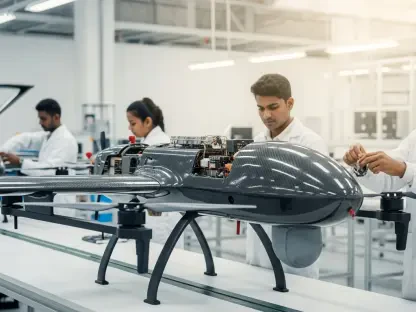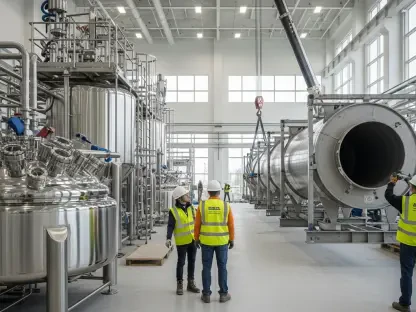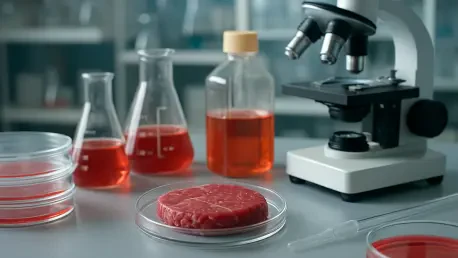

In the burgeoning field of cellular agriculture, a sector celebrated for its transformative potential yet notorious for its immense capital consumption, achieving profitability has remained an elusive goal for most companies racing to bring cultivated meat to market. While many startups have focused on a venture-capital-fueled sprint toward consumer products, the Japanese firm IntegriCulture has charted a markedly different course, demonstrating that financial self-sustainability is not just a distant dream but an attainable reality. By strategically positioning itself as a foundational “picks and shovels” provider, the company has successfully built a profitable business supplying the essential infrastructure—from materials and equipment to specialized services—that the entire industry needs to grow. This pragmatic approach, which prioritizes immediate revenue generation and ecosystem support over a high-stakes, product-first gamble, offers a compelling blueprint for sustainable growth in one of today’s most innovative industries.
A Pragmatic Blueprint for Financial Sustainability
IntegriCulture’s journey to profitability is rooted in a meticulously crafted, dual-pronged business model designed for immediate financial viability and long-term research funding. Rather than channeling all resources into the protracted and expensive development of cultivated meat, co-founder and CEO Yuki Hanyu adopted a strategy that generates consistent revenue from non-food applications. The company’s most notable success in this area has been the development and sale of cell-cultured ingredients for the high-end cosmetics industry, a market with a strong appetite for novel, effective components. In parallel, IntegriCulture established itself as a Contract Research Organization (CRO), providing essential supplies and expert services to other startups and corporate entities. This B2B focus created a stable and predictable income stream, allowing the company to finance its ambitious food-tech research internally, thereby reducing its reliance on external funding rounds and market speculation. This diversified approach proved its worth when the company reported a net profit of approximately $255,000 for the fiscal year ending in September 2025, a significant milestone in the sector.
Building on its initial success as a supplier and research partner, IntegriCulture has progressively evolved into a comprehensive Contract Research, Development & Manufacturing Organization (CRDMO). This strategic expansion solidifies its role as a full-stack infrastructure provider, capable of supporting a wide spectrum of players across the cellular agriculture landscape. By offering a complete suite of materials, proprietary equipment, and critical process knowledge, the company empowers other businesses to accelerate their own product development timelines. This positioning is not only lucrative but also synergistic, as it places IntegriCulture at the center of the industry’s growth, benefiting from the success of its clients. CEO Yuki Hanyu has confirmed that all of the company’s business segments now operate with positive unit economics, a clear signal of a robust and meticulously managed operational framework. This model transforms the company from a competitor into a crucial enabler, fostering a collaborative ecosystem while ensuring its own financial health and resilience in a volatile emerging market.
Reshaping the Scaling Paradigm
A significant philosophical principle guiding IntegriCulture’s strategy is a deep-seated caution against the prevailing industry trend of pursuing massive, capital-intensive scale-up operations. CEO Yuki Hanyu posits that the immense financial barrier to entry and the staggering cost of building large-scale facilities represent the primary obstacles preventing the cellular agriculture industry from achieving mainstream adoption. To illustrate this point, he draws a compelling parallel with the power sector. He contrasts the history of traditional, large-scale nuclear power plants—which are often plagued by enormous upfront costs, construction delays, and public resistance—with the modern success of small modular reactors and highly distributed solar PV systems. The latter technologies have attracted significant investment and achieved rapid deployment precisely because their scalable, incremental nature presents a lower-risk, more manageable financial proposition. This perspective fundamentally challenges the “go big or go home” mentality that has dominated much of the early cell-ag narrative.
This counter-intuitive philosophy directly informs IntegriCulture’s approach to engineering and bioprocess development, leading the company to deliberately sidestep the industry-standard equipment. Instead of investing in the large, complex, and costly stir-tank bioreactors commonly used in the biopharmaceutical field, its research and development efforts are concentrated on creating more compact, cost-efficient, and modular hardware. This focus has led to the exploration of alternative designs, such as cell-ag grade packed beds and other adherent systems where cells grow attached to a surface rather than suspended in a liquid. This can offer significant advantages in cell density and process efficiency for certain cell types. The company pursues this goal through both “scale-up” projects, which are largely funded by Japan’s Small Business Innovation Research (SBIR) program, and a “scale-out” strategy. This scale-out approach is being realized through a collaboration with Sumitomo Riko, resulting in the “Oxy-thru Cultivator,” an innovative, low-cost bioreactor that simplifies operations by using oxygen-permeable materials, thereby eliminating the need for complex and expensive oxygen infusion systems.
The CulNet System A Breakthrough in Media Cost
At the core of IntegriCulture’s technological arsenal is the CulNet system, an innovative platform engineered to drastically reduce the cost of cell culture media, which remains one of the most significant cost drivers in cultivated meat production. Conventional methods rely on producing and purifying dozens of individual growth factors and proteins, often through expensive microbial fermentation, and then adding them to a basal medium. The CulNet system elegantly circumvents this costly and complex process. It operates by using a series of interconnected chambers that house various types of organ cells. A simple, low-cost basal medium is continuously circulated through these chambers. As the medium passes by the organ cells, it becomes naturally enriched with a complex, serum-like cocktail of growth factors, proteins, and metabolites that the cells secrete as part of their normal biological function. This enriched, “conditioned” medium can then be drawn off and used to nourish the target meat or liver cells growing in a separate product bioreactor.
This unique bioreactor-as-a-factory approach offers several transformative advantages over traditional media formulation. First and foremost is the profound cost reduction achieved by sidestepping the expensive downstream processing and purification steps required for recombinant proteins produced in microbes. Secondly, by avoiding the use of genetic modification to produce these proteins, the system potentially streamlines the path to regulatory approval in many jurisdictions. Furthermore, this method fosters greater transparency and could enhance consumer trust. Hanyu suggests that since the system begins with publicly known basal media, the proprietary element becomes the specific combination of organ cells used to create the “cell-cultured serum.” This eliminates the need to guard the media’s final composition as a trade secret, allowing for a more open approach. Ultimately, this open-source-style philosophy could significantly lower the barrier to entry for new companies, empowering the entire sector by providing access to affordable and highly effective culture media.
Diversification and Strategic Market Positioning
IntegriCulture’s most commercially successful venture to date has been its strategic diversification into the cosmetics sector, a market that has proven highly receptive to its technology. The company developed Cellament, a nutrient-rich conditioned medium derived from early-stage avian cells, which it markets as a premium ingredient for high-end skincare products. This innovative product has gained significant traction, securing partnerships with established and emerging beauty brands such as Euglena, Epolar, Fabius, and Oppen Cosmetics. CEO Yuki Hanyu has noted that forward-thinking brands, particularly within the influential K-beauty space, have been especially quick to embrace the technology. Cellament is positioned to compete directly with existing luxury ingredients like human or plant stem cell serums and animal placenta extracts. IntegriCulture compellingly argues that its product offers comparable or superior skincare benefits while being safer, thanks to the sterile and pathogen-free cell culture environment. It also boasts a more stable supply chain, is less odorous, and is priced competitively, making it a highly attractive alternative for formulators.
To further solidify its foothold in this lucrative market, IntegriCulture is launching a “Cell-Ag open brand” initiative. The primary objective of this campaign is to create and popularize a new, distinct category of cosmetic ingredients, officially termed “Cell-Ag Cosmetics.” This branding effort aims to differentiate its products from traditional categories like “animal-based,” “plant-based,” or “bio-pharma.” By encouraging its partners to feature a dedicated “Cell-Ag” logo on product packaging, the company seeks to build widespread market recognition and cultivate a unique identity for this novel class of cosmetic components. This strategic move not only helps educate consumers but also establishes a quality standard, building a brand halo around the technology itself. This initiative serves as a powerful example of how the company leverages its core technological platform to capture value in adjacent markets, generating revenue that fuels its ultimate mission in the food sector while simultaneously building public familiarity and acceptance of cellular agriculture technologies.
Navigating the Japanese Regulatory Landscape
IntegriCulture’s pioneering work has been set against a complex and evolving regulatory and political backdrop in its home country of Japan. The company has taken a proactive role in shaping the future of the industry, working closely with the Japan Association for Cellular Agriculture (JACA) to consult with regulators on the development of a comprehensive rulemaking framework for cultivated meat. While a formal framework was anticipated by early 2026, CEO Yuki Hanyu has acknowledged that the process has encountered some delays. In addition to bureaucratic hurdles, the company has had to navigate political headwinds from certain politicians who are protective of traditional agricultural interests. Despite these challenges, the broader governmental stance in Japan remains largely supportive, with food tech and biomanufacturing designated as strategic focus areas for the national administration. This high-level backing provides a crucial tailwind for the entire sector.
To skillfully navigate this delicate political landscape, IntegriCulture has made a deliberate and strategic choice in its public positioning. Instead of framing itself as a “disruptive entrant to agriculture”—a label that could provoke opposition from powerful and well-established farming lobbies—the company identifies as a “biomanufacturer.” This carefully chosen terminology allows it to align with the influential Japan Bioindustry Association, a powerful organization with strong lobbying capabilities that is highly supportive of the cellular agriculture field. This positioning reframes the narrative from one of replacement to one of innovation and industrial advancement, making it easier to garner political and institutional support. By emphasizing its role in building a new high-tech manufacturing sector, IntegriCulture effectively sidesteps potential conflicts and instead aligns its mission with national strategic goals for economic growth and technological leadership, ensuring it remains a valued partner in Japan’s future industrial vision.
Pioneering a Sustainable and Collaborative Future
IntegriCulture’s success provided a powerful case study in how a cellular agriculture company could achieve financial stability by rejecting the prevailing “growth-at-all-costs” mindset. Through a masterful combination of strategic diversification into revenue-generating sectors like cosmetics, a relentless focus on developing cost-efficient and modular enabling technologies like the CulNet system, and a deeply collaborative, infrastructure-building approach, the company established a financially sustainable model. This innovative blueprint not only supported its own ambitious growth trajectory but also contributed significantly to the maturation of the entire cell-ag ecosystem. By prioritizing profitability and pragmatic solutions, IntegriCulture demonstrated that the path to a sustainable food future could be built on a foundation of sound business principles, technological ingenuity, and a commitment to empowering the industry as a whole.