
A company once synonymous with capturing memories on photographic film is now engineering the future of medicine, methodically constructing a globally interconnected network to manufacture the next generation of biopharmaceuticals. This strategic pivot from consumer electronics to advanced biopharma is not merely a diversification; it represents a fundamental reshaping of the company’s identity and a calculated response to the critical demand for a more resilient and agile global drug supply chain. The inauguration of its massive biomanufacturing facility in Teesside, UK, stands as a testament to this transformation, signaling the operational launch of a key node in a meticulously planned international ecosystem.
From Photographic Film to Pharmaceuticals a Legacy Companys Radical Shift
The transition from producing photographic film to developing complex biological drugs may seem disparate, but it is rooted in a shared foundation of advanced chemical engineering and precision manufacturing. Fujifilm’s decades of experience in creating highly uniform, multi-layered coatings for film provided a unique technological skill set directly transferable to the biopharmaceutical industry. This core competency in managing sensitive chemical processes and ensuring stringent quality control at a microscopic level created a natural bridge into the contract development and manufacturing organization (CDMO) space, where consistency and reliability are paramount.
This evolution was not just an opportunity but a strategic necessity. As the market for traditional photography waned, Fujifilm leveraged its deep scientific expertise to pivot toward high-growth sectors, including healthcare and life sciences. The move into biopharma was a calculated decision to apply its legacy of innovation to a field with immense future potential, transforming a potential corporate decline into a story of reinvention and technological leadership.
The Imperative for a Resilient Global Biopharma Supply Chain
The global healthcare landscape has underscored the vulnerabilities inherent in a centralized manufacturing model, where disruptions in one region can trigger worldwide shortages of critical medicines. This has created an urgent demand for a more distributed, flexible, and robust supply chain capable of withstanding geopolitical shifts, logistical bottlenecks, and public health crises. Biopharmaceutical companies now prioritize partners who can offer not just capacity, but also geographical diversity and supply chain security to ensure uninterrupted patient access to therapies.
In this context, building a de-risked manufacturing network is no longer a competitive advantage but a fundamental requirement. The ability to produce therapies “local-for-local”—manufacturing treatments within the regions where they will be used—mitigates cross-border complexities and shortens delivery times. Fujifilm’s strategy directly addresses this modern imperative by creating an integrated network of facilities that can operate both independently and in concert, providing a powerful solution to the industry’s most pressing supply challenges.
Deconstructing the Blueprint the Core Pillars of Fujifilms Global Strategy
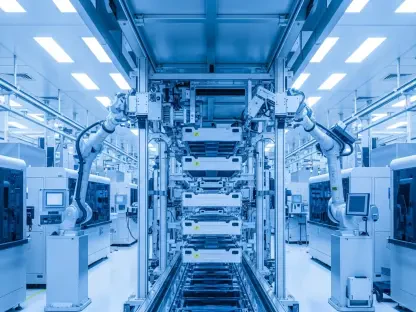
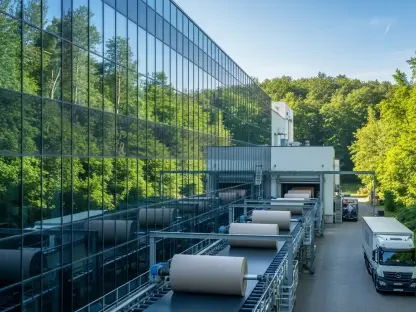
At the heart of Fujifilm’s global expansion is a monumental investment in advanced infrastructure, exemplified by the £400 million Teesside facility in the UK. Now Britain’s largest single-use biomanufacturing site, this 110,000-square-foot facility is designed for small- and mid-scale antibody production with a total capacity of 19,000L. It is complemented by the new Bioprocess Innovation Centre UK, the country’s largest multi-modality process development laboratory, creating a comprehensive, end-to-end service hub from initial development to full commercial supply.
This physical expansion is governed by the “KojoX” philosophy, a modular approach focused on standardization and replication. By cloning facility designs, using uniform equipment, and harmonizing quality systems across all global locations, Fujifilm ensures predictable performance and operational consistency. This model accelerates production changeovers and enables seamless technology transfers, allowing partners to scale their operations rapidly and reliably across different continents without re-validating core processes.
The final pillar weaves these individual sites into a cohesive, interconnected network designed for strategic resilience. By linking its key nodes in Teesside (UK), Holly Springs (USA), Denmark, and Toyama (Japan), Fujifilm has created a distributed manufacturing ecosystem. This “local-for-local” model acts as a crucial hedge against supply chain volatility, allowing production to be shifted or shared between regions to maintain continuity and ensure a stable supply of therapies to global markets.
Evidence of a Revolution the Technology and Investment Behind the Vision
The operational backbone of this network is fortified by proprietary technological advancements. The SymphonX automated purification system, developed internally, is a key enabler, streamlining complex downstream bioprocessing and enhancing efficiency and consistency across facilities. This commitment to technological innovation demonstrates a focus not just on expanding capacity, but on optimizing the manufacturing process itself to deliver higher quality and faster turnaround times for its partners.
This ambitious vision is supported by a significant and sustained financial commitment. With total investments in its biopharma division exceeding £5 billion over the last decade, Fujifilm has signaled its long-term dedication to becoming a dominant force in the CDMO landscape. This level of investment underscores the company’s strategic resolve to build a future-proofed network capable of meeting the evolving demands of biopharmaceutical development and manufacturing for the next fifteen years and beyond.
The Fujifilm Framework a Three Step Strategy for Building a Global CDMO Network
The company’s global build-out follows a clear, three-step strategic framework, beginning with standardization to accelerate deployment. By implementing the uniform KojoX model, which dictates consistent processes, equipment, and quality standards across all sites, Fujifilm has minimized variables and dramatically reduced the time required to bring new capacity online. This foundational step ensures that a process developed in one facility can be replicated identically in another, providing unparalleled speed and predictability.
The second step focused on connecting these standardized hubs to create a resilient, integrated network. Facilities were intentionally designed to be interconnected, allowing production to be dynamically managed across regions. This strategic linkage enables the network to absorb shocks and maintain supply continuity, transforming a collection of individual sites into a powerful global manufacturing platform. Finally, the strategy culminated in integrating massive manufacturing capacity with comprehensive process development laboratories, which offered partners a seamless journey from initial discovery to full commercialization, all within a single, unified ecosystem.