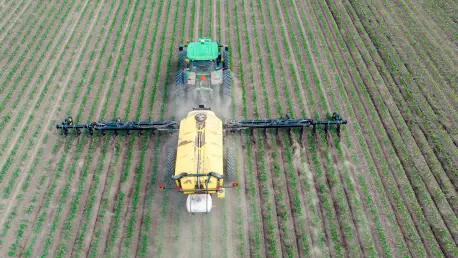

The quiet rhythm of a tractor crossing a field in Punjab or the rhythmic sowing of seeds in the Deccan Plateau depends on a complex global machinery that most citizens rarely consider. While the world watches geopolitical friction points with an eye on oil prices and microchips, India has recognized that the true foundation of its sovereignty lies in the chemical compounds that feed its soil. As regional conflicts and upended logistics threaten the steady flow of essential nutrients, the nation has pivoted toward a high-stakes diplomatic offensive. This “mission mode” operation is designed to ensure that the upcoming kharif planting season remains insulated from the tremors of international warfare, transforming a potential agricultural crisis into a masterclass in resource resilience.
For decades, the invisible pipeline of urea and di-ammonium phosphate (DAP) that sustained Indian harvests was concentrated within a narrow corridor of suppliers. This reliance on a few concentrated hubs meant that any disturbance in the energy markets or shipping lanes of West Asia could ripple through the rural economy within weeks. The current global climate has made this old model of dependency untenable, forcing a shift from being a passive consumer to an active, strategic partner on the global stage. By moving beyond simple trade, the government is redefining what it means to be food-secure in a fragmented world where supply chains are increasingly used as levers of political influence.
Beyond the West Asian Dependency
Traditional procurement patterns once saw nearly 30% of India’s essential fertilizer inputs arriving from a small cluster of nations, including Saudi Arabia, Qatar, and the UAE. However, the escalating energy shortages and maritime disruptions in these regions have highlighted a systemic vulnerability that could no longer be ignored. Maintaining the status quo would have left the domestic agricultural sector at the mercy of volatile spot prices and shipping bottlenecks. Consequently, the strategy has shifted toward autonomy, treating fertilizer security with the same level of urgency as defense or energy procurement to protect the livelihood of millions of farmers.
This transition involves a departure from the historical reliance on a single geographic bloc. While these regional partners remain significant, the focus has moved toward a model of strategic autonomy where no single conflict can paralyze the national food supply. This shift is not merely about changing suppliers; it represents a total overhaul of how the nation views its agricultural inputs. By integrating into global value chains rather than just purchasing from them, the government is building a buffer against the unpredictability of modern geopolitics, ensuring that the dinner plates of a billion people are not held hostage by foreign instability.
The Geographic Pivot: Diversifying the Procurement Map
Indian diplomatic missions are currently operating on a footing rarely seen outside of wartime, rewiring the nation’s supply lines across twenty different countries. This massive outreach is designed to synthesize a resilient network that stretches from the mineral-rich regions of North Africa to the industrial heartlands of Southeast Asia. In the north, the relationship with Russia has intensified significantly, marked by a 40% increase in supplies and a landmark $1.2 billion joint venture. This partnership aims to produce 2 million tonnes of urea annually by 2028, providing a sturdy anchor for the nitrogen-based requirements of the soil.
Simultaneously, the outreach has deepened in North Africa, where the partnership with Morocco’s OCP group provides a steady stream of rock phosphate. Expansion into Egypt’s Suez Canal Economic Zone is also underway, involving multi-billion dollar greenfield investments that position Indian firms at the heart of global shipping lanes. To further balance this map, the government has tapped into the manufacturing capacities of Indonesia, Malaysia, and Vietnam. This broad geographic spread ensures that if one region faces a production halt or a logistics crisis, the other nodes in the network can compensate, keeping the total supply levels consistent and predictable.
Strategy Over Subsidy: The Shift to Foreign Investment
The days of simple purchasing agreements, which left the treasury vulnerable to the whims of the global spot market, have largely been replaced by a framework of “supply security through investment.” This sophisticated model involves taking direct equity stakes in foreign manufacturing firms and establishing production hubs in countries with lower energy costs. By becoming owners and partners rather than just customers, Indian entities can mitigate price volatility at the source. This move toward offshoring production helps neutralize domestic price spikes before they ever cross the coastline, providing a much-needed layer of financial insulation.
Expert analysis suggests that this investment-heavy approach is the only way to escape the cycle of ever-increasing subsidies. Joint ventures in countries like Jordan and Algeria allow for a more stable cost structure, as these facilities are often located near the raw materials required for production. This integration means that the “Indian” supply of fertilizer is increasingly being produced on foreign soil but under the control and priority of Indian interests. This strategy effectively exports the risks associated with manufacturing while importing the stability required for a thriving agricultural sector.
A Framework for Building a Resilient Supply Chain
The current strategy serves as a blueprint for how a resource-dependent nation can navigate a world defined by volatility. At its core, the approach rests on three pillars: diplomatic diversification, long-term offtake agreements, and infrastructure integration. By spreading import reliance across diverse geopolitical blocs, the nation ensures that localized conflicts do not result in national shortages. Long-term contracts, meanwhile, provide a shield against the sudden price hikes that characterize the modern commodity market, allowing for better budgetary planning and more predictable costs for the end-user in the fields.
Furthermore, the transition to deep-rooted infrastructure integration has changed the nature of international trade relationships. Rather than transactional buyer-seller interactions, these are now integrated partnerships where Indian firms own a piece of the upstream production process. This multi-layered strategy has created a robust buffer that protects the agricultural economy from external shocks. The focus remained on transforming a linear supply chain into a web-like network, ensuring that the movement of essential minerals and chemicals continued unabated despite the fracturing of traditional global trade norms.
The initiative successfully redefined the boundaries of national security by placing agricultural inputs at the center of the diplomatic agenda. Policy planners moved beyond reactive measures and instead established a proactive, investment-led network that spanned multiple continents. This transition toward strategic ownership and geographic diversity provided a stable foundation for the nation’s farmers. Ultimately, the focus shifted toward sustainable self-reliance, ensuring that future technological advancements in nutrient management and green ammonia production would build upon this newly secured and resilient global infrastructure.