
The Strategic Elevation of MTDG within the AMGTA
The global industrial sector is currently undergoing a massive structural transformation as the Additive Manufacturer Green Trade Association strengthens its leadership through the strategic appointment of the Manufacturing Technology Deployment Group to Principal Member status. This high-level designation signals a move toward more integrated, sustainable production cycles and places MTDG at the helm of strategic decision-making in the additive manufacturing space. By bringing experienced leadership onto the Board of Directors, the trade association is signaling its intent to bridge the gap between niche technological innovation and broad industrial application. This evolution redefines how the sector approaches resource efficiency, workforce development, and the global transition toward greener industrial practices.
Navigating the Shift from Innovation to Industrialization
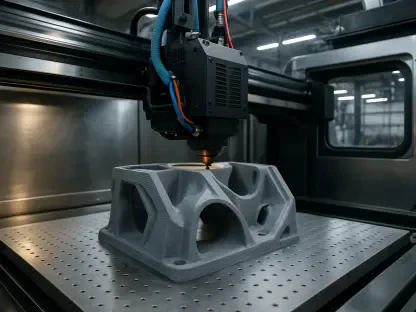
Historically, additive manufacturing was viewed as a specialized tool for prototyping rather than a cornerstone of mass production. However, as global supply chains faced unprecedented disruptions, the industry began to shift its focus toward resilience and decentralized manufacturing. The trade association was founded to champion the environmental benefits of 3D printing—such as reduced material waste and localized production—but the need for a more comprehensive industrial framework became clear. This background sets the stage for the current expansion, as the history of deploying advanced manufacturing technologies provides the necessary infrastructure to scale these green innovations from labs to factory floors.
Integrating Additive Technologies into the Global Ecosystem
Synchronizing 3D Printing with Traditional Production
A critical challenge in the evolution of sustainable manufacturing is the “silo effect,” where new technologies are developed in isolation from existing workflows. The inclusion of specialized leadership on the board is specifically designed to dismantle these barriers. By leveraging expertise in ecosystem-level perspectives, the industry can better understand how additive processes interface with legacy systems. This integration is vital for creating a circular economy where parts are designed for longevity and recyclability, ensuring that the environmental gains of 3D printing are not lost during post-processing or assembly stages.
Enhancing Economic Viability through Resource Efficiency
For green manufacturing to be adopted at scale, it must prove to be as economically viable as it is environmentally responsible. The role of a Principal Member involves providing data-driven insights into the cost-benefit analysis of sustainable practices. By focusing on grounded industrial realities rather than theoretical models, this partnership helps businesses identify where additive methods can reduce energy consumption and raw material usage without compromising the bottom line. This pragmatic approach addresses the skepticism of many industrial stakeholders by demonstrating that sustainability and profitability are increasingly interdependent.
Bridging the Workforce Gap for a Greener Economy
The transition to a more sustainable industrial landscape is frequently hindered by a lack of specialized talent. There is now a significant focus on workforce development, which is essential for managing the complexities of modern technologies. This involves not only training engineers in design-for-additive-manufacturing but also educating the broader workforce on the ethics and mechanics of resource-efficient production. By addressing the human element of technology deployment, the industry ensures that the shift toward green manufacturing is supported by a robust pipeline of skilled professionals who can navigate the nuances of carbon-neutral production.
Emerging Paradigms in Sustainable Industrial Strategy
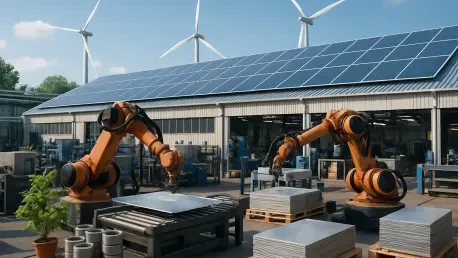
As we look ahead, the collaboration between deployment experts and trade advocates is expected to catalyze several transformative trends. We are likely to see a surge in “distributed manufacturing networks,” where localized production allows companies to print parts on demand closer to the end-user, drastically cutting down on logistics-related carbon emissions. Furthermore, regulatory pressures regarding environmental, social, and governance reporting are expected to intensify, making standardized green metrics essential for global compliance. This partnership will likely result in the creation of new industry standards that prioritize life-cycle sustainability over short-term production volume.
Actionable Blueprints for Industrial Transformation
The primary takeaway from this organizational elevation is that the future of manufacturing lies in the synthesis of innovation and practical application. For businesses looking to follow this lead, the best practice is to adopt an “ecosystem-first” mindset, evaluating how new technologies can optimize the entire supply chain rather than just individual components. Professionals should focus on cross-disciplinary training, merging technical skills with environmental science and strategic management. By prioritizing transparency in material sourcing and energy usage, organizations can position themselves as leaders in a market that increasingly values responsible production.
Forging a Resilient and Responsible Industrial Future
The partnership between deployment groups and trade associations represented a maturation of the additive manufacturing industry. It moved the conversation beyond the novelty of 3D printing and into the realm of strategic industrial resilience. By integrating high-level innovation with a deep understanding of manufacturing deployment, this collaboration ensured that the quest for sustainability was rooted in practical, scalable solutions. As the global economy continued to demand more responsible production methods, this leadership became instrumental in shaping a future where manufacturing was not just a driver of growth, but a guardian of environmental resources.