
As the global textile industry confronts its significant environmental footprint, the search for viable, scalable solutions has become more urgent than ever. At the Première Vision exhibition in Paris, Portugal’s technological center for the textile and clothing industry, CITEVE, unveiled the groundbreaking results of its be@t project, a large-scale applied research initiative that is rapidly transitioning from theoretical concepts to tangible industrial applications. This initiative positions Portugal not just as a participant but as a formidable leader in the sustainable textile revolution. By successfully integrating bio-based materials, pioneering circular economy processes, and leveraging advanced digital tools, the country is demonstrating a clear and executable roadmap for the future of fashion manufacturing. The project’s success hinges on a powerful collaborative ecosystem, proving that a concerted national effort can effectively address systemic challenges and pave the way for a more responsible and transparent industry.
From Concept to Collection
Showcasing Tangible Innovation
The core of the be@t project’s presentation was a compelling collection of twelve experimental garment demonstrators, all proudly manufactured in Portugal. These pieces are far more than conceptual designs; they represent the successful culmination of a collaboration involving over ten industrial partners, serving as tangible proof that non-fossil raw materials and sophisticated eco-design methodologies can be seamlessly integrated into existing manufacturing systems. Each garment was developed with circular economy principles at its foundation, meaning sustainability was not an afterthought but a primary consideration from the earliest design stages. This holistic approach meticulously integrated every aspect of the product lifecycle, from the careful selection of renewable and recycled materials to the optimization of production processes and the strategic planning for end-of-life scenarios, such as disassembly and recycling. These demonstrators effectively bridge the gap between abstract research and real-world industrial capability.
The initiative highlights a fundamental shift in production philosophy, where the entire value chain is re-engineered to prioritize environmental stewardship. The collaboration between diverse industrial entities was crucial in overcoming the practical hurdles of implementing new materials and processes on a commercial scale. By working in concert, these partners were able to troubleshoot challenges related to fiber processing, dyeing, and finishing, ensuring that the final garments met high standards of quality and durability without compromising their sustainable credentials. The project’s emphasis on practical application demonstrates that a circular model is not only environmentally preferable but also industrially feasible. This focus on real-world manufacturing provides a powerful and replicable model for other regions looking to transition their textile sectors, proving that with strategic collaboration and a commitment to innovation, the industry can move beyond incremental improvements toward truly transformative change.
A New Palette of Sustainable Materials
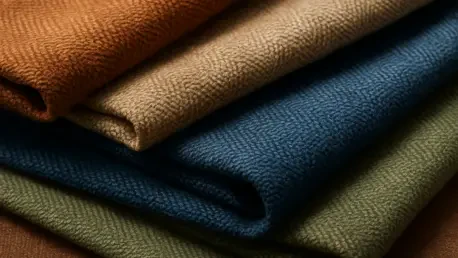
A central theme of the project is the extensive exploration and application of innovative, sustainable materials that drastically reduce reliance on virgin fossil fuels. The twelve demonstrators incorporate a diverse and forward-thinking range of bio-based and recycled content, showcasing the versatility of next-generation textiles. Materials such as linen, viscose, lyocell, PLA, and hemp form the collection’s backbone, complemented by unconventional inputs like cork and pine-based components that leverage Portugal’s natural resources. The project also pushed the boundaries of material science by developing unique blends that valorize waste streams from other industries. These include novel fabrics combining cotton with bio-residues like grape pomace and spent brewery grain, as well as a sophisticated blend of linen with recycled wool. Across all designs, the dominant share of fiber is verifiably bio-based or recycled, a commitment underscored by a remarkable achievement: each of the twelve looks attained an environmental and circularity index exceeding 70 percent.
This ambitious material strategy not only diversifies the raw material base for the textile industry but also establishes a new benchmark for what can be achieved in sustainable apparel. The use of agricultural and industrial byproducts, such as grape pomace, points toward a more integrated and circular bio-economy where waste from one sector becomes a valuable resource for another. This approach, known as industrial symbiosis, is critical for minimizing landfill waste and creating closed-loop systems. Furthermore, the high environmental and circularity index achieved by each garment provides a quantifiable measure of the project’s success, moving beyond vague sustainability claims to offer concrete data. By successfully processing and transforming these materials into high-quality textiles, the project’s industrial partners have demonstrated the technical viability and commercial potential of this new material palette, offering a compelling vision for a more resourceful and less extractive future for fashion.
The Digital and Collaborative Backbone
Pioneering Transparency with Digital Passports
A key trend highlighted by the be@t project is the proactive push for enhanced transparency and traceability, a direct response to impending European regulations and a growing consumer mandate for accountability. In a significant technological leap forward, each of the twelve silhouettes is equipped with a Digital Product Passport (DPP). This powerful digital tool provides an unprecedented level of insight into the garment’s journey, allowing for complete traceability from the origin of the raw materials to a detailed breakdown of key environmental performance indicators. The DPP functions as a digital ledger, capturing data at every stage of the value chain, including water usage, carbon footprint, and chemical inputs. This granular information directly addresses the increasing demands from both brands and consumers for greater transparency, empowering them to make more informed purchasing decisions. By embedding this technology directly into the product, Portugal is not only preparing its industry for future compliance but is also setting a new standard for transparency.
The implementation of the Digital Product Passport represents a crucial step in building consumer trust and holding the industry accountable for its environmental claims. In an era of widespread “greenwashing,” the ability to provide verifiable, data-backed information is a significant differentiator. The DPP moves beyond simple marketing labels to offer a comprehensive and dynamic record of a product’s lifecycle. For brands, it provides a robust mechanism for substantiating sustainability claims and managing supply chain risks. For consumers, it offers a window into the complex processes behind their clothing, fostering a deeper connection to the products they buy. This digital infrastructure is essential for enabling a truly circular economy, as the passport can contain vital information for repair, resale, and end-of-life recycling. By championing this technology, the be@t project is building the digital framework necessary for a more honest, responsible, and circular textile industry of the future.
A Blueprint for Collaborative Success
The be@t project ultimately underscored the immense strength of Portugal’s vertically integrated and intensely innovation-driven industrial ecosystem. The initiative successfully brought together a formidable coalition of sixty entities, including a dynamic mix of small and medium-sized enterprises (SMEs), leading universities, and specialized research and development centers, all skillfully coordinated by CITEVE. This broad-based collaboration was instrumental in transforming ambitious research goals into market-ready innovations. Supported by strategic funding from Portugal’s Recovery and Resilience Plan and the European Union’s NextGenerationEU program, the project established a powerful framework for accelerating the textile sector’s transition. The main finding was not just the creation of sustainable products, but the development of a collaborative model that fostered shared knowledge, pooled resources, and aligned diverse stakeholders toward a common goal, creating a blueprint for a circular, bio-based, and digitally enabled future.