
Navigating the complexities of the modern food and beverage industry requires a delicate balance of honoring tradition while relentlessly pursuing innovation, a challenge that has become increasingly pronounced in the face of evolving consumer expectations and global supply chain pressures. The inaugural edition of the Equipment, Automation and Technology Show for Food & Beverage (EATS), held in Chicago from October 28–30, 2025, has successfully carved out a new identity as the essential North American event dedicated to this very challenge. Stepping out from the shadow of its predecessor, Process Expo, the rebranded show floor convened over 300 exhibitors with thousands of industry professionals, creating a vibrant ecosystem for collaboration. This gathering was more than a simple trade show; it was a strategically designed platform for processors and suppliers across the entire supply chain to connect, witness emerging technologies in action, and exchange the transformative ideas that are actively defining the future of food and beverage production.
A Dynamic Show Floor Experience
Blending New Features with Established Favorites
A central strategy for the inaugural EATS was the thoughtful integration of brand-new, experience-driven features with the established, crowd-pleasing attractions that attendees had come to value. One of the most notable debuts was the EATS Kitchen, an innovative space designed to vividly illustrate the complete journey of a food product from its initial conceptual recipe to a commercially viable and scalable item. This feature was headlined by celebrated chefs Rick Bayless and Jeff Mauro, who conducted compelling live cooking demonstrations that went far beyond mere culinary showcases. Their sessions were meticulously crafted to bridge the often-significant gap between the artistry of the kitchen and the rigorous demands of large-scale manufacturing. They demonstrated not only the versatility of various ingredients but also fundamental principles of production efficiency, process optimization, and maintaining quality at scale, providing invaluable insights for product developers and operations managers alike. This practical, engaging format provided a tangible connection between creative ideation and industrial application.
Further enhancing the event’s focus on the future of the industry was the introduction of the Student Research Poster Program. This initiative created a formal, high-visibility pathway for the next generation of food scientists, engineers, and business leaders to engage directly with the sector. By presenting their academic research to an audience of seasoned professionals, students gained priceless exposure and feedback while industry leaders had the opportunity to connect with emerging talent and gain fresh perspectives from cutting-edge academic work. This program served a critical function by strengthening the link between theoretical education and its practical, real-world application, fostering a pipeline of skilled professionals who are essential for driving future innovation. The combination of these new features with familiar elements created a multifaceted environment that catered to a wide range of professional interests, from product development to strategic talent acquisition, ensuring a rich and rewarding experience for all attendees.
Showcasing Technology in Motion
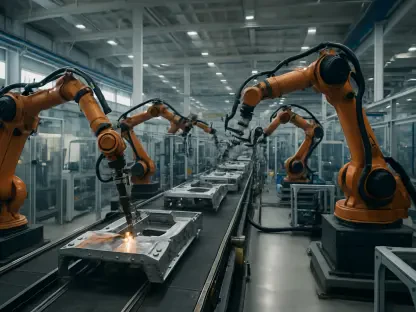
Alongside these new initiatives, EATS continued to feature its highly popular and well-established attractions, with the live production lines once again serving as a major focal point and drawing significant attention from attendees. A signature element of the show since 2017, these fully functional lines represent a remarkable display of industry collaboration. Dozens of companies worked in concert to construct and operate three distinct, end-to-end production lines dedicated to the protein, bakery, and pet food sectors. These complex operations were expertly managed by leading engineering firms Epstein, Gray AES, and Dennis Group, respectively, whose leadership ensured the seamless integration of machinery from numerous suppliers. As highlighted by FPSA’s production lines specialist, Andy Drennan, this feature fundamentally sets EATS apart from other industry events. It offers a rare, firsthand look at integrated processing and packaging technologies operating in a real-world context, a stark contrast to the static equipment displays common at other trade shows.
This dynamic presentation provides a unique, hands-on learning experience that is impossible to replicate in a brochure or video. Attendees were able to witness the entire manufacturing process, from the introduction of raw ingredients to the final packaged product, observing how different pieces of equipment from various manufacturers work together in a synchronized system. This holistic view is invaluable for decision-makers looking to invest in new technology, as it allows them to assess not just individual machine performance but also overall line efficiency, changeover times, and the practical challenges of integration. The visual and operational reality of the production lines provides a powerful educational tool, helping companies visualize how new automation and processing solutions can be implemented within their own facilities to enhance productivity, improve product quality, and ensure food safety. It is this commitment to demonstrating real solutions in motion that solidified the show’s value proposition for thousands of industry professionals.
Comprehensive Educational Programming
Addressing Key Industry Challenges
Education served as a foundational pillar of the EATS 2025 experience, with a robust and comprehensive program meticulously designed to address the most pressing challenges and emerging opportunities in the food production landscape. The program spanned the entire three days of the event and comprised more than 30 distinct sessions, each focused on critical topics such as advancements in food safety, strategies for sustainable manufacturing, the impact of technological innovation, and the practical implementation of automation. The overarching goal of the educational track was to move beyond theoretical discussions and equip attendees with practical tools, new perspectives, and actionable strategies that could be directly implemented to improve their own operations upon returning to their facilities. This commitment to applicable knowledge was evident in the diversity and depth of the content offered throughout the show.
The popular Food For Thought theaters made a successful return, consistently drawing large crowds with a wide range of presentations from industry experts on market trends, consumer behavior, and regulatory updates. The educational offerings were further enhanced with the introduction of new, sector-specific forums, including The Sweet Spot and The Beverage Spot. These focused discussions provided a dedicated platform for attendees in the confectionery and beverage markets to engage in deep dives into the current challenges unique to their segments. These sessions moved beyond generalities to offer tailored, actionable solutions, addressing topics such as sugar reduction technologies and alternative sweeteners in the confectionery industry, as well as water conservation, innovative packaging, and clean-label ingredient sourcing in the beverage sector. This specialized approach ensured that the educational content was highly relevant and provided maximum value to a diverse audience with specific operational needs.
Fostering Hands on Learning
Adding a significant layer of practical, experiential learning, the event featured the “Food Safety Through Design and Management” workshop, a dynamic collaborative effort powered by the Meat Institute and Commercial Food Sanitation. This workshop employed a unique and highly effective hybrid learning model that combined traditional classroom instruction with invaluable hands-on experience directly on the show floor. After the live production lines completed their daily demonstration runs, the equipment was repurposed as a real-world training ground for workshop participants. This innovative approach allowed attendees to move beyond theoretical principles and explore the fundamentals of food safety in a tangible, operational context. The curriculum focused on critical areas such as the principles of sanitary equipment design, where participants could physically inspect machinery and identify potential harborage points or hard-to-clean areas.
This immersive experience provided a rare opportunity to conduct risk assessments and practice sanitation management protocols on state-of-the-art equipment in a non-production environment. Participants learned how to evaluate machinery for compliance with food safety standards and gained practical insights into developing effective and efficient sanitation procedures. By leveraging the fully assembled production lines, the workshop created a learning environment that was immediately applicable to the participants’ own operational realities. The ability to see, touch, and analyze equipment in the context of food safety design provided a level of understanding that far exceeds what can be achieved through presentations or textbooks alone. This commitment to hands-on education empowered attendees with the confidence and knowledge to return to their facilities and implement meaningful improvements to their food safety and compliance programs.
Celebrating Industry Excellence and Looking Ahead
Honoring Innovation and Leadership
A significant aspect of the inaugural EATS was its formal recognition of the excellence and forward-thinking innovation that is propelling the industry forward. The EATS Innovation Awards Ceremony, held on the first day of the event, served to spotlight emerging technologies that are driving significant progress across key industry domains. As noted by Sarah Hatcher, the group show director, the awards were designed to celebrate solutions that are not only technologically advanced but also practical, scalable, and capable of delivering a tangible impact on operations. The 2025 recipients represented a cross-section of critical industry advancements. BESTMIX Procision by BESTMIX Software was honored as Best New Product for its sophisticated software solution that optimizes recipe and production management. For Best New Technology for Sustainability, the award went to Patented Fiber MAP Trays by Cirkla Inc., recognizing their breakthrough in creating environmentally friendly packaging that extends shelf life. Finally, the VOTTATM Ceiling-Mounted Automated Cleaning System by Rbot9 won for Best New Technology for Automation, showcasing a revolutionary approach to improving sanitation efficiency and worker safety.
The show also played host to the 2025 Women’s Alliance Network Red Circle Honors, an important event dedicated to celebrating the achievements of individuals and organizations that are actively advancing leadership roles and promoting equality for women within the food and beverage sector. The ceremony recognized a diverse group of honorees for their significant contributions. Melissa Reinhart of Burns & McDonnell received the Rising Star Award, while Mary Mooney of Mooney Farms was honored with the Career Excellence Award for her long-standing impact. The Innovation and Inspiration Award was presented to Elizabeth Cobb of Intralox, and Matt Jones of Hoosier Feeder was recognized with the Male Ally Award for his dedicated support of female colleagues. The company Alfa Laval, represented by Ester Codina, received the Achievement in Developing and Promoting Women Award. The event was highlighted by a powerful keynote address from Julie Carmardo, CEO of Zweigle’s Inc., who shared profound insights from her journey as a fifth-generation family business leader on fostering leadership and creating meaningful pathways for women in manufacturing.
A Strong Foundation for the Future
The overarching trend evident throughout the event was the industry’s strategic expansion through the cultivation of global partnerships, a theme reinforced by the show’s own initiatives. EATS solidified its role as a vital cross-sector platform by forging a key partnership with the prestigious international trade fair IFFA – Technology for Meat and Alternative Proteins. This significant collaboration integrated IFFA’s globally recognized branding and expertise directly into the Proteins sector at EATS, establishing a strong and mutually beneficial link between the North American and international processing markets. This strategic alliance not only elevates the profile of the protein-focused exhibits at EATS but also provides a direct bridge for North American companies to connect with global trends, technologies, and business opportunities, and vice versa. It signals a clear intention for the show to serve as a nexus for international commerce and knowledge exchange, further enhancing its value proposition for both exhibitors and attendees who operate in an increasingly interconnected global marketplace.
The consensus viewpoint from industry leaders was overwhelmingly positive, framing the inaugural EATS as a successful and important first step that re-energized the industry’s event calendar. Constantin von Vieregge, president and CEO of Messe Frankfurt Inc., expressed encouragement at the high level of participation and engagement, viewing the event’s debut as the creation of a vital platform that effectively connects business, innovation, and technology under one roof. Similarly, Chris Lyons, president of the Food Production Solutions Association (FPSA), affirmed that EATS successfully fills a critical need within the industry by bringing every segment of the supply chain together. This comprehensive approach creates a unique environment where professionals can witness real, integrated solutions in motion and gain hands-on experience with the future-shaping technologies that will define the next era of food and beverage manufacturing. The positive reception and strong industry support have firmly established a solid foundation for the event’s future growth and influence. Looking ahead, the momentum from the inaugural edition is set to carry forward to the next show, which will return to Chicago from October 26–28, 2027.