
As the global campaign against single-use plastics reaches a critical juncture, the resulting market vacuum has created one of the most significant industrial opportunities of the decade, catapulting the humble paper bag from a simple commodity to a strategic asset in the new green economy. The confluence of stringent government regulations, shifting corporate sustainability mandates, and a powerful wave of consumer demand for eco-friendly alternatives has fundamentally reshaped the packaging landscape. This is not merely a fleeting trend but a structural and enduring transformation, positioning the paper bag manufacturing sector at the epicenter of a multi-billion-dollar shift. For entrepreneurs and investors surveying the horizon in 2026, the question is not whether a market for paper bags exists, but rather what it truly takes to capitalize on this profound opportunity. Establishing a manufacturing plant is a capital-intensive undertaking, demanding a meticulous blend of financial planning, technological investment, and operational expertise. Success in this arena is reserved for those who can navigate the complexities of modern manufacturing while aligning their operations with the powerful and irreversible momentum of the global sustainability movement.
The Unstoppable Rise of the Paper Bag Market
Understanding the Modern Paper Bag Industry
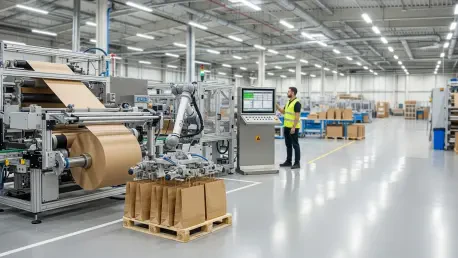
The paper bag manufacturing sector of 2026 bears little resemblance to the rudimentary operations of the past; it has evolved into a highly sophisticated industry where precision engineering, advanced material science, and high-impact graphic design converge. The modern value chain is an intricate process that begins with the complex logistics of sourcing and managing massive rolls of kraft paper, which serve as the primary raw material. From there, the process flows into a technologically advanced production sequence involving high-speed, multi-color printing presses capable of rendering complex brand imagery with stunning clarity. These printed rolls are then fed into fully automated bag-forming machines that precisely cut, fold, and glue the paper into its final shape. Subsequent stages can include the automated attachment of twisted or flat paper handles, the integration of specialized features like die-cut windows, and a battery of rigorous quality control checks to ensure every bag meets exacting standards for strength, durability, and aesthetic appeal. This entire ecosystem represents a significant industrial operation, blending heavy machinery with digital control systems to produce a product that is both a utilitarian container and a vital component of a brand’s identity and environmental commitment.
The industry’s product portfolio is remarkably diverse, tailored to serve a wide spectrum of commercial needs and consumer applications. At the most basic level, a well-equipped plant can manufacture simple yet essential flat paper bags, which are economical solutions for smaller items in merchandise retail and pharmacies. A step up from this are the ubiquitous Self-Opening Style (SOS) bags, characterized by their rectangular, flat bottoms that allow them to stand upright, making them the quintessential choice for grocery stores, bakeries, and quick-service restaurants. For more premium retail environments, such as department stores and boutiques, the industry offers twisted handle and flat handle bags. These variants provide superior strength and a more sophisticated feel, effectively elevating the customer’s post-purchase experience. The product range extends further into specialized categories designed for specific functional requirements. Square and satchel bottom bags offer enhanced stability and capacity for food service and heavier grocery applications, while gusseted bags with expandable sides are ideal for packaging bulkier products. For the most demanding industrial uses, such as packaging cement, chemicals, or agricultural products, manufacturers produce incredibly durable multiwall paper bags constructed from multiple layers of paper for maximum strength and protection against the elements.
A Diverse Product Portfolio for Every Need
The true strength and market adaptability of a modern paper bag plant lie in its capacity for customization and specialization, moving beyond generic products to offer value-added solutions. This advanced capability allows manufacturers to cater to the nuanced demands of various high-margin sectors. A significant area of specialization is in custom-printed shopping bags, which serve as mobile billboards for retail brands, transforming a simple packaging item into a powerful marketing tool. This requires investment in high-fidelity printing technologies like flexography and offset printing, along with sophisticated color management systems to ensure brand consistency. Another critical and growing category is food-grade bags, which must comply with stringent health and safety standards, such as those set by the FDA. Manufacturing these products necessitates the use of approved materials, inks, and adhesives, as well as maintaining a meticulously clean production environment to prevent contamination. This specialization opens up lucrative markets in the restaurant, fast-food, and gourmet food industries, which have a continuous and high-volume demand.
Furthermore, the industry addresses specific functional challenges with innovative designs and materials. For instance, the production of grease-resistant bags is essential for the fast-food sector, requiring the application of specialized coatings or the use of papers with inherent barrier properties to contain oils and prevent leakage. For premium products or items where visibility is key, such as artisanal bread or confectionery, manufacturers can produce windowed bags by integrating a transparent film patch into the paper structure. This process requires specialized window patching equipment that adds a layer of complexity to the production line but also commands a higher price point. The ability to offer laminated bags, which feature a protective film for enhanced moisture resistance and durability, and to provide sophisticated finishing options like spot UV coating, embossing, or debossing, allows a plant to compete in the luxury packaging market. By developing a diverse portfolio that includes these specialty products, a paper bag manufacturer can insulate itself from the commoditization of standard bags and build a more resilient, profitable, and market-leading business.
The Global Tailwinds Fueling Demand
The meteoric rise in demand for paper bags is not a matter of chance but the direct result of a powerful and interconnected series of global trends that are fundamentally reshaping the packaging industry. The primary catalyst is the sweeping wave of environmental legislation enacted by governments at local, national, and international levels. These stringent regulations, which often include outright bans on single-use plastic bags and other plastic packaging, have created a legally mandated market shift, compelling businesses across the retail and food service sectors to seek sustainable alternatives. This legislative pressure acts as a powerful and non-negotiable driver of demand, guaranteeing a baseline market for paper-based solutions and providing a stable foundation for investment in manufacturing capacity. This regulatory environment is not static; it continues to evolve, with an increasing number of jurisdictions expanding the scope of plastic restrictions, thereby continually enlarging the addressable market for paper bag producers.
This government-led push is powerfully reinforced by a profound and authentic shift in both corporate and consumer consciousness. On the corporate side, sustainability is no longer a peripheral marketing tactic but a core component of brand identity and corporate social responsibility. Major global retailers, consumer goods companies, and e-commerce giants are making public, time-bound commitments to reduce their plastic footprint and transition to sustainable packaging materials. These corporate policies create a massive, top-down demand for paper bags, as these companies seek reliable, large-scale suppliers to help them meet their environmental goals. Simultaneously, a parallel transformation is occurring at the grassroots level. Consumers are more environmentally aware than ever before and are increasingly making purchasing decisions based on a company’s perceived commitment to sustainability. They actively prefer and often demand eco-friendly packaging, viewing the choice between a plastic and a paper bag at the checkout counter as a reflection of their personal values. This consumer preference creates a powerful bottom-up incentive for businesses to adopt paper packaging, as it directly impacts customer loyalty and brand perception in a competitive marketplace. The sustained growth of the e-commerce sector has also opened up a vast new frontier for paper-based packaging, with paper mailers and bags becoming the preferred solution for shipping a wide variety of goods.
Deconstructing the Investment What It Really Costs to Start
Laying the Foundation Land and Infrastructure
The foundational investment for any paper bag manufacturing plant begins with the strategic acquisition and development of a suitable physical site, a decision that has long-term implications for operational efficiency and profitability. The process of site selection is a critical first step, requiring a thorough analysis of several logistical and economic factors. Proximity to raw material suppliers, particularly paper mills, is paramount, as it can significantly reduce inbound transportation costs and ensure a stable supply of kraft paper. Equally important is access to a skilled labor pool with experience in manufacturing and machine operation. The site should also be strategically located near major commercial markets and be well-connected to robust transportation networks, including highways and ports, to facilitate the efficient distribution of finished goods to customers. Once a location is secured, whether through purchase or long-term lease, the next phase involves substantial investment in site preparation and infrastructure development. This includes leveling the land, laying strong foundations, and constructing a facility with reinforced concrete flooring capable of withstanding the immense weight and vibrations of heavy industrial machinery.
Inside the facility, the design and layout are critical for optimizing workflow and maximizing productivity. A well-designed plant will feature clearly demarcated and logically sequenced areas for each stage of the operation. This includes a climate-controlled warehouse for storing large kraft paper rolls to prevent moisture damage, a dedicated production hall with ample space for machinery and material movement, and an organized storage area for finished goods awaiting shipment. The infrastructure plan must also incorporate comprehensive utility and support systems. This entails installing a high-capacity electrical system with robust distribution networks to power the energy-intensive machinery, along with a powerful compressed air system that is essential for many automated functions. To mitigate the risk of production stoppages due to power failures, the installation of backup power generators is a non-negotiable investment. Furthermore, the facility must include essential employee amenities, administrative offices for management and sales staff, and robust security and fire suppression systems to protect the significant capital investment in machinery and inventory. These foundational elements, while less visible than the production equipment, are absolutely essential for creating a safe, efficient, and scalable manufacturing environment.
The Heart of the Operation Core Machinery
The most significant portion of the initial capital expenditure is allocated to the acquisition of core manufacturing equipment, which forms the technological heart of the entire operation. This machinery is highly specialized and is typically segmented by function, beginning with the printing section. For a plant aiming for versatility and high-volume output, the primary investment will be in a multi-color flexographic printing press, which is ideal for high-speed, cost-effective printing on paper rolls. For clients demanding premium, high-resolution graphics, such as those in the luxury retail sector, an offset printing press may also be necessary. The investment in printing does not end with the presses themselves; it requires a host of essential support systems. These include UV curing systems to instantly dry inks, advanced color management software to ensure brand consistency, and in-house plate-making equipment. Critical components like anilox rollers and doctor blade systems, which control ink application, along with automated inspection systems to detect print defects in real time, are also vital for maintaining high-quality standards and minimizing waste.
The central piece of the production floor is the paper bag making section, which requires a suite of fully automatic machines tailored to the desired product mix. A versatile plant will invest in several types of machines, including square bottom bag machines for grocery and retail applications, V-bottom or SOS machines for food service, and flat bag machines for smaller merchandise. For manufacturers targeting the industrial sector, dedicated multiwall bag production lines, which are significantly more complex and robust, represent a major investment. Modern bag-forming machines are marvels of integration, often featuring inline systems that perform multiple functions in a single pass. These can include handle attachment units for twisted or flat handles, die-cut handle punching modules, bottom gusseting mechanisms, and applicators for reinforcement patches. Precise gluing, folding, and cutting systems are all seamlessly integrated and controlled by sophisticated software, while automated batch counting and stacking systems at the end of the line prepare the finished bags for packaging, minimizing the need for manual labor. This high level of automation is crucial for achieving the speed, consistency, and cost-efficiency required to compete in the modern market.
Essential Supporting Systems and Capital
Beyond the primary production machinery, a substantial investment is required in a range of essential supporting systems and ancillary equipment that are critical for quality control, operational efficiency, and regulatory compliance. A non-negotiable component of a modern plant is a dedicated quality control laboratory equipped with a comprehensive suite of testing instruments. This lab must be able to verify the physical integrity of the products, requiring equipment such as tensile strength testers, burst strength testers to measure pressure resistance, handle pull testers, and tear resistance testers. To ensure the raw materials meet specifications, the lab will also need material property analyzers, including grammage testers to verify paper weight and thickness, moisture content analyzers to prevent issues like curling or weak glue adhesion, and spectrophotometers for precise color matching to meet strict brand guidelines. For plants serving the food industry, additional investment is required in equipment for food contact compliance testing to ensure that no harmful substances migrate from the packaging to the food, a critical requirement for gaining FDA or EU approval.
The supporting infrastructure extends to the plant’s utility and environmental control systems. This includes the aforementioned robust electrical infrastructure and compressed air systems, as well as comprehensive HVAC systems to maintain optimal temperature and humidity levels within the production and storage areas, which is crucial for both machine performance and material integrity. In an era of rising energy costs and environmental scrutiny, investing in systems for waste heat recovery can offer significant long-term savings. Equally important are the environmental management systems. Air quality control systems, such as volatile organic compound (VOC) abatement technology, are often required to manage emissions from printing inks and solvents. A wastewater treatment facility may be necessary to process effluent from cleaning processes, and a comprehensive paper waste collection and recycling program is essential for both regulatory compliance and demonstrating a commitment to sustainable operations. Finally, prospective investors must account for the significant costs associated with pre-operative expenses and working capital. These funds, which are required before a single bag is sold, cover crucial preliminary activities like feasibility studies, obtaining industrial licenses, equipment installation, staff recruitment and training, and initial marketing campaigns. The working capital component ensures the business has the liquidity to cover the initial procurement of raw materials, meet payroll, and pay utility bills during the ramp-up period before revenue streams become stable and self-sustaining.
Tailoring Your Venture Key Factors That Define Your Budget
Scale and Ambition
The total capital investment required to launch a paper bag manufacturing plant is not a single, fixed figure but rather a highly variable sum determined by the strategic choices made regarding the scale and ambition of the operation. The spectrum of possibilities ranges from a small, localized venture to a large, industrial-scale enterprise, with each level carrying a distinct cost structure and market focus. A small-scale plant, designed to produce between 50,000 and 200,000 bags per day, represents the most accessible entry point into the market. Such an operation typically focuses on serving local or niche markets, such as independent retailers, local restaurant chains, and community events. The capital intensity is lower, often relying on more basic, semi-automatic machinery and a smaller physical footprint. While this approach minimizes the initial financial risk, it also comes with limitations, including lower economies of scale, higher per-unit production costs, and a reduced capacity to compete for large, national contracts.
In contrast, a medium-scale facility, with a production capacity ranging from 200,000 to 500,000 bags per day, is positioned to serve regional markets and larger commercial clients. This level of operation requires a more substantial investment in higher-speed, more automated machinery and a larger, more organized facility. The goal is to strike a balance between production volume, product diversity, and operational efficiency. Such a plant can offer a wider range of bag types and custom printing options, making it an attractive partner for regional grocery chains, department stores, and growing e-commerce businesses. At the highest end of the spectrum is the large-scale plant, designed for national or even global supply chains with a production capacity exceeding 500,000 bags per day. This model is built on the principles of maximum automation, efficiency, and economies of scale. It demands the highest level of capital investment, featuring state-of-the-art, fully integrated production lines, advanced robotics for material handling, and sophisticated plant management software. While the initial outlay is immense, this scale allows for the lowest possible per-unit production cost, making the plant highly competitive for securing contracts with major multinational corporations and big-box retailers. The strategic decision of where to position the venture on this scale is the single most important factor in determining the overall project budget.
Product Specialization and Automation
Another critical set of strategic decisions that profoundly influences the initial investment revolves around the intended product range and the chosen level of technological automation. A plant that focuses exclusively on producing standard, unprinted commodity bags, such as basic grocery or checkout bags, will have a relatively straightforward and less expensive machinery requirement. The core investment would be in reliable, high-speed bag-forming machines without the need for complex printing or finishing equipment. This business model relies on high-volume production and thin margins, competing primarily on price. However, if the strategic vision is to target the more lucrative high-end market, the cost structure changes dramatically. Manufacturing custom-printed, multi-color luxury retail bags with features like lamination, spot UV coatings, and premium handles necessitates a significant investment in advanced printing presses, sophisticated finishing machines, and more precise converting equipment. Similarly, specializing in certified, food-grade industrial bags requires not only specialized machinery but also investment in a controlled production environment and extensive testing protocols to meet stringent regulatory standards. Each step up in product complexity and value adds a corresponding layer of capital cost.
The level of automation chosen creates a fundamental financial trade-off between initial capital expenditure and long-term operational costs. A business model based on manual or semi-automatic operations will have a significantly lower barrier to entry in terms of upfront investment in machinery. This approach relies more heavily on skilled labor for tasks like material loading, quality inspection, and packing. While this reduces the initial capital outlay, it typically results in higher ongoing operational costs due to labor expenses, lower production speeds, and potentially higher rates of human error and material waste. Conversely, a fully automated, integrated production line represents the highest initial investment. These state-of-the-art systems can run with minimal human intervention, featuring automated roll loading, inline quality inspection using computer vision, and robotic palletizing of finished goods. The upfront cost for such technology is substantial, but it pays dividends over the long term through dramatically lower labor costs, higher throughput, unparalleled consistency, and minimal waste. This approach maximizes operational efficiency and provides the lowest possible per-unit production cost, which is a decisive competitive advantage, particularly in high-volume markets. The choice between these two philosophies is a strategic one that must align with the company’s long-term goals, target market, and available capital.
Vertical Integration and Quality Standards
The financial blueprint of a paper bag plant is also heavily shaped by decisions regarding the level of vertical integration within the production process. This strategic choice determines which stages of manufacturing are performed in-house versus which are outsourced, directly impacting both capital requirements and operational control. The least capital-intensive model is a “converting-focused” operation. In this setup, the plant purchases pre-printed paper rolls from a third-party supplier and focuses solely on the cutting, folding, and gluing processes to form the bags. This approach significantly lowers the barrier to entry by eliminating the need to invest in expensive printing presses and the associated support infrastructure. However, this cost saving comes at a strategic price: a complete dependency on external suppliers for a critical component of the value chain. This can lead to longer lead times, reduced control over print quality, and potentially lower profit margins, as the value-added by the printing process is captured by the supplier.
A more integrated approach, and a more common model for competitive plants, involves bringing both printing and converting functions in-house. While this requires a substantially higher investment in flexographic or offset printing presses, it provides complete control over the entire production process from raw paper to finished bag. This integration allows for greater flexibility in scheduling, faster turnaround times for custom orders, and the ability to ensure consistent quality from start to finish. It also enables the manufacturer to capture a larger portion of the value chain, leading to better overall profit margins. The highest level of vertical integration involves establishing in-house handle manufacturing capabilities as well. Instead of purchasing pre-made twisted paper rope or flat handles, the plant invests in specialized machinery to produce these components on-site. This adds another layer of capital investment but provides maximum control over quality, cost, and supply chain reliability for a critical component. Furthermore, the required investment in quality control infrastructure and compliance systems will escalate significantly depending on the target market’s standards. Achieving food contact compliance with bodies like the FDA or the EU, obtaining environmental certifications such as those from the Forest Stewardship Council (FSC), or becoming an approved supplier for major retail chains all necessitate investment in advanced testing equipment, rigorous documentation processes, and adherence to strict operational protocols, thereby increasing the overall project cost.
The Path to Profitability Maximizing Your Return
Revenue Streams and Cost Management
The financial success of a paper bag manufacturing plant hinges on its ability to build a diverse and resilient portfolio of revenue streams while meticulously managing its operational cost structure. A well-positioned plant will not rely on a single market segment but will actively generate sales across a wide spectrum of sectors to mitigate risk and maximize opportunities. The primary revenue drivers are typically the retail and grocery sectors, which provide high-volume, consistent demand for shopping and checkout bags. The food service industry, including restaurants and fast-food chains, represents another stable and lucrative market for various types of food-grade and grease-resistant bags. The booming e-commerce sector has opened up a massive new channel for paper-based mailers and protective packaging. Beyond these core markets, significant revenue can be generated from industrial applications, which require heavy-duty multiwall bags for products like cement and agricultural goods. To further enhance profitability, manufacturers can pursue high-margin opportunities in custom-branded promotional bags for corporate events and marketing campaigns. Exploring private label manufacturing for other brands and tapping into export markets can also provide additional, valuable income streams.
On the other side of the ledger, maintaining profitability requires a relentless focus on cost management and operational efficiency. The cost structure of a typical paper bag plant is heavily weighted toward raw materials, with kraft paper, inks, and adhesives often accounting for 45% to 60% of the total operating expenses. Therefore, strategic sourcing is paramount. Negotiating long-term contracts with paper mills, diversifying suppliers to mitigate price volatility, and implementing a robust inventory management system to minimize waste are all critical for protecting the bottom line. The next largest cost category is typically direct labor, which can represent 10% to 18% of expenses, making investments in automation and workforce training crucial for improving productivity. Electricity and other utilities usually account for 8% to 12% of costs, highlighting the importance of energy-efficient machinery and practices like waste heat recovery. The remaining overheads, including maintenance, administration, and sales, also require careful management. Ultimately, the profitability of the venture is determined by the spread between the revenue generated from a diverse customer base and the tightly controlled costs of production, making both sides of the equation equally important for long-term financial health.
The Levers of Success and Risk Mitigation
Achieving and sustaining profitability in the paper bag manufacturing industry requires the masterful execution of several key performance indicators that act as the primary levers of success. At the forefront is the optimization of material utilization. Given that paper is the largest cost component, minimizing waste during the cutting and converting process is crucial. Even small improvements in efficiency can have a significant impact on profitability. This is closely linked to production efficiency, which involves maximizing machine uptime and throughput. This is achieved through a combination of advanced automation, a well-trained and motivated workforce, and a proactive preventive maintenance program to avoid costly, unscheduled downtime. Securing raw materials at competitive prices through strategic sourcing and long-term supply contracts is another critical factor that can provide a significant cost advantage. Furthermore, operating the plant at or near its full capacity is essential for spreading fixed costs, such as rent and administrative salaries, over a larger volume of output, thereby lowering the per-unit cost. Maintaining impeccable quality consistency is non-negotiable, as minimizing defects and customer rejections protects both profit margins and the company’s reputation. Finally, a key driver of success is the ability to offer value-added services, such as high-quality custom printing, innovative designs, and specialty finishes, which allow the company to capture premium pricing and differentiate itself from competitors focused solely on commodity products.
Alongside these success factors, a proactive and comprehensive risk management strategy is essential for ensuring the long-term viability of the venture. One of the most significant risks is the inherent volatility of paper prices, which can be subject to global market fluctuations. This risk can be mitigated through a combination of long-term supply contracts, diversifying sourcing across multiple suppliers and geographic regions, and incorporating flexible pricing models into customer contracts. Another potential pitfall is customer concentration, or an over-reliance on a small number of large clients. This can be addressed by actively diversifying the customer base across multiple industry sectors and geographical markets. The risk of quality failures, which can lead to costly rejections and damage to the brand’s reputation, is best prevented by implementing a rigorous, multi-stage quality control process, from raw material inspection to finished product testing. Staying ahead of regulatory changes, such as new environmental laws or food safety standards, requires continuous monitoring and maintaining a flexible and adaptable production process. The threat of technology obsolescence can be countered by a commitment to continuous investment in equipment upgrades and ongoing training for the workforce. Lastly, managing competition from alternative packaging materials requires a strategy focused on emphasizing the strong environmental credentials of paper, achieving cost competitiveness through operational excellence, and specifically targeting eco-conscious market segments that value sustainability.
A Strategic Blueprint for Sustainable Success
The comprehensive analysis of establishing a paper bag manufacturing plant revealed that it was a venture defined by significant capital requirements, with the final investment figure being heavily contingent on strategic choices regarding operational scale, technological sophistication, and product specialization. However, the investigation also confirmed that the powerful and enduring global shift away from plastics had created a compelling and highly lucrative business opportunity. The demand for paper bags was not identified as a fleeting trend but as a fundamental and structural change within the global packaging industry, a transformation driven by the combined forces of legislative action, corporate policy, and deeply held consumer values. The project’s success ultimately required more than just financial investment; it demanded an unwavering commitment to operational excellence, stringent quality control, responsive customer satisfaction, and a core philosophy of sustainability. The entrepreneurs and investors who successfully navigated this landscape were those who effectively combined advanced manufacturing technology with strategic raw material sourcing, highly efficient production workflows, and the cultivation of strong, long-term market relationships. By doing so, they were well-positioned not only to achieve significant economic returns but also to make a tangible and positive environmental impact within the critical and expanding sustainable packaging sector.