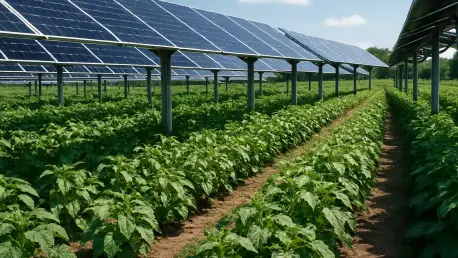

The global agricultural landscape is currently undergoing a radical transformation as farmers seek to balance the rising demand for food production with the urgent need for sustainable energy solutions that do not compromise land utility. This shift is most visible in the rapid adoption of agrivoltaics, a dual-use strategy where solar energy systems are integrated directly into active farmland. Norbut Solar Farms, a pioneering developer in New York, has successfully turned traditional dairy pastures into high-tech landscapes that produce both kilowatts and crops. This model addresses a historical tension where renewable energy projects often competed with agriculture for prime soil. By placing solar arrays above grazing lands or specialty crops, landowners are finding that they no longer have to sacrifice their heritage for modern progress. As the industry moves from 2026 to 2030, this synergy is becoming the standard for efficiency, providing a blueprint for the nearly two million farms across the nation. This approach proves that the land can serve multiple masters simultaneously while maintaining its long-term ecological health and agricultural productivity.
The Evolution of Energy Consumption on the Modern Farm
Agriculture has historically been an energy-intensive sector, accounting for a significant portion of total energy consumption while relying heavily on traditional diesel fuels for machinery and operations. While diesel is valued for its high energy density and reliability, its continued use presents a significant challenge to meeting carbon-neutrality goals due to the greenhouse gas emissions associated with combustion. The transition to agrivoltaics offers a localized solution to this dilemma by generating clean electricity exactly where it is needed most. Norbut Solar Farms has demonstrated that these installations can produce hundreds of megawatts, providing enough power to support tens of thousands of homes while fueling on-farm electrified equipment. This decentralized energy model reduces the strain on the national grid and minimizes the carbon footprint of food production. By capturing sunlight above the same fields that produce food, farmers are effectively doubling their land’s efficiency without expanding their physical footprint.
The technical synergy between solar panels and plant biology goes far beyond simple land-sharing; it creates a microclimate that can actually improve agricultural outcomes during increasingly volatile weather patterns. Solar panels provide strategic shade that reduces the soil temperature and slows the evaporation of water, which is particularly beneficial for heat-sensitive crops and moisture retention in arid regions. This controlled environment allows farmers to maintain consistent yields even during periods of intense heat that would otherwise stress traditional open-field crops. Furthermore, the structures supporting the solar arrays can be designed to facilitate rainwater collection or provide shelter for livestock, such as sheep, which help manage vegetation around the panels through natural grazing. This symbiotic relationship ensures that the presence of energy infrastructure does not degrade the soil quality but rather enhances the overall resilience of the ecosystem. By prioritizing the health of the soil and the local pollinator habitats, these projects ensure that the land remains fertile for decades to come.
Economic Viability and the Future of Rural Revenue
Financial sustainability remains a primary driver for the adoption of agrivoltaic systems, as modern farming operations face fluctuating market prices and rising operational costs. By integrating solar energy production, landowners can establish a dual revenue stream that provides a steady income regardless of crop performance or weather-related harvest losses. Statistical data suggests that these systems can increase the total income per acre by approximately 30% while simultaneously reducing on-site electricity costs by as much as 40%. This economic cushion is vital for small and medium-sized family farms that are often vulnerable to the consolidation pressures of the current market. As the industry expands from 2026 to 2032, the capital investment required for these installations is increasingly offset by government incentives and long-term energy purchase agreements. This shift transforms the farm from a purely agricultural enterprise into a diversified energy hub, ensuring that rural communities remain economically vibrant and capable of supporting the next generation of agricultural professionals.
Moving forward, the successful implementation of agrivoltaics required a coordinated effort between policymakers, agricultural experts, and technology developers to ensure that energy goals did not overshadow food security. Strategic planning focused on site-specific designs that accommodated local crop varieties and soil conditions, rather than applying a one-size-fits-all approach to solar installation. It became clear that the integration of pollinator-friendly vegetation underneath panels was essential for supporting local biodiversity and improving the pollination rates of nearby crops. To maximize the benefits of this technology, stakeholders prioritized the development of transparent leasing agreements that protected the long-term interests of the farmers. These initiatives established a framework where renewable energy and traditional farming coexisted as complementary pillars of the rural economy. The transition necessitated a shift in perspective, viewing the farm not just as a source of food, but as a multifunctional landscape capable of sustaining both the people and the planet through innovative resource management and shared land usage.