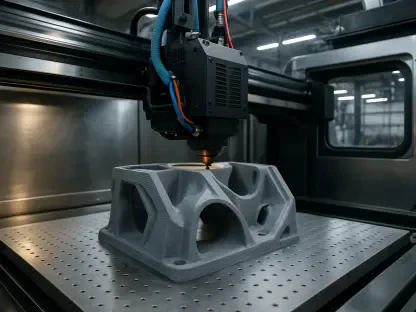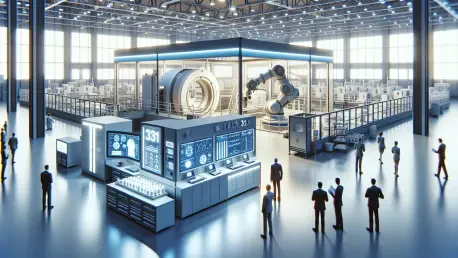

Packed aisles, 803 exhibitors, and roughly 50,000 m² of machines, software, and services created a striking signal: the industrial additive manufacturing market is shifting from capability theater to measured production value, with buyers comparing takt time, quality loops, and total cost of ownership rather than showpiece parts.
Market context and purpose
This analysis examines how Formnext’s tenth edition reframed AM as a production tool anchored in throughput, qualification, and profitability. The fair functioned as a barometer, revealing where demand concentrates, how supply responds, and which enablers close the gap between pilot and plant. The goal here is to translate show-floor signals into a forward view of market direction.
What stood out was not a single breakthrough but the orchestration of the entire process chain: design for AM, stabilized materials, automated powder handling, integrated MES/QMS, and post-processing that no longer behaves like an uncontrolled cost center. The event mattered because it connected technical progress to buyer priorities—compliance, repeatability, and predictable unit economics.
Demand signals from the show floor
High footfall aligned with product premieres that emphasized ROI: cycle-time cuts, lights-out cells, and closed-loop quality using in‑situ monitoring and CT feedback. Application narratives carried weight—qualified aerospace brackets, sterilization-ready medical devices, and tooling programs with compressed payback—demonstrating that AM revenue increasingly comes from production rather than prototyping.
However, the demand profile remained selective. Automotive procurement pressed for price stability and volume, aerospace insisted on documentation depth and process control, and medical buyers prioritized biocompatibility and validated sterilization paths. These constraints channeled interest toward vendors offering not just machines, but software, services, and training bundled into a coherent deployment model.
Technology and process chain economics
On technology, buyers compared binder jet for batch economics, LPBF for lattice complexity and performance parts, photopolymer for medical models and tooling aids, and DED for repair and large-format builds. The decisive factor was less about headline resolution and more about process capability under real constraints—material availability, post-process time, and inspection throughput.
The economics pivoted on the invisible factory: automated depowdering, robotic finishing, powder traceability, and integrated data from design intent to inspection record. Vendors that tied machine health, parameter sets, and genealogy into MES/QMS positioned themselves as lower-risk partners. The market response suggested a premium on uptime, scrap predictability, and standardized data schemas that ease audits and accelerate PPAP and certification.
Ecosystem, talent, and access dynamics
Formnext’s program reinforced adoption levers often overlooked in capital placement. Discover3DPrinting, DeepDives, guided post-processing tours, and live lines translated theory into playbooks. These sessions equipped teams with parameter windows, fixture strategies, and QA plans—converting interest into implementation steps.
The ecosystem lens also mattered. Start-ups showcased niche innovations and speed, while established suppliers offered validation depth and global support networks. VDMA’s Additive4Industry track framed hybrid lines that pair AM with machining and finishing, addressing factory integration. Meanwhile, Formnext streAM extended content to distributed teams, enabling synchronized training and vendor evaluation across locations—an underrated accelerator for multi-site rollouts.
Outlook and projections
Over the next 6–12 months, the market is set to favor software-defined production: broader deployment of closed-loop control, machine learning for anomaly detection, and MES/QMS integrations that reduce manual handoffs. Expect materials portfolios to center on cost-stable, application-qualified alloys and engineering polymers, with feedstock reuse and recyclability monitored as standard KPIs rather than side notes.
Economically, procurement will push for transparent TCO models, service-level agreements tied to quality metrics, and subscription stacks that bundle monitoring, analytics, and compliance updates. Certification pathways in aerospace, medical, and energy will continue to codify, trimming time to revenue. The practical outcome is likely fewer proofs of concept and more multi-cell ramps designed from day one for inspection throughput and workforce coverage.
Strategic implications and next steps
The clearest takeaway was that industrial AM returns depended on disciplined process design, not just machine choice. Firms that mapped design-to-inspection, quantified post-processing, and standardized data early reduced risk and sped qualification. Selecting applications by certification pathway, materials readiness, and repeatability—rather than novelty—improved payback certainty.
From these signals, the immediate moves were straightforward: stand up pilots with explicit KPIs (scrap reduction, lead-time compression, tooling elimination), pair hardware with training and QA plans, and adopt open data structures that support genealogy and traceability. Engagement with start-ups for agility, incumbents for validation, and industry groups for integration benchmarks formed a pragmatic path to scale.
Bottom line
Taken together, the fair marked a pivot from experimentation to execution, where AM competed on unit economics, compliance, and uptime. The market now favored providers that bundled machines with software, services, and training to deliver predictable production outcomes. For adopters, the winning playbook centered on application fit, end-to-end data, and automated post-processing, supported by ecosystem partnerships and continuous learning infrastructures.