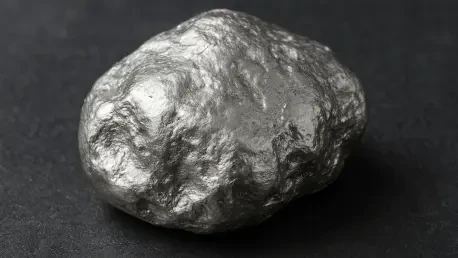

The global chemical industry is grappling with a severe financial challenge as platinum, a metal indispensable to countless synthesis processes, experiences a price surge of historic proportions. This dramatic and volatile escalation has sent shockwaves through manufacturing sectors, forcing companies to address operational costs that can no longer be absorbed through internal efficiency improvements alone. Since early 2025, the price of this crucial catalyst has more than doubled, rocketing from an average of about $41,000 per kilogram to an unprecedented peak of $91,176 on January 26. Although the price has since settled to around $74,000, this new reality has created a challenging economic environment, triggering a fundamental re-evaluation of pricing structures and operational strategies. This is not merely a market fluctuation; it is a systemic pressure that is compelling a broad recalculation of business viability across the chemical supply chain.
A Shockwave Through the Supply Chain
The direct consequences of this price shock are starkly illustrated by the defensive measures taken by major industry players. Wacker Chemie, a prominent German specialty chemical manufacturer, provided a clear example by implementing a substantial price increase of more than 25% for some of its silicone products, which became effective on February 1. This decision was not arbitrary but was explicitly attributed to the sharp rise in commodity costs, with a particular emphasis on platinum. The noble metal is an essential catalyst for the company, used in critical processes such as the curing of cross-linking silicone release agents and the manufacturing of addition-curing silicone products. Tom Koini, the head of Wacker’s silicones division, articulated the difficult position the company was in, stating that the current price trend had surpassed a threshold where it could be absorbed through efficiency optimizations. He stressed that the company had reached a critical juncture, making the transfer of these increased costs to the market an unavoidable necessity.
This challenging situation is not an isolated incident but rather a symptom of a broader, industry-wide predicament that is affecting numerous sectors reliant on platinum-based catalysis. According to Sebastian Bray, a stock analyst for Berenberg Bank, platinum holds an important role in catalysts used throughout several segments of the chemicals industry. While Bray notes that platinum is not typically a large component of the overall cost structure when producing chemicals, the current extreme and volatile prices are significant enough to compel companies to make necessary adjustments to their product pricing. This pressure is most acutely felt within select value chains where platinum dependence is high. This expert analysis confirms a targeted but substantial impact, suggesting that while not all chemical products will be affected equally, those that are will see significant price adjustments, creating a ripple effect that extends from manufacturers to end consumers and disrupting established economic models.
The Drivers and the Inevitable Pivot
The underlying market dynamics driving this price escalation are multifaceted, stemming from a fundamental imbalance between supply and demand. A recent report from the World Platinum Investment Council (WPIC), an organization focused on stimulating platinum demand, identified two primary factors contributing to the current crisis. First, a significant supply deficit has severely constrained the availability of the metal. The council’s data indicates that above-ground stocks have plummeted by a staggering 49% since 2022, creating a classic supply-side squeeze. Second, this scarcity has been compounded by a notable uptick in platinum purchasing by investors, who are increasingly turning to precious metals as a hedge against macropolitical uncertainty. The WPIC predicts that the persistence of high prices will likely have a dual effect on the market: it will incentivize an increase in supply, particularly through enhanced recycling efforts, while simultaneously eroding some demand as industries and consumers actively seek alternatives or reduce consumption.
In response to this new economic reality, different business models are leading to varied strategies for managing the price shock. Catalyst maker Evonik Industries, for example, has stated that the direct price of its platinum-containing catalysts will not increase for its clients. This is because, under their business model, the customers own the precious metal contained within the catalysts they purchase. However, this approach does not fully insulate the customer from rising costs. Evonik clarified that the overall expense for the customer will still rise due to the inevitable, albeit small, losses of the precious metal that occur during the synthesis process. With the base value of platinum being significantly higher, the financial impact of these operational losses becomes much more pronounced. To counter this, Evonik is actively working to mitigate these effects by focusing on increasing the efficiency of its catalysts to require less platinum per reaction and by offering a portfolio of alternative catalysts that do not contain any precious metals.
An Accelerated Quest for Alternatives
The recent price surge has acted as a powerful accelerant for a pre-existing and growing trend within the scientific and industrial communities: the search for viable substitutes for platinum and other costly noble metals. A comprehensive literature review conducted by CAS (Chemical Abstracts Service) confirms a rising number of published research papers dedicated to developing noble metal substitutes. This research is particularly active in the field of electrocatalysis, which is critical for emerging technologies like fuel cells and water electrolysis, where platinum has traditionally been the go-to material. The primary focus of this research is on the less costly and more abundant transition metals found on the first row of the periodic table, from scandium to zinc. These elements are being investigated as central components in efforts to replace platinum across a wide range of applications, including industrial catalysis, energy generation, and advanced materials science, signaling a long-term strategic pivot away from reliance on a single, volatile commodity.
This long-term trend toward substitution has been significantly bolstered by the compelling economic incentive to move away from expensive and price-volatile noble metals. The current market conditions have turned a gradual scientific pursuit into an urgent industrial priority. Promising breakthroughs are already emerging from this intensified research effort. A notable example comes from the University of Rochester, where scientists have identified a tungsten carbide-based catalyst that demonstrates the potential to effectively replace platinum in hydrogenation reactions, a fundamental and widely used process in industrial chemistry. The success of such research provided a clear pathway toward a future where chemical manufacturing is less dependent on the whims of the precious metals market. The industry’s forced adaptation had, in effect, catalyzed its own evolution, pushing innovation in materials science to the forefront as a necessary strategy for survival and future growth.