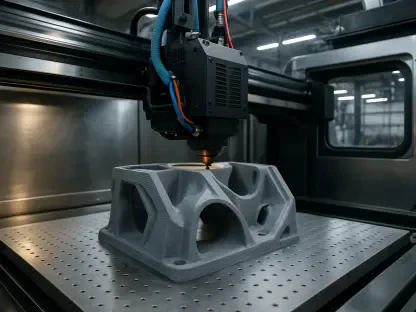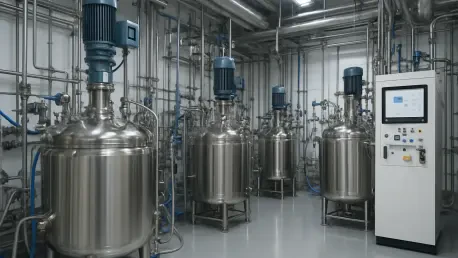

A seismic shift is underway across the American industrial landscape, where an unprecedented surge of capital is fueling the rapid expansion of facilities designed to produce the next generation of life-saving medicines. This article analyzes the unprecedented surge in U.S. biomanufacturing investment, examining the core drivers behind this “super-cycle.” It addresses the central question of whether this rapid growth is a sustainable, long-term trend or a temporary boom facing insurmountable challenges.
Defining the “Super-Cycle” in American Biomanufacturing
The term “super-cycle” aptly describes the current period of accelerated growth, characterized by investment levels that dramatically outpace historical norms and other leading industrial sectors. This is not a mere cyclical upswing but a foundational realignment of the nation’s capacity to develop and produce complex biologics, cell therapies, and other advanced medical treatments. The momentum suggests a deliberate, strategic effort to solidify the United States as a global leader in pharmaceutical innovation and production.
At its core, this analysis seeks to determine the longevity of the current boom. The central tension lies between the massive influx of capital, which signals long-term confidence from major industry players, and the significant operational headwinds that threaten to derail progress. Understanding this dynamic is crucial for stakeholders, from policymakers and investors to local communities, as they navigate the opportunities and challenges presented by this transformative period.
The Confluence of Capital, Policy, and Onshoring
The recent boom is fueled by a 20% spike in pledged investment, driven by policy shifts, tariff uncertainties, and a strategic national effort to onshore pharmaceutical production. This context is critical, as nearly $50 billion in new facility announcements since 2024 underscores a fundamental shift toward building a more resilient domestic supply chain. This figure, representing an 80% increase over the capital expenditures announced between 2021 and 2024, points to a concerted move away from reliance on foreign manufacturing and toward domestic self-sufficiency.
This strategic pivot is not merely a reaction to recent global disruptions but a proactive investment in national health security and economic competitiveness. Government incentives and a shifting geopolitical landscape have created a fertile environment for domestic expansion, encouraging pharmaceutical giants to commit to long-term, large-scale infrastructure projects on U.S. soil. The result is a powerful combination of public-sector encouragement and private-sector ambition, creating a wave of development that is reshaping regional economies.
Research Methodology, Findings, and Implications
Methodology
This summary is based on a synthesis of industry-leading data sources to provide a comprehensive view of the biomanufacturing landscape. The analysis of capital investment trends, regional market competitiveness, and new facility announcements relies primarily on reports from the commercial real estate firm Newmark. These macroeconomic indicators provide a clear picture of the scale and geographic distribution of the ongoing expansion.
To assess the human capital side of the equation, this research integrates workforce statistics from the 2025 Cytiva Global Biopharma Index. This data offers critical insights into labor market dynamics, highlighting emerging talent shortages and the specific skill sets in highest demand. By combining investment data with on-the-ground workforce realities, the methodology aims to create a holistic and nuanced understanding of the sector’s health and sustainability.
Findings
A massive influx of capital is concentrated in key regional hubs, with the Northeast and Southeast, particularly North Carolina, emerging as dominant markets. The Northeast has secured nearly $12 billion in new project announcements, but the Southeast is experiencing particularly intense growth. North Carolina’s Research Triangle, encompassing markets like Raleigh-Cary and Durham-Chapel Hill, is now ranked among the nation’s most competitive for producing therapeutic biologics, attracting significant investment from leading pharmaceutical firms.
However, a critical labor shortage poses the most significant threat to growth, affecting both the construction of new facilities and the staffing of specialized manufacturing roles. In burgeoning hubs, fierce competition for skilled construction labor is already impacting project timelines. Moreover, a deeper, more systemic talent gap exists for the scientific and technical roles required to operate these advanced facilities. The Cytiva index revealed that 38% of industry executives report severe shortages of qualified personnel for high-growth fields like cell and gene therapy and mRNA production.
This expansion is also creating a surge in demand for essential infrastructure, most notably specialized cold storage capacity for temperature-sensitive biologics. As the production of these complex therapies scales up, the need for a robust and reliable cold chain becomes paramount. In response, companies are either expanding their own refrigerated and freezer facilities or co-locating near specialized logistics providers, driving a secondary boom in the development of supporting infrastructure within key life science markets.
Implications
The biomanufacturing boom is creating powerful economic centers but also straining local labor markets, potentially slowing project timelines and increasing operational costs. While the injection of capital stimulates local economies, the intense demand for a limited pool of skilled workers creates a hyper-competitive environment. This can lead to project delays, inflated labor costs, and challenges in maintaining a stable workforce, which may ultimately temper the pace of expansion.
Furthermore, the shortage of specialized talent in high-growth fields like cell and gene therapy could become a critical bottleneck, limiting innovation and production capacity. Without a sufficient supply of scientists, engineers, and technicians, even the most advanced facilities cannot operate at their full potential. This talent deficit not only threatens the operational viability of new plants but could also constrain the industry’s ability to bring next-generation therapies to market efficiently.
Finally, the need for a robust cold chain creates new investment opportunities and highlights the infrastructural dependencies of the growing sector. The surge in demand for temperature-controlled warehousing and transportation represents a significant opportunity for logistics companies and real estate developers. It also underscores the complexity of the biomanufacturing ecosystem, where success depends not only on scientific innovation but also on the parallel development of a highly specialized and resilient supply chain.
Reflection and Future Directions
Reflection
The study successfully highlighted the central conflict between massive capital investment and the scarcity of human capital required to execute it. This core tension emerged as the most defining characteristic of the current super-cycle, illustrating that financial commitment alone is insufficient to guarantee success. The findings underscore the critical importance of aligning investment strategies with robust workforce development initiatives.
A primary challenge in the analysis was synthesizing macroeconomic investment data with granular, on-the-ground labor market realities to form a complete picture of the sector’s health. While capital flow reports provide a compelling narrative of growth, they do not capture the operational friction caused by talent shortages. Bridging this gap required integrating disparate data sets to reveal the underlying vulnerabilities that could impede the industry’s long-term trajectory.
Future Directions
Future research should focus on the effectiveness of workforce development programs designed to close the specialized talent gap in biomanufacturing. An examination of academic-industry partnerships, vocational training initiatives, and corporate reskilling programs could identify best practices for cultivating the next generation of biopharma talent. Understanding what works is essential for creating a sustainable pipeline of skilled professionals.
Further investigation is needed to assess the long-term resilience of these new domestic supply chains against future global shocks. While onshoring is intended to mitigate risk, it is important to analyze potential new vulnerabilities, such as dependencies on single-source domestic suppliers or regional infrastructure limitations. Stress-testing these new models will be crucial for ensuring they deliver the intended security and stability.
Opportunities also exist to explore the co-evolution of biomanufacturing hubs and their supporting logistics and cold chain infrastructure. Research into how these ecosystems develop symbiotically could inform smarter, more integrated regional planning. Analyzing the spatial relationships between manufacturing sites, storage facilities, and transportation networks could lead to more efficient and resilient biopharma clusters.
A Verdict on Sustainability: Forging a Resilient Future
The U.S. biomanufacturing boom appeared to be a sustainable, long-term trend driven by strategic infrastructure investments from major pharmaceutical companies. While significant headwinds from labor shortages persisted, the sheer scale of capital commitment indicated a foundational shift that positioned biomanufacturing as a key engine for future growth in the U.S. advanced manufacturing landscape. This strategic realignment, motivated by a desire for greater supply chain resilience and national health security, suggested that the current wave of investment was more than a cyclical peak; it was the start of a new industrial era.