
The seemingly harmless act of replacing a refrigerator water filter has become a minefield for consumers, with a flood of counterfeit products threatening both health and home appliances. In response, a major American company is betting billions that the best defense is a radical offense: bringing high-tech manufacturing back home. GE Appliances has opened its first in-house water filter plant in Louisville, Kentucky, a move that signals more than just a new product line; it represents a strategic stand against a pervasive threat.
This initiative is a direct countermeasure to the rising tide of imitation appliance parts that jeopardize consumer safety. By insourcing the production of a critical component, the company aims to guarantee the integrity of its products from start to finish, protecting its brand and, more importantly, its customers.
Bringing Production Home A Stand Against Counterfeits
The decision to establish a dedicated water filter facility at Appliance Park is a calculated response to a growing global problem. Counterfeit filters, often nearly indistinguishable from genuine parts, have infiltrated online marketplaces, posing significant risks. These fakes can fail to remove harmful contaminants like lead, mercury, and pharmaceuticals from drinking water, while also being prone to leaking, which can cause catastrophic damage to appliances and homes.
This move by GE Appliances is not happening in a vacuum. It is part of a broader economic realignment where companies are reevaluating a decades-long reliance on overseas supply chains. Spurred by recent global disruptions, the push to reshore manufacturing is gaining momentum, with an emphasis on building resilience, ensuring quality control, and shortening the distance between production and the consumer.
The Hidden Dangers Fueling a Manufacturing Renaissance
The new Kentucky plant is a cornerstone of a larger vision, backed by a significant portion of GE Appliances’ $3 billion investment in its U.S. operations. This commitment reflects a growing recognition that domestic manufacturing, powered by modern technology, can be a competitive advantage. Rather than simply competing on cost, this strategy prioritizes quality, security, and long-term brand trust.
The danger posed by counterfeit goods extends beyond individual households, eroding consumer confidence and damaging the reputation of established brands. By taking full ownership of its supply chain for this vital component, GE Appliances is not just making a product; it is making a statement about its commitment to American-made quality and consumer well-being, framing its investment as a necessary step in a complex global market.
Inside a Cutting-Edge Digital Factory
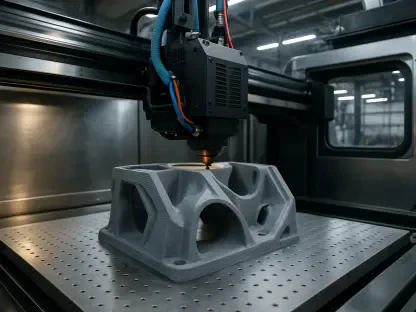
Stepping inside the Louisville facility reveals a production environment that looks more like a tech lab than a traditional factory floor. The operation is defined by its embrace of advanced automation, data, and virtual design, setting a new standard for efficiency and precision in manufacturing.
Automation and Robotics at the Core
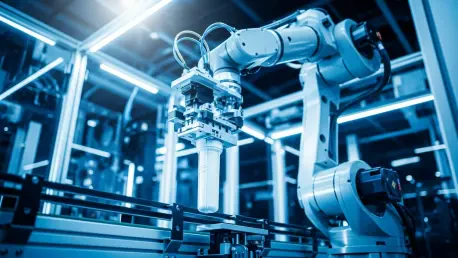
At the heart of the plant is a fully automated assembly and packaging line, a marvel of modern engineering built by ATC. Robotic arms, guided by sophisticated machine vision systems, work in perfect sync to assemble, test, and package each filter. This high level of automation not only allows for rapid production but also ensures a degree of consistency and precision that is difficult to achieve with manual processes.
Building Virtually Before Physically
Before any physical construction began, the entire production line was built and tested in a virtual environment. Using digital twin and virtual reality technologies, engineers were able to simulate the manufacturing process, identify potential bottlenecks, and optimize the workflow. This innovative “build-it-virtually-first” approach significantly reduced development time and ensured the physical line would operate at peak efficiency from day one.
Uncompromising Quality Assurance
Consumer safety is the driving principle behind the plant’s design, and its quality control measures are correspondingly rigorous. Every single water filter that comes off the line undergoes 100% in-line air leak testing, a critical step to prevent water damage in a customer’s home. This comprehensive, automated testing guarantees that each product meets the highest standards of integrity and performance before it ever leaves the factory.
More Than a Factory A New Business Philosophy
This initiative diverges sharply from the conventional manufacturing playbook of the last several decades. Instead of outsourcing to lower-cost suppliers, GE Appliances has opted for vertical integration for a component crucial to its brand promise. The goal is not merely to produce a part but to gain absolute control over its quality, supply, and security.
This model represents a strategic pivot from prioritizing short-term cost savings to investing in long-term value. By controlling the entire manufacturing process, the company can directly protect consumers, fortify its brand against the erosion caused by counterfeits, and build a more resilient and responsive supply chain. It is a philosophy that trades the perceived efficiencies of global outsourcing for the tangible benefits of domestic control and technological superiority.
The Kentucky Plant Powers On
Today, the Louisville plant is a hive of activity, running on three shifts to meet market demand. The highly automated line is capable of producing a new, fully tested water filter every few seconds, a testament to the efficiency of its advanced design.
The facility’s launch has created 30 new high-skilled positions for technicians and specialists tasked with managing these complex systems. These roles required extensive training, highlighting the shift in manufacturing jobs toward technical expertise and away from traditional manual labor. The plant’s immediate impact on the market is already being felt, and its design allows for potential future expansion to meet growing needs.
Reflection and Broader Impacts
The success of the GE Appliances water filter plant offers a compelling case study for the revitalization of American industry. It demonstrates how targeted investment in technology and domestic production can solve critical business challenges while creating high-value jobs.
A Blueprint for Modern Manufacturing
This model’s strengths are clear: superior product quality, a secure supply chain, and robust brand protection. However, it is not without challenges. The high initial capital investment required for automation and digital design could be a significant barrier for smaller companies. Furthermore, finding and training a workforce with the skills to operate and maintain such advanced systems remains a hurdle for the industry at large.
Reshaping the American Industrial Landscape
Nonetheless, this project could inspire other major manufacturers to reconsider their own supply chain strategies. If more companies follow this path, it could trigger a broader shift toward high-tech, domestic production, fundamentally reshaping the U.S. industrial landscape. This approach also redefines what a manufacturing job looks like, elevating it to a skilled, technology-driven career.
The Verdict on America’s Manufacturing Future
In the end, GE Appliances’ new plant is more than just a factory; it is a powerful argument for a new era in American manufacturing. It proves that strategic onshoring, when paired with a commitment to automation and digital innovation, can offer a potent solution to the modern challenges of global counterfeiting and supply chain fragility.
This blend of technology and domestic investment presents a compelling, though demanding, model. Whether it becomes a scalable blueprint for the wider industry remains to be seen, but it stands as a clear and functioning example of a future where American manufacturing competes not on cost, but on quality, resilience, and ingenuity.