
A seismic shift is reconfiguring the foundations of global pharmaceutical production, with hundreds of billions of dollars in capital now flowing back toward American shores to rebuild a domestic manufacturing base that was offshored over decades. This monumental pivot is not a matter of chance but the result of a concerted political and economic realignment that is forcing the industry to fundamentally rethink its global footprint. After years of relying on complex international supply chains, the pharmaceutical sector is now at a critical inflection point, weighing the strategic benefits of domestic production against the immense operational hurdles of such a transition.
The Great Recalibration Americas Pharmaceutical Production at a Crossroads
For decades, the US pharmaceutical industry embraced a globalized model, outsourcing significant portions of its manufacturing, particularly active pharmaceutical ingredients (APIs), to lower-cost regions. This strategy optimized efficiency and reduced expenses, but it also created vulnerabilities, exposing the nation’s drug supply to geopolitical instability and logistical disruptions. The economic significance of this global footprint is immense, yet its fragility has become a central concern for both policymakers and corporate strategists.
Now, a powerful convergence of political pressure and economic incentives is driving a historic recalibration. The push to reshore manufacturing is gaining unprecedented momentum, impacting every segment of the industry. From the foundational production of APIs to the complex manufacturing of advanced biologics, companies are being compelled to re-evaluate their supply chains. This movement represents more than a simple logistical adjustment; it signals a potential restructuring of the entire pharmaceutical value chain, with profound implications for cost, access, and national security.
The Reshoring Gold Rush Catalysts and Capital Investment
The Policy Prescription Tariffs Deals and Political Pressure
A key catalyst for this reshoring trend is the aggressive policy stance of the Trump administration. Through the strategic threat of industry-specific tariffs and the pursuit of Most-Favored-Nation drug pricing deals, the administration has created a powerful incentive for pharmaceutical companies to prioritize domestic operations. These policies effectively increase the risk and reduce the financial appeal of relying on overseas manufacturing, making US-based investment a more predictable and politically sound alternative.
This policy-driven environment is compelling multinational corporations to act decisively. The new U.S.-centric drug-pricing agreements, in particular, are reshaping corporate strategy, tying market access and favorable pricing to domestic investment. As a result, long-term capital allocation plans are being rewritten, with boardrooms across the sector redirecting funds toward building and expanding manufacturing capabilities within the United States.
A Staggering Sum Charting the Multi Billion Dollar Domestic Pivot
The financial scale of this domestic pivot is staggering. Industry trade group PhRMA reports that the biopharma sector is injecting an estimated $500 billion into new U.S.-based manufacturing and infrastructure, while other analytics firms like GlobalData place the figure at a still-historic $370 billion over the next five years. This unprecedented influx of capital is a clear indicator that the reshoring movement is far more than a public relations effort; it is a core business strategy backed by massive financial commitments.
Leading this charge are some of the industry’s largest players. Merck has committed over $70 billion toward domestic manufacturing and research and development, while Johnson & Johnson has pledged a formidable $55 billion. These cornerstone investments serve as a major tailwind for the entire US pharma manufacturing ecosystem, signaling a long-term commitment to rebuilding a robust and resilient domestic supply chain.
Navigating the Headwinds Challenges on the Home Front
Despite the momentum, the path to a fully onshore manufacturing base is fraught with challenges. Companies expanding their US presence face significant operational hurdles, including tight labor markets for skilled technicians and scientists. Moreover, consulting firm West Monroe warns of extended lead times required to construct, validate, and bring new, compliant facilities online. These factors can delay production timelines and inflate project costs, complicating the strategic calculus for reshoring.
This shift also highlights a growing divide within the industry. While large, multinational corporations possess the capital and resources to build new domestic facilities, smaller biotechnology firms are in a more precarious position. According to the Biotechnology Innovation Organization (BIO), these smaller companies increasingly rely on contract development and manufacturing organizations (CDMOs) to advance their products. Their ability to participate in the reshoring trend is therefore dependent on the availability of a scalable domestic contract manufacturing ecosystem.
The pressing need for a robust network of US-based CDMOs is becoming a critical bottleneck. Without sufficient domestic capacity for contract manufacturing, innovative smaller firms could be left behind, unable to align with the new policy-driven landscape. Building this supportive infrastructure is essential not just for these companies, but for the health of the entire US biopharma innovation pipeline.
A New Regulatory Reality Navigating a Policy Driven Market
The current reshoring movement is inextricably linked to a new regulatory reality. Specific policy proposals and U.S.-centric drug-pricing agreements are no longer abstract concepts but direct drivers of corporate investment decisions. Companies must now navigate a landscape where their manufacturing footprint has direct implications for market access and profitability, turning compliance into a central pillar of business strategy.
This policy-driven market utilizes both positive and negative reinforcement to achieve its goals. On one hand, domestic production is incentivized through potential regulatory advantages and inclusion in favorable pricing schemes. On the other, reliance on foreign manufacturing is discouraged by the looming threat of tariffs and exclusion from key agreements. This dual approach creates a powerful, albeit complex, environment for strategic planning.
The global ramifications of these U.S.-centric policies are significant. As the world’s largest pharmaceutical market reorients its supply chain inward, it sends ripples across the international landscape. Global market dynamics are shifting, and questions about patient access in other regions arise as companies reallocate resources and production capacity toward the United States.
The Future Footprint A Hybrid Model for a Globalized World
The trend toward domestic production does not signal a complete retreat from globalization. Instead, a more nuanced, hybrid strategy of “selective” reshoring is emerging. Companies are strategically expanding their US capacity for high-volume or politically sensitive products while simultaneously maintaining and investing in their global networks to ensure supply chain diversity and access to specialized expertise.
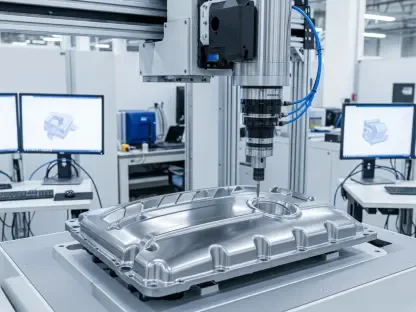
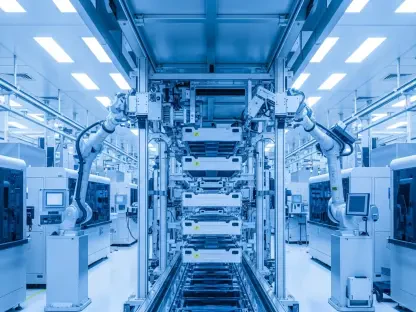
Automation and advanced manufacturing technologies are critical enablers of this hybrid model. These innovations help offset higher domestic labor costs, making US-based facilities more competitive on a global scale. By leveraging robotics, data analytics, and continuous manufacturing processes, companies can enhance efficiency and scalability, allowing domestic production to operate with greater agility.
Europe’s continued strength as a manufacturing hub further illustrates this point. Eli Lilly, for instance, is committing $27 billion to four new US sites while also investing $3 billion in a new facility in the Netherlands, a nod to the continent’s stable regulatory environment and established science clusters. Similarly, Fujifilm Biotechnologies’ new $3.2 billion facility in North Carolina shows how firms are embedding expanded US capacity within a globally distributed network, not replacing it.
Final Diagnosis Is the Return to US Shores a Permanent Cure
The forces driving pharmaceutical manufacturing back to the US are undeniably powerful, combining political will with strategic reassessments of supply chain risk. This is not a fleeting trend but a significant realignment spurred by a new policy paradigm. However, the path forward is complicated by substantial operational challenges, including workforce shortages, long construction timelines, and an underdeveloped domestic CDMO ecosystem needed to support the full breadth of the industry.
Ultimately, this shift represents a fundamental and likely permanent restructuring of the global pharmaceutical landscape. The era of optimizing solely for cost is giving way to a more balanced strategy that prioritizes resilience, security, and policy alignment. The end state will likely not be a complete repatriation of all manufacturing but a sophisticated hybrid model where a stronger, tech-enabled US manufacturing base coexists with strategic global partnerships.
To thrive in this new era, companies face clear strategic imperatives. Success hinges on their ability to navigate a complex and evolving policy environment, invest in automation to ensure domestic competitiveness, and foster a robust ecosystem of partnerships, particularly with CDMOs. The great recalibration of pharma manufacturing is well underway, and its long-term success now depends on turning massive capital investments into a resilient, innovative, and sustainable domestic reality.