
The international market for critical minerals is currently navigating a period of intense volatility as Western nations prioritize the creation of secure supply chains that are entirely independent of foreign monopolies. Korea Zinc stands at the vanguard of this industrial shift, having successfully transitioned the traditional smelting process into a high-tech discipline that many industry experts describe as a form of modern-day alchemy. By utilizing its flagship Onsan Smelter in South Korea as a foundational blueprint, the company is now embarking on an ambitious $7.8 billion expansion into Clarksville, Tennessee. This massive investment is specifically designed to bridge the gap between South Korean metallurgical expertise and American strategic requirements, ensuring a stable flow of essential metals for the next generation of technological innovation.
The Benchmark of Metallurgical Excellence
Establishing a Global Standard at Onsan
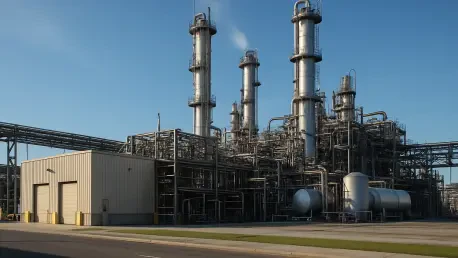
The Onsan Smelter functions as an indispensable industrial titan, occupying a footprint eighteen times larger than Seoul’s World Cup Stadium and maintaining its status as the largest single-site zinc producer in the world. However, its true value lies not in its physical dimensions but in the implementation of the proprietary “low-temperature, low-pressure hematite process,” which has revolutionized the extraction of iron impurities. This specific technological advancement allows the facility to achieve a 99% recovery rate while operating at significantly lower energy thresholds than those required by conventional smelting methods. Because of this unprecedented efficiency and its role in maintaining industrial sovereignty, the South Korean government has officially designated this specialized smelting process as a national core technology.
The operational success of the Onsan site serves as a testament to five decades of refined engineering and continuous process improvement within the non-ferrous metal sector. By integrating advanced chemical engineering with large-scale industrial manufacturing, Korea Zinc has created a facility that consistently outperforms global competitors in both purity and output volume. This level of technical mastery ensures that the refined metals meet the stringent quality standards required for high-tech applications, such as the production of precision electronics and aerospace components. The facility does not merely produce raw materials; it provides the specialized high-purity inputs that are necessary for the world’s most advanced manufacturing ecosystems to function without interruption.
Redefining Waste Through Circular Economics
Beyond the production of primary base metals, the Onsan facility has perfected a circular economic model that identifies and extracts significant value from what was previously considered industrial waste. This “urban mining” strategy allows Korea Zinc to process byproducts from zinc, lead, and copper smelting lines to isolate rare metals like indium, which is a critical component for the manufacturing of solar panels and semiconductor substrates. By achieving a purity level of 99.999%, the company provides a reliable source of high-grade materials that are often difficult to find in nature. This approach effectively decouples the production of rare minerals from the environmental costs associated with traditional mining, creating a sustainable loop of resource recovery.
The financial implications of this circular model are profound, as evidenced by the substantial growth in operating profits and revenue reported in the current fiscal year. By maximizing the extraction of every possible mineral from its raw material inputs, Korea Zinc has demonstrated that environmental responsibility and high-profit margins are not mutually exclusive concepts in heavy industry. The ability to recycle spent materials, such as exhausted solar panels and electronic scrap, further strengthens the company’s position as a leader in the green transition. This proven methodology provides a clear path forward for other industrial players who are looking to reduce their ecological footprint while simultaneously enhancing their competitive advantage in the global materials market.
Strategic Security and Geopolitical Impact
Breaking Monopolies on Defense Materials
Korea Zinc has increasingly transitioned into a vital partner for global defense by successfully disrupting long-standing monopolies on strategic minerals such as antimony. Antimony is a critical ingredient in the production of armor-piercing ammunition, military-grade electronics, and various aerospace alloys, yet its supply has historically been controlled by a very small number of foreign entities. The Onsan facility currently produces approximately ten tons of this material daily, providing a steady and secure supply for Western defense departments. This domestic production capability mitigates the risks associated with geopolitical tension and export restrictions, ensuring that military readiness is not compromised by fluctuations in the international commodity markets.
The company is currently expanding its strategic portfolio by preparing to launch the commercial production of gallium and germanium within the next year. These two minerals are considered essential for the development of advanced military communications systems and the manufacturing of next-generation semiconductors used in radar technology. By establishing a reliable production base for these materials in South Korea, the company is effectively providing a “proven future” for Western nations that are seeking to decouple their defense sectors from vulnerable supply chains. This shift in production dynamics represents a significant move toward greater technological autonomy, as it allows allied nations to source critical components from a trusted partner with a long history of industrial excellence.
Exporting the Technological DNA to Tennessee
The development of the “mini-Onsan” facility in Clarksville, Tennessee, represents a direct and intentional transfer of South Korean technological prowess to American soil to meet rising demand. This integrated smelter project is designed to replicate the successful Onsan model at roughly half the scale, with a specific focus on producing thirteen non-ferrous metals, eleven of which are classified as critical by the United States government. To ensure that the facility operates with the same level of precision as its South Korean counterpart, Korea Zinc has dispatched over seventy specialists to oversee the procurement of equipment and the installation of core processing units. This hands-on approach ensures that the high-efficiency extraction processes are seamlessly integrated into the new American industrial hub from the very beginning.
This expansion is more than a simple construction project; it is a strategic alignment that strengthens the industrial bond between two long-term economic partners. The Tennessee facility will not only provide a domestic source of critical minerals but will also produce high-purity sulfuric acid, which is an essential chemical used throughout the semiconductor manufacturing process. By housing these diverse production capabilities under one roof, the Clarksville plant will function as a comprehensive materials hub that supports the entire high-tech manufacturing ecosystem in the United States. This move drastically reduces the lead times and logistics costs associated with importing refined metals, providing American manufacturers with a significant advantage in the rapidly evolving global marketplace.
Innovation and the Future of Industry
Advancing the Smart Factory Initiative
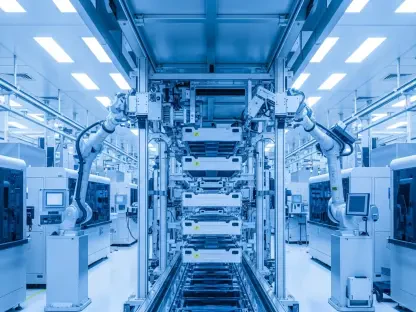
To maintain its competitive edge in an increasingly digital world, Korea Zinc is aggressively integrating cutting-edge robotics and artificial intelligence into its daily operations through a comprehensive “Smart Factory” initiative. At the Onsan site, the company has already deployed autonomous quadruped robots to conduct twenty-four-hour inspections in hazardous or hard-to-reach areas of the plant, significantly improving worker safety. These robots are equipped with advanced sensors that can detect minute changes in temperature, vibration, or chemical composition, allowing for predictive maintenance that prevents costly operational downtime. This shift toward total automation ensures that the refining process remains consistent and that the purity of the final materials is never compromised by human error.
The data collected by these autonomous systems is analyzed in real-time by sophisticated machine-learning algorithms to optimize energy consumption and chemical usage across the entire facility. This focus on digital transformation creates a highly scalable operational model that can be implemented at the new Clarksville facility to ensure peak performance from the very first day of trial operations. By merging traditional metallurgical science with modern data analytics, Korea Zinc is setting a new standard for how heavy industry can remain efficient and responsive in the twenty-first century. This commitment to innovation ensures that the company remains at the forefront of the industry, capable of adapting to new materials and processing requirements as they emerge in the high-tech sector.
Building a Foundation for the Modern World
The expansion into the United States marks a historic bridge between South Korean innovation and the growing global demand for semiconductor materials and renewable energy infrastructure. The Tennessee plant is positioned to become a cornerstone of the Western world’s industrial strategy, providing the raw materials necessary for the mass production of electric vehicle batteries and high-efficiency solar arrays. By producing these essential inputs domestically, the facility will help insulate the American economy from the supply shocks that have characterized the global minerals market in recent years. This strategic foresight ensures that the transition to a cleaner energy future is supported by a robust and reliable industrial foundation that can withstand geopolitical pressures.
The successful implementation of the Onsan blueprint in Clarksville should serve as a model for future international industrial collaborations. Industry leaders and policymakers ought to prioritize the development of similar integrated facilities that combine resource recycling with primary production to maximize efficiency and minimize environmental impact. Moving forward, the focus must remain on the continuous refinement of extraction technologies and the expansion of domestic processing capabilities for all critical minerals. By embracing the circular economic principles and advanced automation techniques pioneered at the Onsan Smelter, the global manufacturing sector can secure the materials needed to build a more resilient and technologically advanced society for decades to come.