
Transforming the remnants of one industry’s harvest into the primary ingredient for another’s feast is no longer a concept of the distant future but a tangible reality in food technology. The development of mycelium-based protein represents a significant advancement in the sustainable food technology sector. This review explores the innovative process of upcycling food industry waste into a high-quality protein, its nutritional characteristics, performance in food applications, and its impact on creating a circular economy. The purpose of this review is to provide a thorough understanding of the technology, its current capabilities, and its potential for future development in the global food system.
An Introduction to Mycelium as a Novel Food Source
At the heart of this innovation is fungal mycelium, the intricate, root-like network of fungi. Traditionally overlooked, mycelium is now being recognized for its potential as a highly sustainable and nutritious protein. Its emergence is a direct response to two of the most pressing global challenges: the ever-growing demand for protein to feed a rising population and the staggering amount of waste generated by modern food manufacturing.
Within the broader landscape of alternative proteins, mycelium offers distinct advantages. Unlike many plant-based sources, it can be cultivated rapidly in controlled environments, using a fraction of the land and water required for traditional agriculture. This efficiency, combined with its ability to grow on diverse substrates, positions mycelium not merely as another protein alternative but as a foundational technology for a more resilient and circular food system.
The Production Process From Food Waste to High Value Protein
Upcycling Agricultural Side Streams
The core of this technology lies in its resourceful use of materials that would otherwise be discarded. The process effectively hijacks agricultural side streams—specifically those from carrot production—and repurposes them as a nutrient-rich foundation for fermentation. This approach directly tackles the issue of food waste at an industrial scale, turning a liability into a valuable asset.
By creating a closed-loop system, this method provides a powerful example of a circular economy in action. It establishes a symbiotic relationship between different sectors of the food industry, where the byproducts of one process become the essential inputs for another. This not only enhances resource efficiency but also reduces the environmental footprint associated with both waste disposal and new ingredient production.
Fungal Strain Selection and Cultivation
Identifying the right organism for the job was a critical and methodical step. Researchers conducted an exhaustive screening of 106 different edible fungi to determine which strain would perform best on the unique carrot-based substrate. This rigorous selection process was essential to ensure optimal growth, protein yield, and nutritional quality, moving the concept from a theoretical possibility to a practical application.
Ultimately, Pleurotus djamor, commonly known as the pink oyster mushroom, was selected for its superior performance. This particular strain demonstrated an exceptional growth rate and an impressive ability to convert the carrot medium into a protein-dense biomass. Its selection underscores the importance of biological synergy in developing efficient and scalable food technologies.
Nutritional Profile and Composition
The resulting mycelium protein boasts a technical profile that stands strong against conventional options. It possesses a high biological value, meaning its amino acid composition is well-suited for human nutritional needs, making it comparable to established animal proteins and superior plant proteins like soy. This quality is crucial for its role in fortifying vegetarian and vegan diets.
Beyond its protein content, the ingredient features a balanced composition that includes low levels of fat and a significant amount of dietary fiber, similar to that found in other edible fungi. This combination of high-quality protein, low fat, and beneficial fiber makes it not just a sustainable choice, but a genuinely nutritious one that can contribute positively to a healthy diet.
Recent Innovations and Consumer Product Development
The journey of mycelium protein is rapidly moving from the laboratory to the consumer’s plate. Recent developments have focused on translating the raw ingredient into appealing, market-ready food items. This shift is critical, as the success of any novel food source depends not only on its technical merits but also on its ability to be integrated seamlessly into familiar products.
Moreover, mycelium is emerging as a multifunctional ingredient. Innovators are now using it to enhance the nutritional value and, importantly, the texture of other plant-based foods. Its fibrous structure can improve the mouthfeel of meat alternatives, addressing one of the most common criticisms of plant-based products and expanding its application beyond a simple protein powder.
Real World Application and Sensory Performance
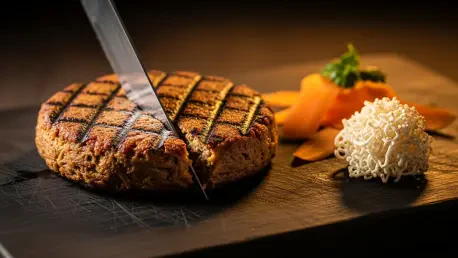
To test the viability of this new ingredient, it has been incorporated into several vegan food prototypes, including patties and sausages. These real-world applications serve as a proof-of-concept, demonstrating how the mycelium performs in a culinary context and providing crucial feedback on its sensory characteristics.
The results from consumer taste tests have been overwhelmingly positive and are perhaps the most compelling evidence of its market potential. In sensory evaluations, vegan patties made entirely with mycelium were consistently preferred over those made with 100% soy protein. Similarly, vegan sausages featuring fresh mycelia were ranked higher for both taste and aroma than a comparable product made with chickpeas, signaling strong consumer acceptance.
Addressing Challenges in Scalability and Market Adoption
Despite its promise, the technology faces significant hurdles in transitioning from a laboratory setting to full industrial-scale production. Scaling up fermentation processes while maintaining consistency, quality, and cost-effectiveness presents a complex technical challenge that requires further engineering and optimization.
On the market side, mycelium must compete with deeply entrenched protein sources, from conventional meat to established plant-based options like soy and pea protein. However, its economic model offers a key advantage. By utilizing low-cost, or even negative-cost, waste streams as its primary input, the production of mycelium protein can potentially be more cost-effective, helping it overcome economic barriers to adoption.
Future Outlook The Role of Mycelium in Global Food Security
The road ahead for mycelium technology is focused on refinement and expansion. Future developments will likely concentrate on optimizing the fungal fermentation process to increase yields and further improve the nutritional profile of the final product. Continuous innovation in bioreactor design and cultivation techniques will be key to unlocking its full potential.
There is also vast, untapped potential in applying this upcycling methodology to other food industry side streams. From fruit pomace to brewery grains, countless nutrient-rich byproducts could serve as substrates for mycelium cultivation. Exploring these possibilities will diversify the technology’s application and amplify its impact on waste reduction. In the long term, technologies like this could play a crucial role in enhancing global food security by offering a method of protein production that does not compete for agricultural land, thereby making the entire food system more sustainable and resilient.
Conclusion A Sustainable Nutritious and Palatable Protein
This review confirms that protein derived from fungal mycelia grown on food industry side streams is a sustainable, tasty, and nutritionally complete food source. The technology successfully transforms low-value waste into a high-value ingredient, presenting a functional model of a circular economy within the food sector.
Its high biological value, favorable sensory performance in food applications, and strong consumer acceptance underscore its viability. With its potential to reduce environmental impact and meet the growing global demand for protein, mycelium-based protein stands out as one of the most promising innovations in the modern food system.