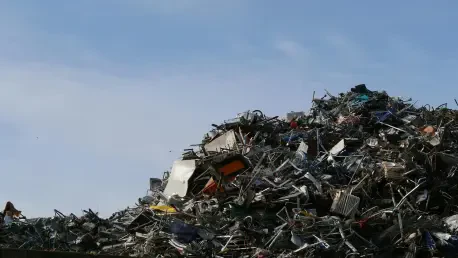

A government-mandated zero export quota on scrap metal, enacted at the beginning of the year, has sent shockwaves through Ukraine’s secondary metals market, triggering a severe industry contraction and igniting a high-stakes legal and political confrontation. Intended as a protective measure to secure essential raw materials for the nation’s metallurgical plants, the policy has instead paralyzed a vital sector of the economy. The immediate aftermath has been characterized by plummeting collection rates, stalled deliveries, and a wave of business closures, pushing the industry into a state of crisis. As stakeholders grapple with the sudden disruption, the ban has escalated into a contentious dispute, with industry associations launching legal challenges to overturn a decision they argue is causing irreparable harm to their livelihoods and the broader economic ecosystem that depends on a stable flow of recycled materials. The conflict highlights the delicate balance between protecting domestic manufacturing and sustaining the intricate supply chains that support it.
The Immediate Economic Fallout
The statistical evidence from the first month of the export ban paints a stark picture of an industry in freefall, with key performance indicators plummeting across the board. In January, scrap metal collection saw a significant downturn, falling by 18.5% to just 97.1 thousand tons when compared to the same period in the previous year. This precipitous drop in available raw materials had a direct and immediate impact on the domestic consumers the policy was designed to protect. Deliveries to Ukrainian metallurgical facilities consequently plummeted by an even greater margin of 26.7%, totaling only 92.5 thousand tons. This supply crunch coincided with a noticeable decline in national steel production, which decreased by 16.4%. The most dramatic effect, however, was on the export market itself. January’s scrap metal exports nosedived by 40.7% year-over-year and collapsed by a staggering factor of seven compared to the preceding month, effectively bringing international trade in the commodity to a standstill and trapping businesses in a purely domestic market that could not absorb the available supply.
The severe market contraction has translated directly into devastating consequences for the businesses and workforce that form the backbone of the scrap collection industry. The Ukrainian Association of Secondary Metals (“UAVtormet”) has reported that the immediate financial pressure has forced a substantial portion of the sector to scale back or shut down completely. According to their analysis, a significant 20-25% of companies involved in scrap collection have had to partially suspend their work, while another 12-15% have been forced to cease operations entirely. This widespread disruption is not just a temporary setback; it is projected to have a lasting impact on employment. The association warns that this trend is expected to result in the loss of approximately 4,000 to 4,500 jobs by the spring, creating a significant social and economic crisis in communities that rely on these enterprises. The sudden halt in export revenue has created a domino effect, leaving companies unable to meet payroll, cover operational costs, or invest in their future.
A Rationale and a Rising Conflict
The government’s decision to implement a zero export quota was not made in a vacuum but was framed as a necessary response to a period of unprecedented and, in their view, unsustainable growth in scrap exports. This drastic measure replaced a pre-existing EUR 180 per ton export duty, which officials claimed had become increasingly ineffective. A key loophole in the previous system was its interaction with a free trade agreement, which often allowed exporters to bypass the duty on shipments destined for the European Union. Dmytro Kysylevsky, a prominent deputy chairman of the Verkhovna Rada Committee on Economic Development, has been a vocal proponent of the ban. He argues that the policy is essential to prevent a critical drain of domestic raw materials, which he contends directly harms Ukraine’s own metallurgical industry by driving up costs and creating supply instability. From this perspective, the zero quota is a strategic intervention designed to re-shore a vital industrial input and bolster national manufacturing capabilities against foreign competition.
Further fueling the government’s position were allegations of a widespread and systematic scheme to evade export duties, which officials claim cost the state billions. Kysylevsky and other supporters of the ban allege that numerous exporters were exploiting the free trade agreement by falsely declaring the European Union as the final destination for their shipments, thereby avoiding the EUR 180 per ton duty, before redirecting the cargo elsewhere. This practice, they claim, not only deprived the state of significant revenue—estimated at UAH 3.5 billion in the previous year alone—but also distorted market dynamics and gave unscrupulous actors an unfair advantage. In response to what they perceive as an existential threat to their industry, key stakeholders have moved the conflict from the economic to the legal arena. Major players, including the company LLC “Zakhidvtorlom” and the influential “UAVtormet” association, have initiated lawsuits to challenge the legality of the zero-quota policy, escalating the dispute into a direct confrontation between private enterprise and state regulators.
A Legal Standoff with National Implications
The implementation of the zero export quota did not mark the end of the debate but rather the beginning of a new, more contentious chapter. Faced with what they considered a ruinous and unjust policy, leading members of the scrap metal industry mobilized a formal response through the judicial system. The lawsuits filed by prominent industry entities were a clear signal that the sector would not passively accept the new regulations. This legal challenge transformed the dispute from a policy debate into a direct confrontation over the government’s authority to impose such restrictive trade measures. The outcome of these legal battles became a focal point, as it held the potential to either cement the government’s protectionist stance or force a significant reversal that could reopen international markets for Ukrainian scrap. The conflict underscored the deep divisions between industrial sectors and highlighted the profound economic consequences that resulted from the state’s intervention, leaving the future of an entire industry hanging in the balance.