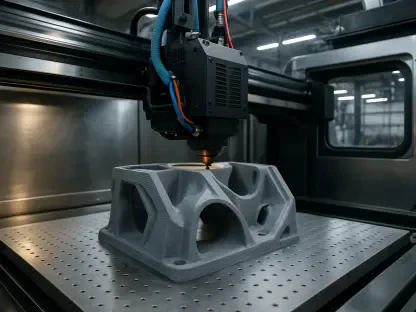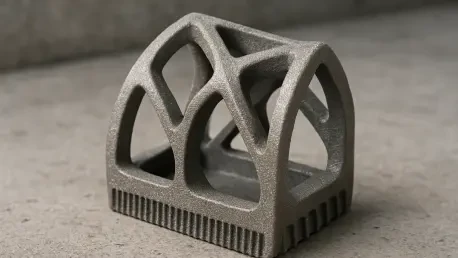

The successful takeoff of an Agusta A109S helicopter from the MOD Boscombe Down facility marks a significant departure from traditional aerospace manufacturing by utilizing a structural part forged from reclaimed debris. This specific flight test successfully validated the performance of a hinge for an Air Data Boom, a component that underwent rigorous assessment to ensure it could withstand the operational stresses of active flight. While the aviation sector has long sought ways to reduce its heavy environmental footprint, this milestone demonstrates that high-performance hardware can be derived directly from recycled aircraft scrap without compromising safety or structural integrity. By integrating Laser Beam Powder Bed Fusion technology with advanced material recovery, the engineering teams have proven that the circular economy is no longer a theoretical concept but a functional reality for modern defense aviation. This achievement provides a clear signal that the industry is ready to transition toward more sustainable production methods while maintaining the exacting standards required for military and civilian airworthiness certifications.
Advancements in Sustainable Material Science
The specialized process developed by Additive Manufacturing Solutions Limited involves a proprietary method to transform titanium scrap, salvaged from retired and decommissioned aircraft fleets, into high-quality metal powder. This transformation is achieved through a sophisticated refinement cycle that ensures the resulting feedstock meets the stringent purity levels necessary for 3D printing applications in the aerospace sector. One of the most remarkable aspects of this technical breakthrough is the material recovery rate, which reaches an impressive 97 percent efficiency during the processing phase. By utilizing Laser Beam Powder Bed Fusion, engineers can precisely layer this recycled powder to create complex geometries that were previously difficult or impossible to manufacture using traditional subtractive methods. This approach not only preserves the mechanical properties of the titanium but also ensures that the final components are indistinguishable from those made from virgin materials in terms of durability and performance.
Beyond the engineering hurdles, the environmental implications of this manufacturing shift are profound, as the process yields a staggering 93.5 percent reduction in carbon emissions compared to traditional primary titanium production. Conventional methods of extracting and refining titanium are notoriously energy-intensive and ecologically damaging, often requiring extensive mining and complex chemical processing. By bypassing these initial stages and focusing on the recovery of existing high-grade metal, the partnership has established a new benchmark for “green” aviation logistics. This reduction in the carbon footprint aligns with broader global initiatives to decarbonize heavy industry and defense operations, providing a scalable model for other sectors to follow. The synthesis of additive manufacturing and sustainable resource management offers a viable path to mitigate the environmental toll of maintaining large-scale aerial fleets. As the industry moves toward 2027 and beyond, the adoption of these circular practices will likely become a prerequisite for organizations aiming to meet strict international environmental regulations.
Geopolitical Resilience and Supply Chain Security
The strategic importance of titanium in the defense and aerospace industries cannot be overstated, yet the global supply chain for this critical mineral remains highly concentrated and vulnerable to international disruptions. Currently, the market is heavily dependent on exports from major producers such as China and Russia, creating a significant risk for nations that rely on these materials for their national security infrastructure. By developing the capability to extract and recycle titanium from their own retired aircraft, domestic industries can begin to insulate themselves from the volatility of foreign markets and the potential for supply weaponization. This transition toward material self-sufficiency is a vital component of modern defense strategy, ensuring that the production of essential components is not hindered by diplomatic tensions or trade restrictions. The ability to source high-grade titanium domestically through recycling programs allows for a more resilient industrial base that can respond rapidly to emerging threats or maintenance requirements without waiting for international shipments.
The successful validation of recycled 3D-printed components on an active helicopter platform effectively dismantled the long-standing perception that sustainable materials are inferior for mission-critical applications. Decision-makers in the aerospace sector recognized that the path forward involved a total integration of these additive techniques into existing maintenance and overhaul cycles to maximize resource efficiency. Moving forward, the industry prioritized the establishment of localized recycling hubs that processed airframe scrap directly at the point of decommissioning, thereby shortening logistics chains and reducing transportation costs. This shift allowed for a more agile response to component failures, as replacement parts were printed on demand from a verified stock of recycled feedstock. Engineers also recommended the expansion of this technology to include other high-value alloys, such as nickel-based superalloys and specialized steels, to further bolster the domestic manufacturing ecosystem. By institutionalizing these circular economy principles, the defense sector secured a more stable and environmentally responsible future.