
The global titanium supply chain is undergoing a profound and irreversible transformation, driven by a confluence of structural supply deficits, nascent demand recovery, and significant geopolitical realignments that are fundamentally reshaping the industry. This complex interplay is dramatically elevating the strategic and economic importance of large-scale, low-cost natural rutile projects, particularly those situated in politically stable jurisdictions. As the world contends with the depletion of legacy mines and the formidable challenges of bringing new sources of high-grade feedstock online, assets capable of ensuring long-term, reliable production are drawing unprecedented interest from both industrial consumers and sophisticated investors.
The Deepening Supply Deficit in High-Grade Titanium
The Roots of Rutile Scarcity
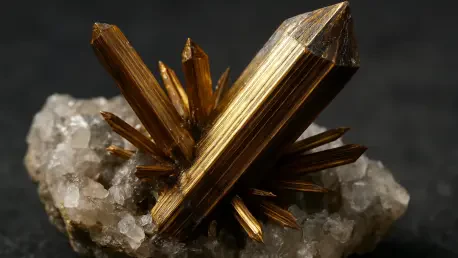
The primary challenge confronting the market today is a structural tightening in the supply of natural rutile, the industry’s highest-grade and most sought-after titanium feedstock. Over the last five years, global production has contracted significantly, falling from an annual output of approximately 750,000 tonnes to around 500,000 tonnes. This is not a cyclical downturn but a long-term trend rooted in the depletion of mature, legacy mining operations that have historically served as the cornerstone of global supply. For decades, the industry relied on these dependable sources, but their inevitable decline has created a production vacuum that is proving exceptionally difficult to fill. The scarcity is therefore foundational, stemming from a physical lack of easily accessible, high-quality deposits that can be brought into production quickly and economically to offset the ongoing depletion.
Compounding the issue of dwindling output from existing mines is a severely constrained pipeline of new projects capable of bridging this widening supply gap. The development of new mineral sands projects, from which natural rutile is sourced, is a notoriously complex, capital-intensive, and time-consuming endeavor. Prospective mines face a formidable array of structural impediments, including the need to secure extensive land access, navigate prolonged and often convoluted permitting timelines, and attract substantial upfront capital investment. Furthermore, increasingly stringent environmental approvals, significant infrastructure hurdles in remote locations, and political instability in several key producing regions have collectively stifled the growth of new supply. This combination of resource depletion and high barriers to entry has created a perfect storm, ensuring that the supply of high-grade rutile will remain structurally tight for the foreseeable future, fundamentally altering the market’s long-term dynamics.
Why Natural Rutile Reigns Supreme
This mounting supply-side pressure is amplified by rutile’s inherent and unparalleled value as the preferred feedstock in the titanium industry. Possessing the highest concentration of titanium dioxide (TiO₂) among all naturally occurring titanium minerals, rutile delivers superior processing efficiency and environmental performance compared to lower-grade alternatives like ilmenite. Its direct use in chloride-process pigment plants—the modern standard for producing high-quality pigments used in coatings, plastics, and paper—significantly reduces processing complexity, lowers energy intensity, and improves overall plant throughput. This efficiency translates directly into lower operating costs and a smaller environmental footprint for pigment producers, making natural rutile a strategically vital input for maintaining competitive advantage and meeting increasingly stringent sustainability standards.
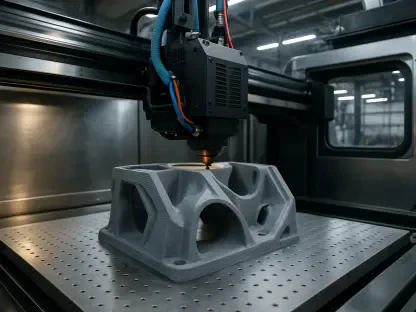
The indispensability of natural rutile extends with equal importance to the production of titanium metal, particularly for high-performance, mission-critical applications. In the aerospace and defense sectors, where purity and material integrity are paramount, natural rutile remains the feedstock of choice for manufacturing aerospace-grade titanium sponge. This material is essential for building lightweight and durable aircraft structures, high-performance jet engines, naval vessels, and advanced defense systems. The combination of its superior technical characteristics and its critical role in strategic industries means that demand for natural rutile is relatively inelastic. The persistent challenges in bringing new rutile sources online against this backdrop of steady, high-stakes demand have created the foundational scarcity that underpins the sector’s compelling long-term value proposition and strategic importance.
Shifting Tides: Market Recovery and Geopolitical Realignment
Glimmers of a Demand Rebound
While structural supply constraints form the long-term narrative for the titanium market, short-term pricing trends are providing early and encouraging indicators of a potential cyclical upswing in demand. The Chinese titanium dioxide (TiO₂) pigment market, in particular, serves as a critical barometer for the industry’s health, given that China is the world’s largest consumer of titanium feedstocks and accounts for over 55% of global pigment production capacity. Recent market data shows that Chinese rutile-grade pigment prices have stabilized in the range of $1,900 to $2,000 per tonne. This stabilization is highly significant because it suggests the market may be forming a durable price floor after a prolonged period of softness linked to weakness in China’s construction sector and slower overall industrial growth. The end of this price decline signals that inventories may be normalizing and that underlying demand is beginning to firm up.
Historically, a stabilization in pigment prices has proven to be a reliable leading indicator for the broader titanium market. This phase typically precedes a recovery in feedstock prices, as pigment producers gradually regain their pricing power and begin to pass their higher input costs through to their customers. For developers of new rutile projects, this is a crucial market signal. Even modest increases in the long-term price forecast for rutile can have a materially positive impact on project economics, substantially enhancing key financial metrics such as net present value (NPV), internal rate of return (IRR), and payback periods. As the market transitions from a period of destocking and price pressure to one of stabilization and potential recovery, the financial viability and strategic appeal of undeveloped, high-quality rutile assets are amplified considerably, attracting renewed investor attention.
The Strategic Imperative for Supply Chain Security
Beyond traditional supply-and-demand fundamentals, powerful geopolitical factors are increasingly reshaping global titanium supply chains and creating a strategic premium for certain assets. The heavy concentration of the titanium value chain, particularly within China, has evolved into a major source of concern and a significant vulnerability for Western nations. By 2024, China accounted for approximately 34% of primary titanium mineral output, over 55% of pigment capacity, and an overwhelming 67% of titanium sponge production, the precursor to titanium metal. This deep reliance on a single nation creates substantial supply chain risk for Western manufacturers, especially in critical sectors like aerospace and defense where titanium is an indispensable material for national security. This vulnerability has been underscored by recent global events, including the imposition of export controls and sanctions, which have exposed the fragility of such concentrated supply chains.
In response to these growing risks, Western governments and corporations are actively pursuing a clear and urgent strategy of supply chain diversification. There is a growing emphasis on securing reliable, long-term supplies of titanium from non-Chinese sources to mitigate geopolitical risk and enhance national security. This strategic shift has several direct and profound implications for the investment landscape. First, it creates a “jurisdictional premium,” where projects located in stable, mining-friendly jurisdictions gain immense strategic importance as supply chain resilience becomes a primary consideration. Second, downstream partners and industrial consumers are increasingly seeking to secure long-term offtake agreements with long-life assets capable of supplying high-grade feedstock for decades. Finally, this realignment is fostering an increase in strategic investments and technical partnerships between major consumers and junior development companies to secure future supply. Consequently, companies with large, scalable, and high-quality natural rutile resources in politically stable countries may command a strategic valuation far beyond their standalone economic metrics.
KasiyA Blueprint for the Modern Rutile Project
Unpacking the Project’s Unique Advantages
Sovereign Metals’ Kasiya project in Malawi exemplifies the convergence of these market-defining trends, positioning it to become a globally significant asset due to its unique combination of scale, grade, cost-position, and strategic partnerships. Kasiya is distinguished as the largest natural rutile deposit ever discovered and, concurrently, the second-largest deposit of natural graphite in the world. This rare co-product mineralization provides a powerful economic advantage, as high-value graphite will be extracted from the same ore as the rutile. This synergy not only diversifies the project’s revenue streams but also fundamentally enhances its overall economic robustness, setting it apart from single-commodity mineral sands operations and providing a natural hedge against price volatility in either market.
The project’s optimized pre-feasibility study (PFS) underscores its exceptional financial potential, outlining a pre-tax net present value of over $2.3 billion and projected average annual EBITDA exceeding $400 million. A key driver of these robust economics is its projected position at the very bottom of the global cost curve. As a natural rutile project, Kasiya inherently avoids the high capital and operating costs associated with upgrading lower-grade ilmenite into synthetic rutile—a process that is also highly sensitive to energy prices and carbon regulations. Kasiya further benefits from its graphite by-product. The incremental cost to produce this graphite is projected to be just $241 per tonne, placing it at the lowest end of the graphite cost curve and enabling potential operating margins of around 50% on this secondary revenue stream. This low-cost structure provides a dual benefit: it enhances profitability during upcycles and offers significant resilience during market downturns, making it a highly attractive asset in a cyclical industry.
De-Risking the Path to Production
The geological and processing advantages of the Kasiya deposit are as significant as its economic potential. The deposit is hosted in soft, friable saprolite, a form of weathered rock that offers substantial operational benefits. The ore is considered free-dig, meaning it can be mined without the need for blasting, which dramatically lowers mining costs and simplifies operations. The simple, blanket-style nature of the mineralization and its very low sulfur content also streamline the processing phase. The proposed flowsheet requires only a basic scrubbing step, a stark contrast to the complex and energy-intensive crushing and grinding circuits required for hard-rock deposits. This geological simplicity translates directly into lower capital expenditures, reduced operating costs, minimized processing complexity, and more stable operating margins over the life of the mine.
A pivotal element in Kasiya’s development and de-risking strategy is its strategic partnership with mining giant Rio Tinto. In mid-2023, Rio Tinto invested approximately $60 million to acquire a 19.9% shareholding in Sovereign Metals, becoming a key strategic partner in the project’s advancement. This investment provides far more than just capital; it serves as a powerful third-party validation of the project’s technical quality, robust economics, and long-term potential. The project is now being advanced under the guidance of a joint Sovereign-Rio technical committee, granting it access to Rio Tinto’s world-class expertise in project development, operational execution, and global marketing. This partnership materially de-risks the project’s path to production, enhances its credibility with financiers and offtake partners, and provides a clear pathway toward its definitive feasibility study (DFS), a crucial milestone targeted for completion in the fourth quarter of the current year.
An Investment Thesis for a New Era
The investment thesis for natural rutile was robust and multi-layered, offering exposure to a market defined by structural feedstock scarcity and aligned with powerful geopolitical trends favoring supply chain diversification. The development timeline for premier projects coincided with an improving pricing cycle, creating a compelling opportunity. Projects like Kasiya, which combined world-class scale, a position in the lowest quartile of the global cost curve, geological simplicity, and the backing of a major strategic partner, were exceptionally well-positioned to meet this moment. For investors who sought long-term strategic value within the evolving titanium and critical minerals landscape, such assets represented a unique chance to capitalize on the profound transition from an era of relative abundance to one of structural scarcity.