
In a move that underscores the growing global emphasis on fortifying regional biopharmaceutical supply chains, Samsung Biologics has finalized a landmark agreement to acquire its first-ever manufacturing facility in the United States. The South Korean-based contract development and manufacturing organization (CDMO) is set to purchase a substantial biomanufacturing site in Rockville, Maryland, from the global biopharmaceutical giant GSK. This acquisition represents a significant strategic expansion for Samsung Biologics, planting a firm operational flag in the world’s largest pharmaceutical market and signaling a long-term commitment to serving U.S.-based clients and patients directly. The transaction not only reshapes Samsung’s global footprint but also reflects a broader industry trend where major players are re-evaluating their manufacturing networks to enhance resilience, flexibility, and proximity to key markets, a lesson learned from recent global health challenges.
A Strategic Foothold in the American Market
The core of this transformative deal involves Samsung Biologics America (SBA), a wholly-owned U.S. subsidiary, purchasing 100% of Human Genome Sciences from GSK in a transaction valued at $280 million. Slated to close in early 2026, this acquisition is more than a simple transfer of assets; it is a pivotal step in Samsung Biologics’ global expansion strategy. By establishing a physical manufacturing presence on U.S. soil, the company drastically reduces logistical complexities and enhances its ability to collaborate in real-time with its extensive North American client base. This move allows the CDMO to offer a more integrated and responsive service, providing clients with multi-site manufacturing options across both the U.S. and its home base in Korea. For a company that has rapidly ascended to the top tier of the global CDMO market, this direct entry into the U.S. manufacturing landscape is a clear statement of intent to deepen its partnerships and solidify its leadership position for the long term.
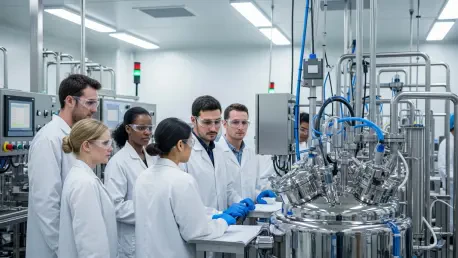
The facility at the center of the acquisition is a highly valuable strategic asset located in the heart of a key U.S. bio-cluster in Rockville, Maryland. It features two established Current Good Manufacturing Practices (cGMP) plants with a combined drug substance capacity of 60,000 liters, fully equipped to support both clinical-stage development and large-scale commercial production. In a move designed to ensure a seamless transition and operational continuity, Samsung Biologics has committed to retaining the site’s more than 500 highly skilled employees. Beyond maintaining current operations, the company has announced plans for significant future investment aimed at expanding the facility’s capacity and integrating advanced technologies. These planned upgrades are not only intended to bolster Samsung’s service offerings but are also aligned with the national interest of enhancing the resilience and reliability of the domestic supply chain for essential therapeutic medicines, ensuring a more stable and secure production source within the United States.
Mutual Benefits and a Refined Focus
From Samsung Biologics’ perspective, the acquisition is a cornerstone of its mission to provide end-to-end CDMO services on a global scale. CEO John Rim highlighted that this investment will be instrumental in deepening collaboration with U.S. government stakeholders and industry partners. By manufacturing therapies directly in the United States, the company can guarantee a more stable and rapid supply for American patients, a critical advantage in the biopharmaceutical sector. Furthermore, this U.S. base provides invaluable flexibility for its clients, who can now leverage a dual-continent manufacturing strategy to mitigate risks and optimize their supply chain logistics. This proximity allows for more agile project management, streamlined technology transfers, and closer partnerships, ultimately accelerating the journey of new medicines from development to patients. The move solidifies Samsung’s role not just as a contractor but as a deeply integrated partner in the American biopharmaceutical ecosystem.
For GSK, the divestment of the Rockville facility is a calculated step that aligns perfectly with its forward-looking corporate strategy. Regis Simard, GSK’s President of Global Supply Chain, explained that the sale to a trusted long-term partner like Samsung Biologics secures the continued, uninterrupted U.S.-based production of two important existing medicines. This arrangement allows GSK to confidently streamline its own manufacturing network, freeing up capital and operational focus to invest in enhancing the agility and capacity required to deliver its innovative pipeline of next-generation specialty medicines and vaccines. The sale is not a retreat from U.S. manufacturing but rather a strategic realignment. It complements GSK’s recent pledge to invest a substantial $30 billion in American research and development and manufacturing over the next five years, demonstrating a clear commitment to focusing its resources on pioneering new frontiers in medicine while ensuring its established products remain in capable hands.
Forging a Resilient Biopharmaceutical Future
The successful finalization of this acquisition represented a consensus viewpoint on the critical importance of a robust and geographically diversified manufacturing network. This landmark transaction allowed Samsung Biologics to directly enter the U.S. manufacturing landscape, a move that fundamentally enhanced its ability to serve its extensive client base and contribute directly to American supply chain stability. Concurrently, the strategic divestment enabled GSK to refine its operational focus squarely on innovation and the development of future therapies, confident that its existing products would continue to be manufactured reliably on U.S. soil by a world-class partner. The deal ultimately stood as a powerful example of how strategic corporate maneuvers could create a scenario of mutual benefit, reinforcing the domestic production of vital medicines while fostering an environment where innovation could thrive.