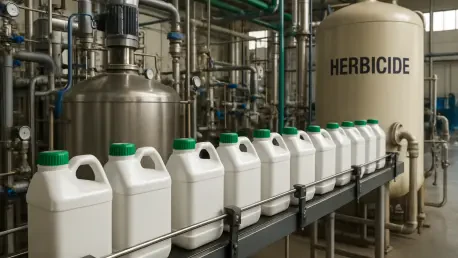

Kwame Zaire joins us to discuss the seismic shift in the agrochemical sector following the decision to halt paraquat production at a key global facility. With his deep roots in production management and safety, Zaire offers a unique lens on how a single facility’s closure in the UK ripples through global markets while navigating a storm of health-related litigation. We explore the tension between industrial efficiency, environmental conservation, and the mounting pressure from regulators to address the human cost of chemical exposure.
Production is shifting away from established facilities like the one in Huddersfield due to intense pressure from global competitors. How does this move affect the international supply chain for herbicides, and what operational challenges do manufacturers face when phasing out a primary ingredient while other producers remain active?
The decision to cease operations at the Huddersfield site by the end of June marks a massive pivot in the agricultural landscape. When a major player retreats due to competitive pressure, it creates a vacuum that over 750 other registered companies are eager to fill, potentially shifting the supply chain toward regions with less oversight. From an operational standpoint, phasing out a primary ingredient while others continue production is a logistical nightmare that involves decommissioning specialized lines and managing residual inventory. It is a bitter pill for a facility that has been a cornerstone of production, and workers often feel the sting of seeing their expertise sidelined by global pricing wars.
Epidemiological studies have indicated a near tripling of Parkinson’s disease risk for individuals with occupational exposure to paraquat. What specific safety protocols are necessary for handling high-risk chemicals, and how should the industry address the growing gap between existing regulatory approvals and emerging medical research?
The findings from expert witnesses who analyzed seven different epidemiological studies are genuinely chilling for anyone on the factory floor. A near tripling of Parkinson’s risk transforms a routine job into a high-stakes gamble with one’s neurological health. Strict protocols must go beyond simple gear; they require airtight closed-loop systems and rigorous biological monitoring to ensure no seepage occurs during the manufacturing process. The industry is currently facing a reckoning where 5,000 plaintiffs in a massive multidistrict litigation are forcing a bridge between old-school safety labels and modern medical reality.
Although certain herbicides support conservation efforts like no-till farming, over 70 countries have banned their use. How can agricultural operations transition to alternative weed control methods without compromising soil health, and what are the primary economic trade-offs farmers face during such a transition?
We are seeing a global movement where more than 70 nations, including the EU, Brazil, Canada, and China, have decided the risks simply outweigh the benefits. For years, this herbicide was championed as a vital tool for no-till farming, a method that protects soil structure and prevents erosion. Transitioning away from it often leaves farmers stuck between a rock and a hard place, as they must choose between more labor-intensive weeding or more expensive alternatives. The economic trade-off is palpable; when you lose a fast-acting tool, you often see a spike in fuel costs and machinery wear, which can feel like a heavy burden for family-owned operations.
With dozens of members of Congress currently urging the EPA to implement a total ban on paraquat, the regulatory environment is in flux. What are the essential steps in a federal chemical review, and how do large-scale multidistrict litigations typically influence the way agencies evaluate pesticide safety?
A federal review is a grueling process that involves weighing economic utility against public health hazards, but political pressure from nearly 50 members of Congress adds a new layer of urgency. When an agency like the EPA re-evaluates a chemical, they look closely at both laboratory data and real-world outcomes reported in the field. Large-scale multidistrict litigations, like the one currently unfolding in Illinois, act as a massive megaphone for the victims, forcing regulators to look at the human faces behind the statistics. These legal battles often uncover long-term health trends that might have been overlooked, making it much harder for agencies to maintain the status quo.
What is your forecast for the future of paraquat use in the United States?
My forecast is that we are witnessing the final chapter of paraquat’s dominance in American agriculture. Given that the European Union withdrew the herbicide back in 2007 and major producers are now shuttering their primary manufacturing sites, the momentum toward a total domestic ban is becoming undeniable. The combination of intense litigation involving 5,000 affected individuals and a growing list of international bans makes it increasingly difficult for the EPA to justify continued use. I expect we will see a phased withdrawal within the next few years as the industry prioritizes safety and settles the mounting legal liabilities.