
For centuries, the fundamental principles of metallurgy have dictated that certain metals simply cannot be joined without compromising their integrity, a constraint that has long defined the boundaries of engineering innovation. This acquisition marks a significant shift in the landscape of advanced manufacturing, as United Performance Metals (UPM), a global leader in specialty metals and an affiliate of O’Neal Industries (ONI), has officially brought Fabrisonic LLC under its corporate umbrella. This strategic move unites UPM’s extensive global resources and market presence with Fabrisonic’s disruptive, patented fabrication technology. Fabrisonic, which originated as an independent entity spun out from the advanced manufacturing innovator EWI in 2011, has carved a unique niche by developing a process to join dissimilar metals without the metallurgical drawbacks that plague traditional methods. This pivotal integration is poised to accelerate the development and deployment of high-performance components across a spectrum of demanding industries, heralding a new era of material science and application.
A Strategic Fusion of Scale and Innovation
The union of UPM and Fabrisonic represents a carefully calculated move designed to create a powerful synergy between an established industry giant and a nimble technological pioneer, setting the stage for accelerated growth and market disruption.
Bolstering Advanced Manufacturing Capabilities
From the perspective of United Performance Metals, this acquisition is far more than a simple expansion of its portfolio; it is a transformative step to solidify its position at the forefront of advanced manufacturing. For years, UPM has served a sophisticated customer base in sectors like aerospace, defense, and space, where the demand for materials with superior performance characteristics is relentless. By integrating Fabrisonic’s unique capabilities, UPM directly addresses this demand, gaining the ability to offer solutions that were previously unattainable. The acquisition equips UPM with a proprietary technology that enables the creation of components with enhanced heat transfer, reduced weight, and integrated functionality, such as embedded sensors. This move is a clear signal of UPM’s commitment to not just supplying high-performance metals but also to providing cutting-edge, value-added processing solutions that solve complex engineering challenges for its most innovative clients, thereby deepening its partnerships and expanding its competitive edge in a rapidly evolving market.
The organizational integration of Fabrisonic into UPM’s operational framework has been structured to maximize synergy and leverage existing infrastructure for rapid scaling. Fabrisonic will be incorporated into UPM’s established division of specialty processing facilities, a network of specialized centers located across the United States. This strategic placement ensures that Fabrisonic’s unique technological processes will benefit from UPM’s robust quality control systems, extensive supply chain logistics, and decades of experience in managing complex industrial operations. Rather than operating as a siloed entity, Fabrisonic will become a key node in a larger ecosystem dedicated to advanced material solutions. This approach is designed to facilitate a seamless flow of resources, expertise, and market intelligence, allowing the innovative potential of Fabrisonic’s technology to be amplified by the industrial might and market reach of its new parent company, ensuring that its groundbreaking solutions can be produced at scale and delivered to a global customer base with greater efficiency.
Unlocking Global Potential for a Niche Innovator
For Fabrisonic, the merger represents a critical inflection point, catapulting the Ohio-based startup from a specialized technology firm into a globally influential player. Since its inception, Fabrisonic has been a leader in its niche, but its growth potential was inherently limited by the constraints typical of a smaller, independent company. The acquisition provides an immediate and transformative infusion of resources, granting Fabrisonic access to the formidable industrial capabilities and extensive market presence of the UPM and O’Neal Industries global network. This newfound access to capital, advanced manufacturing infrastructure, and an international sales and distribution channel is expected to dramatically accelerate Fabrisonic’s innovation pipeline and its ability to commercialize new applications. It effectively removes the barriers to scale, allowing the company’s engineers and scientists to focus on pushing the boundaries of their technology while leveraging a powerful corporate backbone to bring their inventions to a much broader audience, transforming novel concepts into market-ready solutions at an unprecedented pace.
The consensus among the leadership of all involved parties has been one of resounding optimism, underscoring the deep strategic alignment that forms the foundation of this acquisition. Statements from key figures, including UPM’s CEO, Peter Neuberger, and Fabrisonic’s General Manager, Jason Riley, have consistently highlighted the merger as a significant and exciting step forward for both organizations. This shared vision, also echoed by Fabrisonic’s Board Chairman, Henry Cialone, emphasizes a future where the combined entity can collaboratively tackle complex challenges and deliver novel solutions that neither company could have achieved alone. The leadership’s collective outlook points toward a future rich with opportunity, where UPM’s market expertise and Fabrisonic’s technological ingenuity will converge to create new products, enter new markets, and redefine what is possible in material science. This unified perspective is crucial, as it signals a partnership built on mutual respect and a shared goal of industry leadership and sustained innovation.
Redefining Material Science and Application
This acquisition is set to fundamentally alter the possibilities within material science, leveraging a unique technological process to create components that solve long-standing engineering problems in the world’s most demanding industries.
The Core of Fabrisonic’s Patented Process
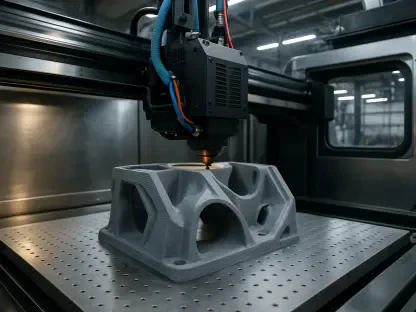
At the heart of this acquisition lies Fabrisonic’s revolutionary and patented manufacturing process, which fundamentally rethinks how metals are joined. Unlike traditional fusion-based methods like welding, which melt metals together and often create brittle, weak points at the joint, Fabrisonic utilizes an advanced form of ultrasonic additive manufacturing. This solid-state process uses sound waves to merge layers of metal foil without reaching the melting point of the materials. By avoiding melting, the process circumvents a host of metallurgical problems, such as the formation of intermetallic compounds or the degradation of material properties due to heat. This critical distinction is what allows Fabrisonic to successfully bond a wide array of dissimilar metals—such as aluminum to copper, or steel to titanium—that are typically considered incompatible. The result is a true metallurgical bond that preserves the original properties of each metal, creating a seamless, multi-material component with unprecedented strength and performance characteristics.
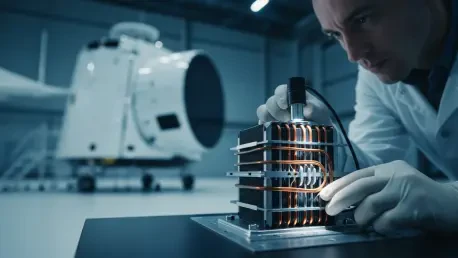
The practical output of this unique technology is the ability to fabricate high-performance components with custom-designed properties that are impossible to create through conventional means. One of the most significant advantages is the ability to engineer materials with optimized thermal properties. By layering highly conductive metals like copper within a lightweight structural metal like aluminum, Fabrisonic can produce heat exchangers and thermal management solutions that are both significantly lighter and more efficient. Another key application is the creation of lightweight structures by combining high-strength materials with less dense ones, a critical need in aerospace and automotive sectors. Perhaps most groundbreaking is the ability to embed sensors, circuits, and other electronic components directly within a solid metal part during the fabrication process. This creates “smart” components with integrated health-monitoring capabilities, offering a level of data-driven insight and reliability that represents a major leap forward in component design.
Impact on Critical High-Tech Industries
The implications of Fabrisonic’s technology for the aerospace and defense sectors are particularly profound, as these industries continuously seek materials that offer a superior strength-to-weight ratio and enhanced performance under extreme conditions. For aerospace applications, the ability to create lighter, more efficient components translates directly into fuel savings and increased payload capacity. For instance, customized heat exchangers for avionics cooling systems or lightweight structural brackets can be produced to exact specifications. In the defense industry, the technology enables the fabrication of more resilient and functionally complex components, from advanced armor systems that combine different metals for optimal protection to parts with embedded sensors that can monitor structural integrity in real-time on military vehicles and aircraft. This capability for creating integrated, multi-functional parts offers a significant tactical advantage, improving the reliability and operational readiness of critical defense assets.
Beyond its immediate impact on aerospace and defense, the technology is poised to drive significant advancements in other high-tech fields, including the rapidly expanding space and automotive industries. In the commercial space sector, where launch costs are directly tied to mass, the potential for weight reduction is a game-changer for satellites, launch vehicles, and deep-space probes. Furthermore, the extreme temperature variations in space demand sophisticated thermal management solutions, an area where Fabrisonic’s ability to create custom, multi-metal components excels. In the automotive world, particularly with the transition to electric vehicles (EVs), effective thermal management of batteries and power electronics is a critical challenge. The ability to manufacture more efficient and compact cooling systems can lead to improved battery performance, extended range, and faster charging times, directly addressing some of the primary hurdles to widespread EV adoption and pushing the industry toward a new level of performance.
A New Chapter in Material Fabrication
The strategic acquisition of Fabrisonic by United Performance Metals ultimately marked a turning point in the advanced manufacturing sector. It represented a powerful validation of how a disruptive, specialized technology could be scaled and amplified when integrated into the ecosystem of a global industry leader. This fusion of pioneering innovation with established industrial strength did more than just expand one company’s portfolio; it created a new paradigm for solving complex engineering challenges across critical industries. The move demonstrated a forward-thinking approach to corporate growth, where acquiring unique technological capabilities was seen as essential for long-term market leadership. The successful integration of Fabrisonic’s process into UPM’s network set a powerful precedent, paving the way for the development of next-generation components that were lighter, stronger, and more intelligent than ever before, fundamentally pushing the boundaries of material science.