
The bustling halls of the Heimtextil 2026 exhibition in Frankfurt, Germany, which recently drew over 48,000 global visitors, prominently featured a formidable contingent of textile manufacturers from Pakistan, showcasing a sophisticated range of home and contract textiles. This strong presence was not a coincidence but a clear signal of the nation’s deeply entrenched and highly successful position within the European textile supply chain. For these Pakistani mills, Europe represents far more than just a lucrative sales region; it is the global epicenter where the highest standards for quality, safety, and consistency in products like bedding and toweling are rigorously defined and enforced. Thriving in this demanding market is a strategic imperative, as it not only secures a place at the premium end of the global value chain but also confers a level of credibility and prestige that resonates across all international markets. Their success story is not merely about production volume but is a complex narrative woven from industrial structure, technological adoption, and enduring partnerships.
The Pakistani Advantage
Vertical Integration as a Strategic Asset
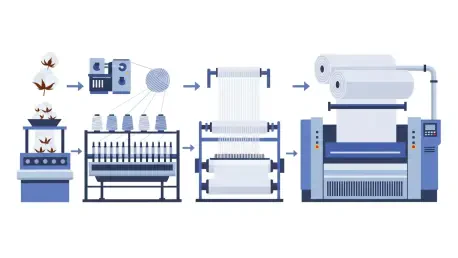
A cornerstone of Pakistan’s competitive edge in the global textile arena is its widespread adoption of a vertically integrated industrial model. Unlike in many other manufacturing hubs where the supply chain is fragmented across numerous independent specialists, Pakistan’s leading textile corporations often encompass the entire production lifecycle within a single organizational structure. This comprehensive control begins with the sourcing and processing of raw cotton, extends through spinning the yarn and weaving the fabric, and culminates in the critical dyeing, finishing, and final make-up of the products. This model grants these companies an unparalleled degree of oversight over every stage of production, enabling them to implement and monitor stringent quality control measures from start to finish. This end-to-end management is not just an operational efficiency but a powerful strategic tool that guarantees consistency and reliability, qualities that are non-negotiable for high-end European buyers.
The alignment between Pakistan’s vertically integrated structure and the procurement strategies of major European brands is a key driver of its market dominance. European buyers increasingly favor consolidating their supply chains, preferring to partner with a smaller number of large-scale, dependable suppliers rather than managing a complex network of smaller vendors. This preference stems from a need for complete process transparency, robust traceability, and the assurance that every component of the final product meets exacting standards. Pakistani mills are uniquely positioned to meet these demands, offering a single point of contact for a fully traceable and quality-controlled production process. This streamlined approach de-risks the supply chain for European clients, simplifies logistics, and ensures that the final goods consistently adhere to the precise specifications and ethical standards required, thereby forging strong, long-term commercial relationships.
The European Market as a Quality Benchmark
For Pakistan’s textile industry, the European market serves as the ultimate proving ground and a critical benchmark for global excellence. Success in this region is predicated on meeting some of the world’s most stringent regulations and consumer expectations regarding product quality, durability, and safety. This includes adherence to complex chemical usage standards like REACH, as well as certifications for sustainability and ethical production. By consistently meeting and often exceeding these high bars, Pakistani manufacturers demonstrate a commitment to best practices that enhances their reputation worldwide. This achievement is not simply about compliance; it is about cultivating a deep understanding of the nuanced demands of a sophisticated consumer base that values longevity and performance. This focus on quality over sheer volume has enabled them to anchor their operations at the higher, more profitable end of the global value chain.
The credibility earned from supplying the demanding European market provides Pakistani textile companies with a significant competitive advantage when expanding into other international territories. Retailers and consumers in markets across North America, Asia, and the Middle East often look to European standards as a hallmark of superior quality. Consequently, a manufacturer with a proven track record of success in Europe is perceived as a reliable, high-caliber partner. This “halo effect” facilitates easier market entry and builds brand trust more rapidly in new regions. The ability to showcase a portfolio of successful partnerships with major European brands acts as a powerful endorsement, signaling to potential new clients that the company possesses the technical capability, operational discipline, and quality assurance systems required to deliver world-class products consistently.
The Technological Foundation
Monforts Machinery as the Engine of Production
The sustained success of Pakistan’s leading textile mills, including industry giants like Lucky Textile Mills, Kohinoor, and Gohar, is inextricably linked to their strategic investment in advanced German dyeing and finishing technology. At the heart of their operations are high-performance machines from Monforts, a specialist whose equipment has become the industry standard in the region. Specifically, the widespread deployment of Montex stenters for fabric drying and heat-setting, Monfortex sanforizing units for controlling shrinkage, and Thermex continuous dyeing ranges forms the technological backbone of their finishing departments. These established technologies are renowned for their reliability, precision, and efficiency, enabling manufacturers to achieve the consistent colorfastness, dimensional stability, and flawless finish that European buyers demand. This reliance on a unified technological platform ensures a high degree of process control and product uniformity across the industry.
The dominance of Monforts in the Pakistani market, where it has maintained an estimated 80% market share for stenters over several decades, is the result of a long-term, symbiotic relationship. This partnership is greatly facilitated by the dedicated local support provided by its agent, Al Ameen, which has represented the company for over 40 years. This enduring presence ensures that Pakistani customers receive not only state-of-the-art machinery but also continuous technical support, process optimization guidance, and swift access to spare parts. Furthermore, Monforts actively collaborates with its clients through trials and development work, both on-site at their mills and at its Advanced Technology Centre in Germany. This commitment to continuous innovation, focusing on enhancing productivity and reducing energy consumption, has allowed Pakistani manufacturers to stay ahead of the curve, optimize their operational costs, and maintain their competitive edge in a fast-evolving global market.
A Look Toward Continued Excellence
The strategic collaborations between Pakistani textile firms and their European technology partners had solidified a foundation built on quality and reliability. The industry’s focus on vertical integration, coupled with advanced finishing capabilities, had already established a powerful market presence. The next logical evolution involved deepening the integration of digital technologies and sustainable practices into this existing framework. This path forward was not about replacing the successful model but enhancing it, using data analytics to further optimize production lines and implementing circular economy principles to meet the growing demand for environmentally responsible textiles. The groundwork laid through decades of quality-focused manufacturing positioned these companies perfectly to lead this next wave of innovation, ensuring their continued relevance and leadership in the global textile market for years to come.