
The biopharmaceutical industry has decisively moved beyond the reactive postures of a tumultuous 2025, now embracing a calculated strategy where supply chain resilience is no longer a logistical afterthought but a core pillar of executive ambition. After a year spent navigating geopolitical tremors and significant shifts in U.S. trade policies, the sector enters this new period with a renewed sense of purpose. This cautious optimism is reflected across the industry; a recent survey found that 52% of pharmaceutical professionals are optimistic about growth, a notable 10% increase from just six months ago, while positive sentiment around biotechnology funding recovery has surged by 15%.
This newfound confidence stems from a hard-won clarity. The supply chain, once a background operational function, has been elevated to a C-suite strategic imperative. A company’s ability to successfully commercialize its pipeline is now inextricably linked to its capacity for agile, redundant, and compliant manufacturing. The transformation is being driven by a convergence of powerful forces: persistent geopolitical pressures, the revolutionary demands of advanced therapies, and the transformative potential of digital innovation are all fundamentally altering how medicines are developed, manufactured, and distributed.
From Aftershock to Ambition a New Era of Biopharma Resilience
The biopharmaceutical landscape is in the midst of a foundational transformation, moving from a model optimized for cost efficiency to one built for strategic resilience. The aftershocks of global instability and economic volatility have catalyzed a proactive overhaul of manufacturing and distribution paradigms. This is not a course correction but a complete redesign, driven by a complex web of external pressures and internal innovation that demands new ways of thinking and operating. The following forces are not merely influencing the industry; they are actively reshaping its core structure.
Navigating a World of Tariffs Tensions and Economic Pressure
Biopharma manufacturers are currently operating in a high-stakes environment defined by persistent inflation, geopolitical instability, and unpredictable trade policies. These external forces have created a dual challenge: managing escalating operational costs while simultaneously redesigning global sourcing strategies to mitigate risk. The aftereffects of inflationary pressures continue to elevate the cost of everything from raw materials to energy, squeezing profit margins and forcing difficult budgetary decisions.
This economic pressure is compounded by global tariffs and trade tensions, which are compelling companies to fundamentally reassess their supply chain architecture. Expert analysis indicates that these factors are forcing a critical evaluation of the economic viability of domestic versus international production. The incentives to shift manufacturing closer to primary markets are growing, pushing organizations to explore hybrid models that balance cost, risk, and regulatory complexity. Consequently, leaders are re-evaluating sourcing, production, and distribution to maintain profitability and ensure a resilient supply of critical medicines in a volatile world.
The Unprecedented Demands of Next Generation Therapeutics
Simultaneously, the scientific frontier is placing its own immense pressure on traditional manufacturing models. The rapid proliferation of advanced modalities—including cell and gene therapies (CGT), RNA-based treatments, and other complex biologics—is straining the industry’s existing infrastructure. These next-generation therapeutics demand highly specialized facilities, exceptionally sophisticated quality control systems, and a workforce with advanced, specific training, all of which are in critically short supply.
In response, the industry is actively reconfiguring its manufacturing ecosystem. Companies are moving away from reliance on single-source partners and are instead diversifying their relationships with contract manufacturing organizations (CMOs) to secure flexible and specialized capacity. In parallel, many are making targeted, strategic investments in their internal capabilities. This dual approach of strengthening external partnerships while building internal expertise is becoming essential to navigate the complex manufacturing requirements of these novel therapies and ensure their successful commercialization.
Rebuilding the Network the Strategic Pivot to Regional Hubs
To counteract supply vulnerabilities and rising tariff costs, a clear industry-wide shift toward regionalization and localization is underway. Geopolitical tensions and economic pressures are accelerating this trend, as tariffs directly increase the cost of critical inputs like active pharmaceutical ingredients (APIs) and laboratory supplies. This has made the creation of localized supply networks a strategic imperative for ensuring both cost-effectiveness and continuity of supply.
Industry advisors recommend a hybrid approach, meticulously mapping supply and tariff risks while forging collaborations with contract development and manufacturing organizations (CDMOs) that have a global footprint. This allows for a balance between resilient, localized production and the cost efficiencies of a global network. This trend is creating significant opportunities for large CDMOs with extensive international operations. However, it is also being matched by direct investments in local capacity, as seen with major players like AstraZeneca, reinforcing a broader strategy to build regional manufacturing hubs, establish localized supply chains, and develop robust resilience plans that depend on local talent.
Integrating the Digital Nervous System AI Automation and Compliance
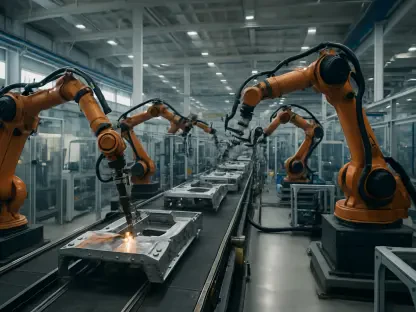
The successful execution of these new regionalized and specialized manufacturing strategies is intrinsically linked to digital transformation. Technology—specifically artificial intelligence (AI), the Internet of Things (IoT), and robotics—is no longer an option but a critical enabler for the scalable, cost-effective production of complex therapies. Automation is being leveraged to reduce the potential for human error, dramatically increase manufacturing throughput, and optimize the intricate logistical workflows associated with advanced biologics.
As the industry prepares for the broader adoption of CAR-T therapies and CRISPR-based gene editing, the need for these efficient, automated operational solutions becomes paramount. While adoption is sometimes moderated by talent shortages and budget constraints, the momentum toward digitalization continues to build through strategic partnerships and the integration of AI-powered tools. A non-negotiable requirement in this digital pivot is strict adherence to Good Manufacturing Practice (GMP) standards, ensuring that technological innovation enhances, rather than compromises, quality and regulatory compliance.
Blueprint for Action Practical Steps to Forge a Resilient Future
The convergence of these transformative forces demands a clear and decisive response from industry leaders. Synthesizing these challenges into a strategic blueprint reveals a set of actionable priorities. The first step is to meticulously map supply chain vulnerabilities, particularly those related to tariffs and geopolitical risks, across every critical component. This provides the foundational data needed to design a more resilient network.
From there, the focus shifts to execution. Cultivating a hybrid manufacturing ecosystem—one that smartly balances strategic partnerships with global CDMOs against targeted investments in regional and local capacity—is essential for building flexibility. Simultaneously, prioritizing investment in GMP-compliant digital solutions is crucial for scaling production and optimizing operations. By building agility and redundancy into every node of the supply chain, from raw material sourcing to final product distribution, organizations can forge a future-ready operational backbone capable of withstanding disruption and capitalizing on innovation.
The Enduring Shift Why Agility Is the New Currency in Biopharma
The changes that reshaped the biopharma supply chain were not a temporary reaction to market volatility but represented a permanent paradigm shift. The era of optimizing solely for cost had definitively given way to a new model where resilience and agility were the primary currencies. Success was no longer just about efficiency; it was defined by a company’s ability to maintain a proactive, flexible, and technologically advanced operational backbone.
The architects of these new, resilient supply chains understood this fundamental change. By embracing regionalization, investing in digital systems, and strategically balancing internal and external manufacturing capabilities, they positioned their organizations to not only weather future storms but to lead the next wave of therapeutic innovation. Their actions ensured that groundbreaking science could reliably make its way from the laboratory to the patients who needed it most, regardless of the complexities of the global landscape.