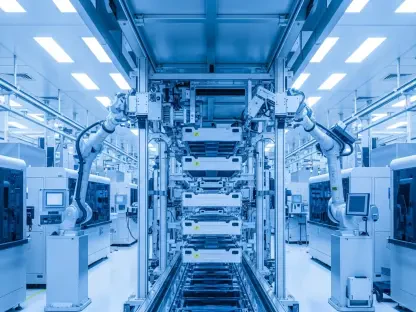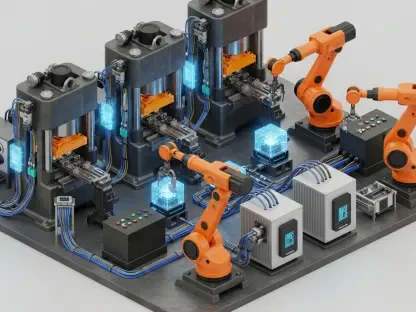

In the relentlessly competitive textile industry, where escalating operational costs and compressed delivery schedules have become the norm, the margin for error has all but vanished. Dyehouses clinging to traditional, manual processes find themselves grappling with inconsistencies that lead to costly rework, wasted resources, and unpredictable outcomes. This operational variability is no longer a manageable quirk of the trade but a critical liability. The strategic imperative has shifted from reactively fixing problems to proactively engineering stable, controllable, and automated systems that guarantee quality and reliability from the outset, paving the way for sustainable success in a demanding global market.
The Foundation of Control and Consistency
Eliminating Variability at the Source
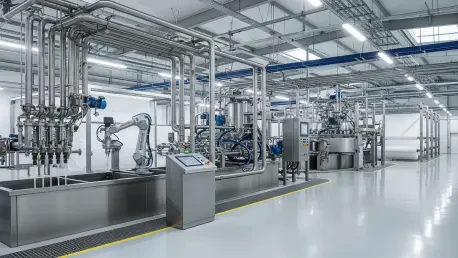
The journey toward process stability begins by addressing the most fundamental source of inconsistency: manual intervention. The introduction of automated chemical and dyestuff dosing systems represents a pivotal first step in establishing a controlled production environment. By replacing the inherent variability of manual handling with precise, machine-driven measurements, these systems create a highly repeatable and reliable foundation for the entire dyeing process. This technological leap ensures that every batch receives the exact formulation required, which directly mitigates the risk of color deviations and other quality defects. Consequently, dyehouses experience a significant reduction in the need for reprocessing—a critical factor in improving right-first-time performance, streamlining production flow, and minimizing the costly consumption of dyes, chemicals, water, and energy. This foundational automation transforms a craft-based operation into a predictable manufacturing science, establishing a baseline of consistency upon which further optimizations can be built.
A key advantage of modern automation is its adaptability to existing infrastructure, making the transition to a more stable process both financially and logistically feasible for many facilities. Advanced dosing systems are often engineered for retrofit integration, allowing dyehouses to upgrade their current machinery without undertaking a complete and disruptive overhaul. This gradual approach to modernization enables a phased investment strategy, where improvements in efficiency and quality from the initial automation step can help fund subsequent technological enhancements. By creating a more predictable and controlled production flow from the very start, these retrofitted systems lay the essential groundwork for more sophisticated process management. This initial investment in precision and repeatability is not merely an upgrade; it is a strategic move that sets the stage for a comprehensive transformation, empowering dyehouses to achieve higher levels of operational excellence and competitive resilience in an increasingly challenging market.
Harnessing Real-Time Data for Proactive Management
Building upon the bedrock of automated dosing, the next layer of control is achieved through the implementation of continuous process monitoring facilitated by intelligent sensors. These advanced devices provide a constant stream of real-time data on critical parameters such as temperature, pressure, pH levels, and overall bath conditions throughout the dyeing cycle. This capability marks a paradigm shift from a traditional reliance on intermittent operator checks and subjective assessments to a system of proactive, data-driven oversight. Operators are empowered to identify and correct even minor deviations from the established process parameters before they can escalate into significant quality defects. This level of granular control ensures that the dyeing environment remains within optimal specifications from start to finish, leading to unparalleled consistency and product quality that can be reliably replicated across every production run.
The benefits of continuous, sensor-based monitoring extend far beyond enhancing product quality and consistency; they directly impact both economic efficiency and environmental responsibility. By maintaining precise control over the dyeing process, these systems enable the optimization of essential resource consumption. Real-time data allows for the fine-tuning of energy usage, ensuring that heating and cooling cycles are executed with maximum efficiency. Similarly, water and chemical consumption can be meticulously managed, reducing waste and lowering operational expenditures. This data-driven approach addresses the dual pressures of economic performance and sustainability that modern textile manufacturers face. It transforms the dyeing process into a transparent, quantifiable, and highly efficient operation where every variable is managed not by chance or estimation but by precise, actionable intelligence derived directly from the factory floor.
Integrating Systems for a Holistic Operational View
From Fragmentation to a Cohesive Digital Factory
A common pitfall that perpetuates process variability is the operation of production systems in isolation, where dosing equipment, monitoring sensors, and dyeing machines function as disconnected islands of technology. This fragmentation prevents a comprehensive understanding of the entire production workflow, making it difficult to pinpoint the root causes of inconsistencies. The “digital factory” concept directly counters this issue by integrating these disparate elements into a single, cohesive operational framework. Through a centralized monitoring platform, managers and operators gain a holistic, real-time overview of all production activities. This unified perspective breaks down information silos and creates a transparent environment where the performance of each component can be analyzed in the context of the entire process, from chemical dispensing to the final rinse cycle.
This integrated approach provides powerful analytical capabilities that are simply unattainable in a fragmented system and is especially valuable for facilities that manage multiple production lines simultaneously. With a centralized dashboard, it becomes significantly easier to detect subtle inconsistencies between machines or shifts, analyze process trends over time, and implement systematic corrective actions that have a facility-wide impact. Instead of solving problems on a case-by-case basis, management can identify systemic issues and deploy standardized solutions that elevate the performance of the entire operation. This transformation from a collection of individual machines into a coordinated, intelligent production ecosystem is the cornerstone of achieving and maintaining true process stability. By ensuring every part of the production chain works in harmony, dyehouses can unlock new levels of efficiency, quality control, and operational agility.
The Evolving Role of Technology and Partnership
Successfully implementing such a comprehensive system requires more than just purchasing advanced hardware and software; it necessitates a collaborative partnership between the dyehouse and its technology provider. A “process partner” approach moves beyond a simple vendor-client transaction, fostering a deep, ongoing relationship in which the provider works closely with the facility to understand its unique workflows, operational challenges, and strategic goals. This collaborative model ensures that the technological solutions are not merely installed but are meticulously tailored and integrated to address the specific needs of the dyehouse. By engaging in this in-depth consultation, technology partners can help identify hidden inefficiencies and co-develop a roadmap for modernization that aligns with the company’s financial and operational realities, maximizing the return on investment.
This partnership model is particularly effective when combined with a strategy of gradual modernization built upon retrofit-compatible solutions. This approach allows dyehouses to build a more stable, resilient, and adaptable production environment incrementally, without the prohibitive cost and disruption of a full-scale replacement of existing machinery. The synergy of advanced automation hardware, intelligent sensing technology, and integrated factory management—all guided by the expertise of a dedicated process partner—provides a clear and manageable path for transitioning from unpredictable, reactive operations to highly efficient, transparent, and stable ones. This strategic alliance empowers dyehouses not only to solve today’s production challenges but also to build a robust technological foundation that will support their long-term growth and success in an ever-evolving industry.
Charting a Path Toward Resilient Operations
The strategic adoption of integrated automation and data-driven management ultimately fortifies the operational backbone of forward-thinking dyehouses. By moving beyond isolated technological fixes and embracing a holistic system, these facilities have successfully transitioned from a state of constant variability to one of predictable control. The initial step of automating dosing created a foundation of consistency, which was then enhanced by the real-time oversight provided by smart sensors. This synergy of technologies, unified under a central digital framework, allowed for a level of process insight and proactive management that was previously unattainable. This transformation did not merely improve efficiency; it redefined what was possible in textile dyeing, establishing a new benchmark for quality, reliability, and sustainable production that has positioned these innovators for enduring success.