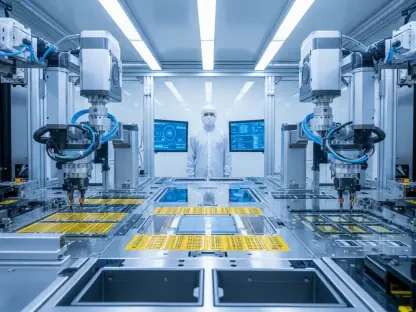

Additive Manufacturing (AM), commonly referred to as 3D Printing, has shown significant promise in revolutionizing the healthcare industry thanks to its ability to create complex, customized medical solutions quickly and efficiently. To fully realize this potential and achieve a wide-ranging

Founded in 2021, ADDMAN has quickly established itself as a forward-thinking entity dedicated to enhancing the manufacturing landscape. The company's mission is characterized not only by owning cutting-edge equipment but also by understanding customer needs, implementing the right strategies, and

As artificial intelligence (AI) continues to evolve, its potential to revolutionize various aspects of supply chain management by 2025 is becoming increasingly evident. The integration of AI in areas such as logistics, technology, warehousing, and industry-specific applications is expected to bring

The autonomous vehicle (AV) industry is at a critical juncture in the United States. With rapid advancements in technology and increasing competition from countries like China, the need for a cohesive federal policy framework has never been more pressing. The recently published federal policy

The biopharma industry is on the brink of significant transformation as it moves toward 2025, driven by advancements in drug development, manufacturing technologies, and an increased focus on sustainability and supply chain resilience. With ongoing innovation, the industry is poised to address
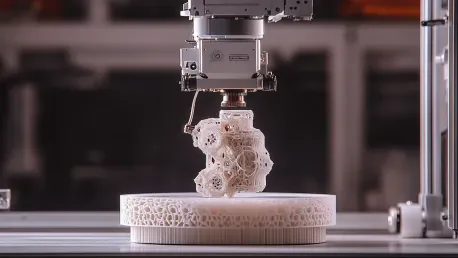
The landscape of product development is undergoing a significant transformation, driven by the convergence of artificial intelligence (AI), agile methodologies, and additive manufacturing. These three forces are not only enhancing efficiency but also fostering deeper innovation and collaboration.