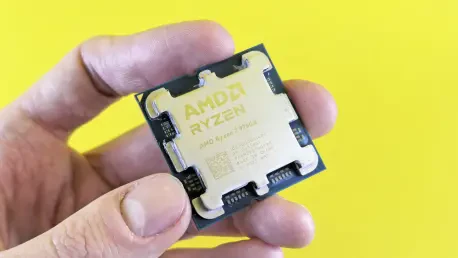

Existing semiconductor test controllers have increasingly become a bottleneck as they struggle to provide the parallel power needed for complex chiplet designs. This limitation has become a focal point in 2026, as the industry grapples with the escalating computational demands of specialized hardware used in validation and high-capacity network security. The launch of the AMD EPYC Embedded 9006 Series represents a decisive technological pivot, transitioning the high-performance Zen 6 architecture into the embedded market to address these critical inefficiencies. By delivering data-center-class performance at the edge, these processors provide up to 256 cores and 512 threads within a single socket, a level of density previously unseen in this sector. This shift ensures that organizations no longer have to compromise between power efficiency and the raw processing muscle required for modern AI-driven workloads. Consequently, the architecture sets a new benchmark for industrial-scale compute power.
Transforming Industrial Performance: Security and Speed Standards
Revolutionizing Semiconductor Testing: Automated Systems
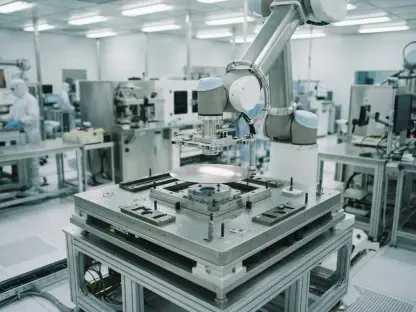
A primary application of the Zen 6 embedded series involves the fundamental optimization of semiconductor automated test equipment, which has traditionally struggled to keep pace with the complexity of modern silicon dies. As chips integrate more diverse chiplet designs and specialized AI accelerators, the equipment used for high-speed quality control must manage massive parallel processing tasks to validate signal integrity and functional stress levels. The 9006 series directly addresses these challenges by providing a significant throughput boost, estimated at 1.8 times the processing capacity of previous hardware generations. This improvement allows manufacturers to conduct exhaustive electrical parametric tests and logic validation across multiple dies simultaneously, significantly shortening the time required for high-volume production cycles. By reducing the time spent in the testing phase, the architecture enables a more streamlined manufacturing process that can quickly adapt to changing market needs.
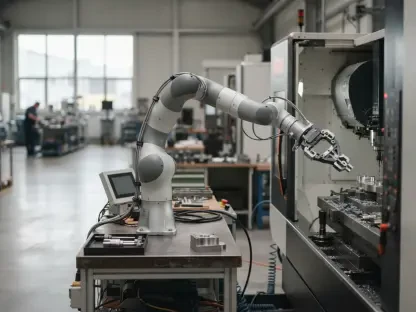
The impact of this increased throughput extends beyond simple speed, as it directly influences the global semiconductor supply chain by improving overall yield rates. When testing equipment can identify defects with greater precision and speed, manufacturers are able to filter out non-compliant silicon before it enters the final assembly stages, thereby reducing wasted resources and lowering total production costs. In the competitive landscape of 2026, where hardware availability is a primary driver of technological progress, the ability to rapidly validate complex chiplet designs has become a significant strategic advantage. Furthermore, the integration of these high-density processors into the factory floor ensures that quality control remains consistent even as production volumes scale. This reliability is essential for maintaining the high standards required for aerospace, medical, and automotive applications where failure is not an option. Thus, the Zen 6 architecture acts as a stabilizing force in the production of advanced electronics.
Strengthening Infrastructure: Connectivity and Data Protection
To support the high core counts and intense computational needs of modern networking, the Zen 6 architecture introduces substantial upgrades to data movement and memory bandwidth. These processors feature up to 96 lanes of PCIe Gen 6 and full support for CXL 3.1, facilitating lightning-fast communication between the central processing unit and external hardware accelerators. Additionally, the inclusion of 16 DDR5 memory channels supporting advanced MR-DIMMs allows for memory speeds of up to 12,800 megatransfers per second. This massive increase in bandwidth is particularly beneficial for high-end network firewalls and enterprise storage arrays that must manage 400G or 800G standards without introducing latency. By providing the control plane muscle necessary to process complex security policies in real-time, the 9006 series ensures that enterprise infrastructure remains responsive. This level of connectivity allows for the efficient management of massive RAID configurations and complex data compression tasks.
Security was established as a core pillar of the 9006 series, with designers implementing multiple layers of hardware protection to safeguard sensitive semiconductor data. The AMD Root of Trust utilized post-quantum cryptography to ensure that firmware signatures remained secure against future decryption threats, while the integration of Caliptra provided an open-source silicon root of trust for remote attestation. These advancements allowed manufacturers to mathematically verify device identities, effectively preventing unauthorized tampering in critical industrial environments. For organizations looking to capitalize on these innovations, the transition to Zen 6 required a holistic update to existing infrastructure to accommodate the new memory and connectivity standards. Moving forward, it is recommended that developers prioritize the deployment of Caliptra-compliant systems to maintain an immutable boot chain. The adoption of these processors successfully bridged the gap between high-performance computing and the specialized security needs of the embedded layer.