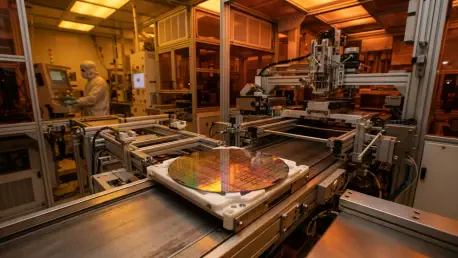

YMTC’s strategic pivot toward domestic tooling is a calculated move to insulate its manufacturing roadmap from the volatility of international trade policy and export bans. As the global semiconductor landscape fragments, the Wuhan-based manufacturer has increasingly leaned into its role as the vanguard of Chinese memory technology. This shift is not merely a survival tactic but a proactive re-engineering of the entire production lifecycle. For the upcoming Fab 4 facility, the company aims to source between 60% and 70% of its equipment from local vendors, a sharp increase from the levels seen in earlier development cycles. This aggressive localization effort underscores a fundamental change in how manufacturing is perceived, moving away from a globalized supply chain toward a self-contained domestic loop. By prioritizing local expertise, the organization is building a resilient foundation that can withstand external shocks while maintaining its competitive edge in the high-stakes NAND market.
Technological Autonomy in Advanced Stacking
The drive toward 300-layer NAND flash technology represents the pinnacle of current memory engineering, and the development of Fab 4 is central to this objective. Achieving such density requires extreme precision in etching and chemical mechanical polishing, areas where domestic firms like NAURA Technology Group and Advanced Micro-Fabrication Equipment have made significant strides. These partnerships are no longer experimental; they are deep, integrated collaborations designed to replace high-end tools previously provided by Western conglomerates. The complexity of stacking hundreds of layers necessitates a high degree of vertical integration, which the company is fostering by embedding local engineers directly into the fabrication planning process. This approach has allowed the firm to refine its Xtacking architecture, which separates peripheral circuitry to maximize density. By tailoring domestic tools to these specific needs, the company is creating a unique and hardened production environment.
While international competitors like Samsung Electronics and SK hynix grapple with regulatory hurdles that complicate the upgrading of their facilities on Chinese soil, YMTC has seized the opportunity to consolidate its domestic market share. Recent data indicates that this strategy is yielding results, as the manufacturer now commands a dominant position in the local data center and artificial intelligence sectors. The demand for high-performance memory to fuel AI training has provided a massive tailwind for advanced NAND products. This market dominance provides a steady revenue stream that partially offsets the massive research and development costs associated with indigenous tool development. However, the reliance on a domestic-first policy also places a heavy burden on the local equipment sector to keep pace with rapid innovation cycles. The success of Fab 4 will serve as a litmus test for whether a localized supply chain can truly compete on a global scale in terms of both yield and cost-effectiveness.
Strategic Fiscal Management and Future Outlook
The decision by Changjiang Memory Holdings to suspend its 33-billion-yuan initial public offering has introduced a layer of fiscal complexity into an already ambitious expansion plan. This multibillion-dollar funding gap creates a significant challenge for the capital-intensive construction and outfitting of Fab 4, which requires consistent investment to reach full operational capacity. The delay reflects broader uncertainties in the financial markets and a cautious stance from institutional investors regarding the long-term impact of trade restrictions. Without the immediate influx of public capital, the organization must rely on state-backed funding and internal cash flows to sustain its momentum. This financial pressure necessitates a highly disciplined approach to capital expenditure, where every yuan must be strategically allocated to the most critical manufacturing bottlenecks. The ability to navigate this funding crunch without slowing the construction timeline will be crucial for maintaining its technological parity.
The strategic maneuvers executed by YMTC provided a clear blueprint for how a high-tech firm could navigate the intersection of geopolitical tension and financial instability. By doubling down on domestic tooling for Fab 4, the company demonstrated that localization was not just a defensive posture but a viable path toward leadership in the memory market. Stakeholders who monitored this transition realized that the success of such an initiative depended as much on financial resilience as it did on engineering prowess. The IPO suspension served as a sobering reminder that even the most advanced technological roadmaps required stable, long-term capital to come to fruition. Moving forward, manufacturers in similar positions should prioritize the development of diverse funding streams and foster deeper integration with local toolmakers early in the design phase. This proactive engagement ensured that when external pressures mounted, the foundation of the supply chain remained intact through various industry shifts.