
The specific combination of cobalt, chromium, iron, nickel, aluminum, titanium, vanadium, and tantalum enables highly tunable properties in this new metallic substance. Engineering teams at the Pohang University of Science and Technology have successfully addressed a significant barrier in modern manufacturing by developing a high-entropy alloy that survives extreme conditions. This material maintains its integrity from cryogenic lows of -196°C up to scorching highs of 600°C, a feat that challenges the capabilities of standard industrial metals. By utilizing Laser Powder Bed Fusion, the research team bypassed the brittle nature associated with high-strength materials produced through 3D printing. This development is far more than a laboratory experiment; it represents a fundamental shift in how we approach the design of metallic structures for aerospace and energy sectors. The ability to maintain structural resilience in diverse environments opens new possibilities for machinery that was once held back by thermal limitations, allowing for more ambitious engineering projects starting in 2026.
Revolutionizing Strength: The Power of Additive Manufacturing
The shift toward advanced additive manufacturing has been hindered by the need for extensive post-processing steps like high-heat annealing to stabilize internal structures. In traditional methods, the rapid cooling inherent in 3D printing often creates internal stresses that lead to structural defects or microscopic cracks. However, the researchers engineered this high-entropy alloy to achieve its peak mechanical performance immediately upon exiting the printer. This as-printed capability effectively eliminates the need for secondary heat treatments, reducing the energy consumption and lead times associated with producing complex components. By precisely calibrating laser intensity and scan speeds, the team fostered a self-organizing microstructure that strengthens the part during the build itself. This approach allows for the rapid transition from digital models to industrial-ready parts without the usual metallurgical bottlenecks found in standard metal production. This efficiency is critical for maintaining a competitive edge in 2026.
A standout feature of this innovation is how it successfully navigates the historic trade-off between strength and ductility, where gains in one property usually necessitate losses in the other. Tensile testing performed on the new alloy revealed a yield strength that consistently exceeds 1 gigapascal, which is paired with a uniform elongation ranging between 19% and 26% across the entire thermal spectrum. This stability is largely due to the formation of a network-like microstructure of precipitates that emerge naturally during the rapid printing cycles. Unlike standard alloys that become dangerously brittle at cryogenic temperatures, this substance maintains its flexibility and energy-absorption capacity. Even when subjected to the intense heat typical of modern gas turbines, the material does not soften or lose its structural resolve. This dual-capability ensures that engineers no longer have to compromise on safety or performance when designing hardware that must operate in volatile and unpredictable thermal environments.
Microstructural Secrets: The Dual Function of Atomic Interfaces
The secret to this unprecedented resilience is located within the atomic interfaces between the precipitates and the surrounding metal matrix. Through high-resolution electron microscopy, the research team discovered that the material employs a dual-deformation strategy that adapts based on the applied mechanical load. At specific interfacial boundaries, the crystal structures are aligned to allow deformation to pass seamlessly from the matrix into the harder precipitates. This deformation transmission prevents the buildup of localized stress that would otherwise lead to the initiation of cracks or fatigue. By allowing the precipitates and the matrix to deform in a synchronized fashion, the alloy achieves a level of ductility that remains consistent regardless of the ambient temperature. This mechanism is particularly effective in sub-zero environments where most metals lose their ability to deform plastically, resulting in a cohesive unit that ensures long-term reliability under heavy strain.
Conversely, at different sets of interfaces within the same material, the atomic arrangement acts as a formidable barrier to movement. These specific boundaries are designed to trap dislocations—the tiny microscopic defects that occur when a metal is stretched or compressed—and prevent them from traveling further through the lattice. This process, known as dislocation accumulation, creates an internal strengthening effect that significantly boosts the alloy’s resistance to external force. By effectively pinning these defects in place, the material hardens as it is stressed, leading to the high yield strength observed in laboratory trials. This interplay between flexibility at some interfaces and rigidity at others creates a sophisticated regulatory system within the metal itself. This balance of opposing forces allows the alloy to withstand immense pressures without failing. The discovery of these dual-function interfaces provides a new blueprint for material scientists looking to design metals for the next decade.
Industrial Applications: Expanding the Horizons of Aerospace and Energy
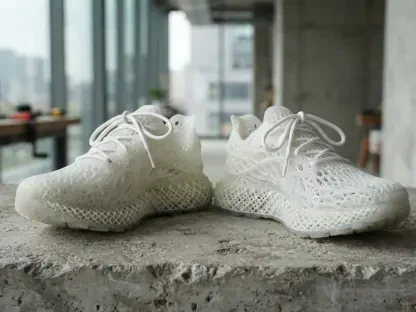
Practical applications for this high-entropy alloy are significant for the aerospace and energy sectors, where hardware must survive the harshest conditions imaginable. Jet engines require materials that can handle the extreme transition from the freezing air of high altitudes to the intense thermal output of combustion chambers. Similarly, the rapid expansion of the global hydrogen fuel economy and the transport of liquefied natural gas necessitate storage tanks and valves that remain ductile at ultra-low temperatures. Standard materials often fail these tests, becoming brittle and dangerous over time, but the new alloy offers a safer and more durable alternative for these critical systems. Beyond propulsion and storage, the material’s compatibility with 3D printing allows for the creation of lightweight, topologically optimized parts that were previously impossible to build. This ability to print intricate cooling channels directly into high-strength parts will improve overall energy efficiency.
The successful fabrication of this 3D-printed alloy demonstrated that the thermal dynamics of additive manufacturing were harnessed to create superior metallic structures. Researchers concluded that the as-printed efficiency of this material eliminated the costs and environmental impact of secondary heat treatments, making it a viable candidate for industrial adoption. Moving forward, the focus shifted toward verifying the long-term fatigue resistance of these parts under repeated stress cycles to ensure they met safety standards for commercial aviation. Engineers were encouraged to integrate these high-entropy alloys into pilot projects for cryogenic storage and high-speed propulsion systems to validate their performance in real-world scenarios. The results confirmed that material science entered an era where atomic-scale design and 3D printing work in tandem to solve thermal challenges. Future considerations involved optimizing powder production to make these alloys more accessible for global supply chains in 2026.