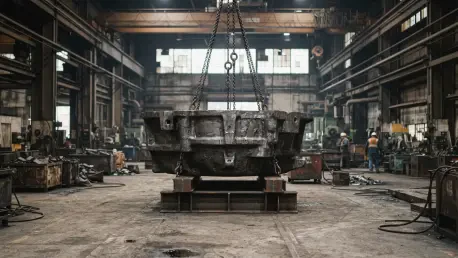

Case studies on wind turbine locking disks reveal that even minor equipment substitutions can cause resin sand consumption to jump by nearly forty-two percent. This staggering fluctuation highlights the current volatility and complexity within the metallurgical sector as it undergoes a period of intense transformation aimed at aligning with the aggressive mandates of international climate agreements. In the current landscape of 2026, heavy industrial players are no longer just evaluated on their throughput or material quality but also on their ability to quantify and mitigate their environmental footprint with surgical precision. Traditional sand casting, an essential process for creating the complex geometries required for automotive housings and renewable energy infrastructure, has long been a challenge for sustainability officers due to its historical inefficiency. With energy utilization rates in many regional foundries fluctuating between fifteen and twenty-five percent, the industry remains a primary target for decarbonization efforts. The introduction of granular mathematical models now offers a path forward, shifting the focus from broad factory-wide assessments to a bottom-up approach that isolates the carbon legacy of every single component that leaves the facility floor.
The Evolution of Carbon Accounting Frameworks
Breaking Down the Foundry Process: From Macro to Micro
Historically, the metallurgical sector relied on top-down life cycle assessments that provided high-level data but offered very little actionable guidance for day-to-day shop floor management. These macro-models could tell a factory manager the total emissions for a month, but they failed to explain why two seemingly identical production runs on different days resulted in disparate carbon profiles. The emergence of granular modeling addresses this analytical gap by meticulously dividing the sand casting workflow into four primary stages: molding, melting, recycling, and machining. This categorization enables a more nuanced understanding of how variable emissions—those directly tied to the specific geometry and volume of a part—interact with the fixed emissions of the facility. By distinguishing between these inputs, engineers can identify exactly where inefficiencies occur, allowing for a level of operational optimization that was previously impossible. This transition to high-resolution data ensures that every kilogram of material and every kilowatt of energy is accounted for in the context of the individual workpiece.
Building on this structural breakdown, the model enables managers to track the carbon footprint across the entire life cycle of a specific order. For instance, the molding stage focuses on the precise amount of resin sand and binders used, while the melting stage captures the intensity of the furnace charge. This prevents the “dilution” of data that often occurs when facility-wide utility bills are simply averaged across total tonnage. In the current industrial environment, this granularity is essential for meeting the reporting standards required by modern green finance and carbon tax regimes. By isolating the molding, melting, recycling, and machining phases, the framework provides a clear map of the environmental cost of each design choice. This allows design engineers to see the immediate carbon impact of changing a part’s thickness or modifying a mold’s gating system, transforming sustainability from a distant policy goal into a real-time design parameter that influences the final product before the first drop of molten iron is ever poured.
Tracking Materials, Energy, and Waste: The Three-Vector Approach
The strength of the current methodology lies in its ability to track carbon sources across three critical vectors: material consumption, energy use, and environmental waste treatment. In the molding stage, researchers and floor managers monitor the “sand-to-iron ratio” as a primary indicator of efficiency. This metric represents the volumetric relationship between the casting mold and the external flask, a factor that directly dictates the amount of new sand and furan resin binders required for each pour. Meanwhile, the melting stage accounts for the furnace charge, which includes everything from pig iron and scrap steel to specific additives like silicon carbide and carburizers. By adjusting for pouring shrinkage margins and volume loss during cooling, the model calculates the exact carbon burden of the raw materials used. This rigorous mathematical tracking ensures that the environmental cost of every additive and alloy is captured, providing a transparent look at the material legacy of the industrial component.
Beyond materials, the framework incorporates the energy demands and waste remediation costs associated with modern metallurgy. Subsequent stages, such as recycling and machining, involve energy-intensive sand reclamation processes and mechanical tool wear that were often overlooked in older accounting models. This methodology calculates the carbon footprint of reclaiming sand after the shakeout process, factoring in the electrical energy required to run reclamation lines and the indirect emissions from process losses. Furthermore, the model addresses the treatment of electric furnace slag and toxic exhaust as an active carbon cost rather than an externalized overhead. By integrating these three vectors—materials, energy, and waste—into a single mathematical framework, foundries can generate a comprehensive carbon profile for every unit produced. This level of detail is becoming the global standard in 2026, as manufacturers seek to provide verifiable environmental data to stakeholders who are increasingly sensitive to the carbon intensity of their supply chains.
Analyzing the Energy Dynamics of the Shop Floor
Accounting for Workshop Logistics: The Hidden Cost of Movement
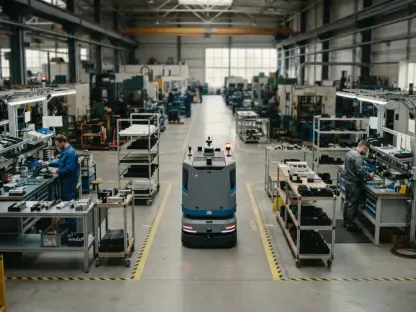
A unique and often overlooked aspect of this granular framework is the detailed integration of workshop logistics into the total carbon equation. While traditional models focus exclusively on high-consumption machinery like induction furnaces, this modern approach includes a power-based methodology to track the kilowatt-hours used by auxiliary equipment such as mechanical mixers and electric overhead cranes. By calculating specific transit distances, travel speeds, and motor wattages, the model quantifies the hidden carbon cost of moving heavy workpieces across the foundry floor. In large-scale operations, where a massive component might travel hundreds of meters between specialized zones for molding, melting, and grinding, these logistical movements add up to a significant environmental burden. In the past, this “internal transport” was typically buried in general facility overhead, but granular modeling reveals that logistical efficiency is a key component of a low-carbon manufacturing strategy.
The logistical tracking component also allows factory managers to identify bottlenecks and inefficient shop floor layouts that contribute to unnecessary energy consumption. For example, if the model shows that a specific part requires excessive crane maneuvers due to its size or the location of the grinding station, it provides a data-driven justification for reorganizing the production flow. This level of insight is particularly valuable for foundries handling massive castings, where the sheer weight of the components makes every meter of movement an energy-intensive endeavor. By transforming “distance traveled” into a quantifiable carbon value, the framework encourages a more streamlined approach to plant logistics. This not only reduces the total carbon footprint of the individual casting but also improves overall operational throughput. In an era where every gram of CO2 counts toward corporate targets, optimizing the path of a seven-ton workpiece across the shop floor represents a practical and effective way to trim excess emissions.
Modeling Waste Treatment and Neutralization: A Circular Perspective
Modern industrial environmental protection requires a truly circular approach to waste management, which this model reflects by calculating the carbon footprint of active remediation processes. Rather than simply measuring the volume of exhaust gases or slag produced, the framework accounts for the energy consumed by filtration systems, dust recovery units, and fume neutralization stations during the production cycle. This ensures that the carbon cost of maintaining a clean work environment and meeting air quality standards is directly attributed to the parts being manufactured. By treating waste management as an active energy consumer, the model provides a more accurate assessment of the “clean” production process, acknowledging that environmental protection itself carries a carbon price. This shift in perspective is crucial for foundries that have invested heavily in sophisticated scrubbing and recovery technologies, as it allows them to see the total energy trade-off of their sustainability investments.
Building on this logic, the model also captures the indirect emissions associated with the handling and processing of secondary waste products, such as electric furnace slag and spent abrasive materials from shot blasting. In 2026, the management of industrial byproducts is a major component of any decarbonization strategy, and the ability to link these costs to individual castings represents a significant step forward. For instance, the energy required to haul slag to a processing facility or to reclaim metallic shot for reuse is mathematically amortized over the production run. This comprehensive view of the “environmental neutralization” phase prevents foundries from underreporting their true carbon impact. By including these variables, the granular model supports a more holistic understanding of the industrial cycle, where waste is not just an output to be managed but a process stage with its own measurable energy and carbon inputs. This data empowers engineers to seek out process changes that reduce waste generation at the source, thereby lowering both remediation costs and the total carbon footprint.
Practical Real-World Application Implementation Strategies and In-Depth Sensitivity Analysis Methodologies
Validating the Model with Large-Scale Castings: The Wind Turbine Study
To prove the framework’s effectiveness under real-world conditions, researchers recently conducted an extensive case study involving a seven-ton wind turbine locking disk made of QT500-14 ductile iron. The baseline trial, which followed standard production protocols, provided a critical and somewhat surprising insight: the melting stage alone accounted for over ninety-nine percent of the total carbon emissions. In contrast, the molding, machining, and recycling stages combined contributed less than one percent of the environmental impact for this massive component. This finding provides clear, data-driven guidance for industry leaders, suggesting that the primary leverage point for meaningful decarbonization in the foundry sector is not necessarily sand reclamation or machining precision, but rather the efficiency of the melting process and the carbon intensity of the raw iron charge. Without addressing the energy profile of the furnace, other “green” initiatives on the shop floor remain largely symbolic.
This validation also highlighted the importance of iron mass management and the “pouring shrinkage margin” in the final calculation. Because the melting stage is so dominant, any reduction in the amount of “over-pour” or scrap generated during the casting process leads to an immediate and significant drop in the total carbon footprint. The researchers found that for high-capacity foundries, the ability to predict the exact metal requirements for a large-scale casting is a powerful tool for environmental management. By focusing on furnace efficiency and optimizing the charge mix, manufacturers can achieve dramatic reductions in their reported emissions. This case study confirms that granular modeling does not just provide data for data’s sake; it identifies the specific “hot spots” in the production cycle where technical innovation will yield the highest environmental rewards. For the wind turbine industry, which is a cornerstone of the global energy transition, ensuring that its own components are produced with maximum efficiency is a vital step toward true sustainability.
The High Cost of Operational Inefficiency: Lessons from the Shop Floor
The case study further demonstrated how seemingly minor operational errors or equipment substitutions can lead to significant and avoidable carbon spikes. In the second trial of the wind turbine locking disk, equipment shortages forced technicians to use an oversized sandbox, which caused the sand-to-iron ratio to jump significantly. This single change resulted in a nearly forty-two percent increase in resin sand consumption and a proportional rise in the energy required for sand mixing and reclamation. Additionally, a logistical disruption during this trial forced the heavy component to be handled by an auxiliary crane team, adding fifty meters to the transport route and increasing the logistical carbon footprint by over twenty percent. These results illustrate that floor-level choices made by technicians, often based on immediate equipment availability rather than environmental strategy, can inadvertently undermine a company’s corporate sustainability goals.
These findings serve as a stark reminder that precision is just as important as technology in the fight for a lower-carbon foundry industry. While the melting stage remains the dominant factor in the overall footprint, the inefficiencies found in the molding and logistics stages represent a lack of operational discipline that modern green manufacturing can no longer afford. When these minor inefficiencies are multiplied across a year of production, the cumulative environmental and financial cost becomes substantial. The model provides a way to quantify these “hidden” costs, giving managers the evidence they need to invest in better equipment scheduling or more flexible molding setups. In the competitive industrial climate of 2026, the ability to avoid these operational pitfalls is what separates industry leaders from those struggling to meet new environmental standards. Granular modeling brings these floor-level realities to light, ensuring that every technician understands how their daily decisions impact the company’s total environmental legacy.
Prioritizing Materials for Maximum Impact: The Role of Sensitivity Analysis
Sensitivity index calculations have further refined this granular model by identifying which specific raw materials have the greatest impact on total emissions. The research discovered that additives such as silicon carbide possess exceptionally high sensitivity coefficients due to their highly concentrated carbon content and the energy-intensive nature of their production. This means that even a slight adjustment in the amount of silicon carbide added to the furnace charge can lead to a disproportionate shift in the final carbon footprint of the casting. By identifying these high-impact variables, metallurgists can prioritize specific material substitutions or charge adjustments that offer the highest “carbon return on investment.” This allows for a more strategic approach to metallurgy, where material selection is guided by both structural requirements and environmental impact.
Building on this insight, the model enables a proactive strategy for material sourcing and procurement; for instance, if silicon carbide is identified as a primary carbon driver, the foundry can work with suppliers to source lower-carbon alternatives or invest in technologies that allow for more precise dosing of the additive. This data-driven approach replaces the trial-and-error methods of the past with a sophisticated system of environmental optimization. In 2026, as supply chain transparency becomes a prerequisite for international trade, having this level of detail on material sensitivity is a major competitive advantage. It allows foundries to offer “low-carbon” product lines with verifiable data to back up their claims, meeting the demands of high-tech clients in the aerospace and renewable energy sectors. Ultimately, sensitivity analysis transforms the chemistry of the furnace into a lever for environmental change, ensuring that every additive is used with maximum efficiency.
Future Directions for Industrial Decarbonization
Addressing Data Gaps and Technical Limitations: The Path to Real-Time Monitoring
Despite the high level of precision offered by the current framework, several technical hurdles remain that must be addressed to reach the next stage of industrial decarbonization. One primary limitation is the current reliance on historical energy averages and manufacturer-rated power settings for equipment such as cranes and mixers. To achieve true unit-level accuracy, future iterations of the framework will need to incorporate Internet of Things (IoT) sensors and smart meters on every major piece of equipment. This would allow for live data streaming directly into the carbon accounting engine, capturing real-time fluctuations in power consumption caused by motor wear, varying load weights, or operator behavior. Transitioning from static averages to dynamic, real-time metering will be the next major leap in the evolution of green foundry operations, providing an even more granular view of the production floor.
Furthermore, the model currently excludes certain ambient site factors such as general facility lighting, heating, and ventilation, which are not directly tied to a specific casting but still contribute to the foundry’s overall site footprint. Integrating these “indirect-fixed” emissions without overcomplicating the unit-level calculation remains a challenge for researchers. Additionally, inconsistency across global emission factor databases poses a hurdle for companies operating in different regions; a ton of iron produced in one country may be assigned a different carbon value than iron produced elsewhere due to variations in the local power grid. Overcoming these discrepancies through international standardization will be essential for creating a truly comprehensive and universally accepted accounting tool. As these technical gaps are closed, the granular model will become even more robust, serving as the definitive source of truth for environmental reporting in the metallurgical industry.
Creating a Roadmap for Green Metallurgy: Actionable Steps for the Industry
The implementation of granular modeling provided a vital roadmap for the future of sustainable industrial engineering by proving that the melting stage is the most critical area for innovation. To move forward, foundries must prioritize the adoption of high-efficiency induction furnaces and explore the use of carbon-neutral raw material blends. The research also demonstrated that operational precision on the shop floor—such as optimizing sandbox sizes and streamlining logistics—can significantly reduce secondary emissions. These are actionable steps that can be taken immediately without requiring a total overhaul of existing foundry infrastructure. By focusing on these high-impact areas, manufacturers can begin to see measurable improvements in their carbon profiles while simultaneously reducing material waste and energy costs. The transition to a green foundry is not a single event but a continuous process of data-driven refinement.
Looking ahead, the shift toward carbon transparency will likely see these modeling techniques become a standard part of manufacturing execution systems. The study concluded that as the global economy moves toward carbon taxes and stricter environmental disclosures, the ability to account for every ton of metal poured is no longer just a corporate social responsibility goal but a competitive necessity. Foundries that embrace this level of granularity will be better positioned to navigate the complexities of modern industrial regulations and meet the expectations of an increasingly eco-conscious market. This methodology ensures that the fight against climate change is integrated into every mold, every pour, and every logistical move on the shop floor. By bridging the gap between high-level policy goals and the daily realities of the production line, granular modeling empowers the metallurgical industry to transform from an environmental liability into a leader in sustainable manufacturing.