
The historical landscape of Central European agriculture is currently undergoing a profound transformation as the Visegrad nations mobilize to reclaim their former status as global leaders in hemp production through a rigorous technological overhaul. This ambitious initiative, supported by the International Visegrad Fund, focuses on the creation of a comprehensive 2035 roadmap designed to transform the rural economies of Czechia, Hungary, Poland, and Slovakia into high-tech industrial hubs. For decades, the region struggled with a fragmented supply chain that saw vast quantities of raw hemp diverted toward low-value applications like animal bedding or basic construction insulation. However, the new strategic framework shifts this paradigm by prioritizing the production of premium, traceable textile fibers that meet the exacting standards of the modern global fashion and automotive industries. By focusing on high-end manufacturing rather than competing with low-cost international suppliers, the roadmap ensures that the unique genetics and agronomic expertise of the region are fully utilized. This transition is not merely about reviving an old crop; it is about building a sustainable, resilient ecosystem that integrates traditional farming with cutting-edge processing technologies to define the future of European textiles.
Modernizing the Processing Infrastructure
Industrial Upgrades: The Decortication Revolution
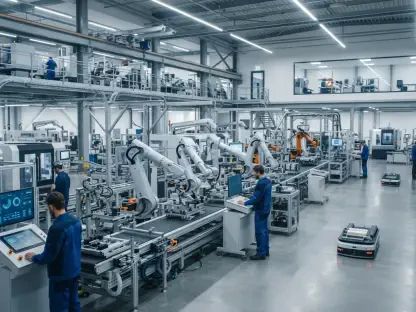
The primary obstacle preventing the regional hemp sector from achieving its full potential lies in the significant disparity between agricultural output and industrial processing capabilities. While farmers across Czechia and Poland have demonstrated an impressive ability to cultivate vast quantities of industrial hemp, the lack of localized, high-tech decortication facilities has historically relegated these harvests to low-value applications. To address this, the 2035 roadmap prioritizes the installation of advanced fiber separation lines that utilize ultrasonic and mechanical methods to isolate premium bast fibers without damaging their structural integrity. These technical upgrades are essential because traditional methods often result in coarse material suitable only for non-woven insulation. By transitioning to high-precision machinery, the region can finally produce the refined fibers required by high-end textile spinners who demand consistent length and strength for garment-grade yarns. This shift represents a move toward high-value manufacturing that will ultimately allow Central European producers to compete on quality rather than price in a crowded global marketplace.
Regional Synergy: Cross-Border Collaboration for Fiber Quality
Strategic partnerships between the Visegrad nations, specifically the burgeoning technical corridor between Poland and Czechia, serve as the backbone of this industrial revival. This collaboration is designed to pool research and development resources, allowing for the creation of standardized testing protocols that ensure every ton of fiber meets rigorous international benchmarks. Instead of operating in isolation, these countries are establishing shared procurement networks and off-take agreements that provide farmers with the financial stability needed to invest in specialized harvesting equipment. This synergy extends to the development of bio-retting technologies, where enzymatic processes are being refined in Polish laboratories before being implemented in Czech processing plants. Such a coordinated effort ensures that the entire region benefits from economies of scale, making the regional supply chain more resilient to global market fluctuations. By aligning their technical standards and industrial goals, these nations are proving that a unified approach to fiber processing can successfully challenge the dominance of low-cost imports while fostering a new era of specialized manufacturing that honors their deep-seated agricultural heritage and expertise.
Strategic Market Alignment and Implementation
Regulatory Drivers: Navigating the Digital Product Passport
The introduction of the Ecodesign for Sustainable Products Regulation by the European Union has created an unprecedented opportunity for Central European hemp producers to gain a competitive edge through transparency. Central to this regulatory environment is the Digital Product Passport, a mandatory tracking system that requires textiles sold within the EU to provide a verifiable record of their environmental footprint, from soil to finished garment. Because hemp is a naturally carbon-negative crop that requires minimal pesticides and water compared to traditional cotton, it is uniquely positioned to thrive under these new transparency requirements. The 2035 roadmap leverages this by integrating blockchain-based traceability into the processing infrastructure, allowing manufacturers to offer a fully documented “European Origin” label. This level of accountability is increasingly demanded by luxury fashion houses and automotive interior designers who are seeking sustainable alternatives to synthetic materials. As these industries seek to lower their Scope 3 emissions, the ability to source high-quality, traceable fibers from a nearby regional hub becomes a powerful economic driver that ensures long-term demand for the output of Visegrad processing facilities.
The Path to 2035: A Three-Phase Implementation Strategy
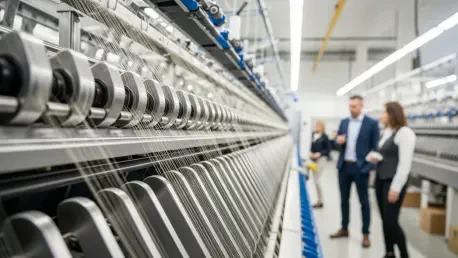
A meticulous three-phase development plan serves as the operational guide for scaling the industry from its current state to a sophisticated, multi-tier ecosystem by the year 2035. The initial phase, which is currently underway, focuses on the establishment of basic processing hubs capable of producing technical textiles for the construction and geotextile sectors. This foundational step allows the industry to build volume and refine its mechanical processes before moving into more complex applications. The second phase, scheduled to begin in 2028, will target the specific requirements of the apparel and automotive industries, requiring higher standards of fiber fineness and consistency. During this period, investments will shift toward sophisticated spinning technologies and specialized finishing treatments that prepare hemp fibers for blending with other sustainable materials. The final phase aims to reach the pinnacle of textile engineering by 2035, focusing on medical-grade fabrics and long-line fibers for the ultra-luxury market. This phased progression ensures that quality control measures and technical expertise grow in tandem with production capacity, preventing the market saturation of low-grade materials that previously hindered regional growth.
Reclaiming the Heritage of Agronomic Excellence
Genetics and Quality Control: Beyond Traditional Farming
Central Europe’s historical dominance in the hemp sector was largely built upon its world-class genetics and specialized agronomic knowledge, assets that remain vital to the 2035 revival strategy. During the mid-20th century, the region’s research institutions developed cultivars that were specifically adapted to the local climate, offering high yields and superior fiber strength. Although the industry faced a significant decline during the late 1990s due to the influx of cheap synthetic alternatives and a lack of technological modernization, the current roadmap seeks to reclaim this heritage by merging ancient expertise with modern biotechnological advancements. Current research initiatives are focused on refining these traditional strains to ensure they meet the specific requirements of modern high-speed spinning machinery. By overcoming modern barriers such as inconsistent fiber quality and non-standardized harvesting windows, the Visegrad nations can transform their historical legacy into a modern competitive advantage. This requires a shift from viewing hemp as a simple agricultural commodity to treating it as a precision-engineered industrial input, where every stage of growth is monitored to ensure the final textile product achieves the highest possible quality for the global luxury market.
Sustainable Legacy: Future-Proofing the Regional Bio-Economy
The establishment of the 2035 Strategic Roadmap provided a definitive answer to the long-standing industrial stagnation that once plagued the hemp sector across Central Europe. By integrating advanced decortication technology and regional cooperation, the Visegrad nations successfully transitioned from raw material exporters to leaders in high-value textile manufacturing. The commitment to digital traceability and strict environmental standards ensured that regional fibers became the preferred choice for global brands seeking sustainability and quality. This movement toward a circular economy demonstrated that historical agricultural strengths could be effectively merged with modern technical requirements to create a resilient economic model. Moving forward, the strategy prioritized the continuous refinement of bio-retting processes and the expansion of regional branding to encompass broader global markets. The success of this initiative established a blueprint for other traditional industries to modernize through targeted investment and cross-border collaboration. Stakeholders remained focused on maintaining the high standards of the Digital Product Passport, ensuring that the region’s hemp textiles continued to define the standard for ecological and industrial excellence.