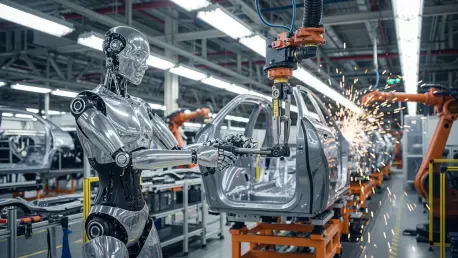

The traditional automotive assembly line remains one of the most demanding environments on the planet, where every second of downtime translates into thousands of dollars in lost revenue for major manufacturers. While the industry has spent decades perfecting the use of stationary robotic arms and automated guided vehicles, a new frontier is emerging through the deployment of bipedal humanoid robots. These machines are designed to operate in a world built for people, navigating the narrow corridors and complex workstations that were previously inaccessible to bulky industrial automation. The core challenge for car makers starting in 2026 is no longer just a matter of mechanical engineering, but a complex calculation of financial viability and operational integration. As companies like BMW and Hyundai experiment with these versatile forms, they are discovering that the road from a successful pilot program to a full-scale factory rollout is paved with significant economic hurdles. The transition requires a deep understanding of how a robot’s physical dexterity can be translated into a measurable return on investment in a sector known for its razor-thin margins.
Bridging the Gap Between Human Spaces and Automation
The primary motivation for introducing humanoid robots into the automotive sector is the inherent limitation of existing factory layouts. Most vehicle manufacturing plants were designed decades ago with human ergonomics in mind, featuring walkways, stairs, and mezzanines that are incompatible with traditional wheeled or tracked robots. Humanoid robots offer a unique solution because they can step over obstacles and climb stairs, allowing them to move between different stages of the production line without requiring a complete overhaul of the facility. By utilizing the same infrastructure as their human counterparts, these robots eliminate the massive capital expenditure typically associated with widening aisles or installing expensive rail systems. This “infrastructure-compatible” nature makes them particularly attractive for legacy plants where space is a premium and the cost of structural renovation would otherwise be prohibitive. Furthermore, the ability to operate in human-centric spaces allows these machines to take over repetitive tasks in areas that were once considered impossible to automate, such as fetching parts from dense storage racks or navigating the crowded interior of a vehicle during the final assembly stage.
Beyond simple navigation, the humanoid form factor allows for a level of physical versatility that stationary robots cannot match. In a modern car factory, the ability to reach into a car body and perform a task while maintaining a stable, standing posture is a game-changer for production efficiency. These robots can use standard human interfaces, such as touchscreens and manual switches, which avoids the need for expensive custom control systems for every automated station. This flexibility is crucial as the industry shifts toward more personalized vehicle manufacturing, where production lines must be reconfigured frequently to accommodate different models and trim levels. Instead of spending months redesigning a specialized robotic cell, engineers can simply reprogram a humanoid to move to a new location and perform a different task. This adaptability serves as a bridge between the rigid precision of traditional automation and the fluid mobility required for dynamic, modern manufacturing environments. It creates a hybrid workspace where biological and mechanical workers can coexist without the need for physical barriers that usually slow down the flow of materials and personnel.
Evaluating the Financial Feasibility of Bipedal Systems
While the physical capabilities of humanoid robots are impressive, the economic reality of their adoption is governed by a rigorous total cost of ownership model. The initial purchase price of a high-end bipedal robot is substantially higher than that of a standard industrial arm, largely due to the expensive sensor suites and high-torque actuators required for stable balance and movement. For a manufacturer to justify this investment, the robot must demonstrate a clear path toward labor replacement or productivity gains that offset its purchase and integration costs within a few years. In the current market, companies are analyzing how these machines can reduce the costs associated with workplace injuries and labor shortages in high-turnover roles. However, the financial equation is not just about the sticker price; it also includes the costs of specialized software development, constant cloud connectivity, and the specialized technicians needed to maintain such complex hardware. As the technology matures from 2026 to 2028, the industry expects a gradual reduction in hardware costs as production volumes for robot components increase, but the software layer remains a significant and ongoing operational expense.
Operational expenses extend beyond maintenance and into the realm of energy efficiency and persistent uptime. Bipedal locomotion is inherently more power-hungry than wheeled movement because the robot must constantly expend energy just to maintain its center of gravity and prevent a fall. In the high-intensity environment of a three-shift car plant, a humanoid robot must be able to operate for several hours without needing a recharge, or it risks becoming a bottleneck in the production flow. To combat this, manufacturers are looking into rapid-charging solutions and automated battery-swapping stations that can keep the robots on the floor with minimal interruption. Reliability is another critical factor; if a humanoid robot fails, it doesn’t just stop working, it potentially blocks a pathway or requires a specialized recovery team to move it. Therefore, the economic success of these machines depends on achieving a level of mechanical durability that rivals the legendary uptime of the stationary robots that have defined the industry for the last fifty years. Only when the cost-per-hour of a humanoid becomes competitive with traditional labor will we see them move from experimental pilot programs to becoming a staple on the global assembly line.
Technical Barriers to Widespread Implementation
Humanoid robots are currently being deployed for tasks that require high dexterity but involve relatively low physical force. In car manufacturing, this often means working on the “high-friction” parts of the assembly process, such as installing intricate wiring harnesses or fitting delicate interior components that require a soft touch. These tasks are notoriously difficult for traditional robots because they require constant adjustments based on tactile feedback and visual cues. Humanoid machines equipped with advanced computer vision and multi-fingered grippers can mimic the subtle movements of a human hand, allowing them to handle flexible materials and small fasteners with increasing precision. However, the transition from performing these tasks in a laboratory to a dusty, noisy, and vibrating factory floor is a massive technical leap. The internal processors required for real-time motion planning and environmental awareness generate significant heat, which can lead to system throttling or component failure if the robot’s cooling systems are not up to the task. Engineers are currently working to balance the need for high-performance computing with the physical constraints of a self-contained, battery-powered frame.
Thermal management is just one part of the broader challenge involving the laws of thermodynamics and current battery chemistry limitations. Most humanoid robots today struggle to complete a full eight-hour shift on a single charge, especially when performing tasks that involve significant walking or lifting. This limitation necessitates a strategic approach to how these robots are integrated into the workflow, often requiring them to work in shorter bursts or in proximity to charging hubs. Furthermore, the sensors used for navigation and object recognition must be robust enough to handle the varying lighting conditions and metallic reflections common in automotive plants. Dust and fine metallic particles can interfere with lidar and optical sensors, leading to navigation errors or safety stops that disrupt production. As the industry moves forward, the focus is shifting toward developing more resilient sensor hardware and edge-computing algorithms that can filter out environmental noise. These technical refinements are essential for ensuring that humanoid robots can maintain the high-speed rhythm of a modern assembly line without requiring constant human intervention to clear errors or reset their systems.
Evolving Safety Standards for Collaborative Environments
The shift from segregated automation to collaborative humanoid deployment requires a fundamental rethinking of factory safety protocols. In the past, industrial robots were confined to heavy steel cages, and any human entry into their workspace triggered an immediate emergency stop. Humanoid robots, however, are designed to work alongside people, which means they must be equipped with a suite of safety features that allow them to detect and react to human presence in milliseconds. This involves the use of “soft” actuators that limit the force of an impact and proximity sensors that create a virtual safety bubble around the machine. Before these robots are ever deployed on a live production floor, their movements are meticulously tested in digital twin environments. These high-fidelity simulations allow engineers to model every possible interaction between the robot, the vehicle, and the human workforce, identifying potential hazards before they manifest in the physical world. This data-driven approach to safety is critical for building trust between human workers and their new mechanical colleagues, ensuring that the introduction of humanoids does not lead to a decrease in overall workplace security.
Ultimately, these robots are being integrated not just as physical laborers, but as mobile data nodes within a larger digital manufacturing ecosystem. Every movement the robot makes and every sensor reading it collects can be fed back into a central management system to optimize the production flow. This allows for a level of granular oversight that was previously impossible, as the robots can identify bottlenecks or quality issues in real-time. The success of humanoid integration depends on how well these machines can communicate with other automated systems, such as the overhead conveyors and the autonomous parts delivery carts. This interconnectedness transforms the factory into a “Software Defined Factory,” where the physical hardware of the robot is merely an extension of a sophisticated AI-driven brain. As the technology continues to evolve, the goal is to create a seamless transition where the robot’s physical agility is matched by its digital intelligence, allowing it to adapt to new tasks and environments with minimal human oversight. This holistic integration is what will eventually determine whether humanoid robots become a permanent fixture in the automotive industry or remain a specialized tool for niche applications.
Building a Resilient Workforce Strategy
Industry leaders recognized that the initial hype surrounding bipedal automation needed to be replaced by a strategic focus on practical utility. They shifted their perspective toward viewing humanoid robots as a way to augment the existing workforce rather than a tool for immediate, widespread replacement. This required manufacturers to invest in comprehensive training programs for their human employees, who transitioned into roles focused on robot supervision, maintenance, and complex problem-solving. Companies that succeeded in this transition were those that prioritized the integration of robots into the most physically taxing and repetitive segments of the assembly line first. This approach allowed the workforce to see the direct benefits of automation in reducing physical strain and improving safety, which helped to mitigate the cultural friction often associated with new technology. They also established clear protocols for data management, ensuring that the insights gained from the robots were used to improve overall factory ergonomics and efficiency.
The path forward for car manufacturing involved a commitment to iterative testing and long-term hardware development. Decision-makers learned that the most effective way to implement humanoid systems was to start with specific, low-risk sub-processes before attempting to automate more complex assembly stages. They focused on developing a standardized software architecture that allowed robots from different manufacturers to share a common language, which prevented the company from becoming locked into a single vendor’s ecosystem. This foresight enabled a more competitive market for robot components and services, driving down costs and accelerating the pace of innovation across the industry. By focusing on the intersection of mechanical flexibility and digital connectivity, manufacturers prepared themselves for a future where the factory floor is a dynamic and highly adaptable environment. They focused on building a resilient infrastructure that could support the next generation of automated systems while maintaining the high standards of quality and precision that the automotive world demanded.