
While purchasing teams focus on acquiring a bill of materials, the manufacturing process remains stalled until every manufacturer part number is verified for both availability and technical compatibility. The transition from a digital prototype to a physical assembly represents a high-stakes bridge where engineering intent meets the unforgiving reality of the factory floor. In the current landscape of 2026, where component lifecycles are shorter and supply chains more volatile, the traditional “toss it over the wall” approach to manufacturing is no longer viable. OrinewPCB addresses this friction by transforming the handoff from a passive file transfer into a proactive, synchronized operational workflow. By treating data as the primary asset, the provider ensures that every technical nuance is resolved before a single board enters the etching tanks. This methodology focuses on the maturity of the project across disparate departments, requiring a state of readiness that encompasses everything from impedance modeling to mechanical housing constraints. When a design moves into their ecosystem, it undergoes a rigorous verification process that aligns the schematic’s electrical goals with the purchasing team’s logistical realities, ensuring that production starts only when success is mathematically and commercially probable.
Streamlining Technical and Material Dependencies
Building a Foundation: Fabrication Excellence in Modern Design
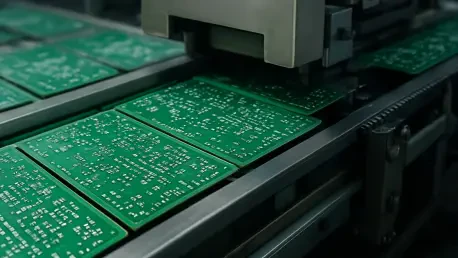
The bare circuit board serves as the critical physical foundation for the entire electronic system, and its fabrication sets rigid constraints that dictate the success of all subsequent assembly steps. OrinewPCB optimizes this specific phase by conducting an exhaustive audit of material selections, copper weights, and surface finishes such as Electroless Nickel Immersion Gold or Organic Solderability Preservatives. These choices are far more than aesthetic preferences; they are fundamental to the electrical performance, signal integrity, and long-term solderability of the final product. In the high-speed signaling environments common in 2026, even a minor deviation in material dielectric constants can render a complex design non-functional. By reconciling the routing geometry with the actual material stackups during the initial handoff, the provider ensures that the “as-intended” signal behavior matches the “as-manufactured” reality. This proactive verification eliminates the need for emergency redesigns midway through the fabrication cycle, providing a stable platform for the high-density components that will eventually be mounted.
Achieving Precision: Balancing Panelization and Mechanical Accuracy
Mechanical tolerances and strategic panelization represent a vital but often overlooked link between the fabrication shop and the automated assembly line. A panel layout designed solely to maximize material utilization might inadvertently create mechanical instability or “board flex” during the high-speed component placement process, leading to misaligned parts or fractured solder joints. OrinewPCB evaluates these designs to find a sophisticated balance between material efficiency and the practical mechanical requirements of production machinery. This review process extends to a deep analysis of hole dimensions, edge clearances, and the overall board layout to ensure the finished assembly interfaces perfectly with its intended connectors and custom enclosures. By identifying potential mechanical conflicts during the pre-production phase, the provider avoids the necessity for manual rework or destructive modifications after the boards have been populated. This level of mechanical foresight ensures that the transition from a flat circuit board to a three-dimensional integrated system is seamless, repeatable, and free from the geometric errors that frequently plague unoptimized handoffs.
Managing the Complexities of Turnkey Sourcing
Decision Authority: Navigating Procurement and Part Substitutions
In a turnkey manufacturing model, the supplier assumes the significant burden of sourcing components, yet this transfer of labor introduces complex questions regarding technical authority and design integrity. OrinewPCB differentiates itself by maintaining a clear distinction between the responsibility to locate parts and the final authority to approve technical changes. When global supply chain shortages necessitate the use of alternative components, the provider employs a strict protocol that triggers a formal customer engineering review. This ensures that any suggested substitution is vetted not just for physical footprint compatibility, but for critical secondary characteristics such as thermal dissipation, electrical noise margins, and even firmware-level compatibility. By refusing to make “silent” substitutions, the provider protects the long-term reliability of the product while simultaneously leveraging its sourcing network to keep production moving. This transparent approach to procurement authority creates a collaborative environment where the engineering team remains the ultimate gatekeeper of the product’s technical performance, even as the manufacturing partner manages the logistical heavy lifting.
Commercial Logistics: Clarifying Inventory and Material Commitments
Beyond the technical specifications, a successful production handoff involves managing the intricate commercial logistics associated with minimum order quantities and material overages. One of the primary optimization strategies used by OrinewPCB involves establishing clear, pre-production agreements regarding how unused inventory and excess components are managed and stored. Transparency in these commercial dealings is essential for mid-market and enterprise clients who must consolidate their vendor lists without losing visibility into their internal inventory planning. The provider gives detailed reporting on component consumption and overage rates, allowing the customer to make informed decisions about future production volumes and safety stock levels. This structured approach to material management prevents the sudden appearance of “hidden” costs after a production run is finished and ensures that the financial handoff is just as smooth as the technical one. By aligning the commercial interests of both parties before the first component is purchased, the provider creates a predictable cost structure that supports the long-term scalability of the client’s product line.
Ensuring Quality Through Rigorous Verification
Defining Success: Testing and Inspection Protocols
The manufacturing handoff is never truly complete until the specific criteria for a “finished product” are both defined and objectively met through verification. OrinewPCB clarifies for its partners that while Automated Optical Inspection is an essential tool for verifying component orientation and solder joint integrity, it cannot serve as a complete substitute for functional electrical testing. The provider works directly with customer teams to develop comprehensive test plans that simulate the actual end-use environment of the device, creating a clear distinction between a simple hardware assembly and a verified functional unit. This transparency ensures that buyers receive tangible evidence of success, including detailed test logs, revision records, and pass/fail metrics, rather than relying on general assurances of manufacturing quality. By integrating these test requirements into the initial production workflow, the provider ensures that every unit shipped meets a specific performance benchmark. This rigorous approach to verification reduces the risk of field failures and provides a documented trail of quality that is essential for regulatory compliance and brand reputation in 2026.
Digital Synchronization: Integrating Firmware and Software Dependencies
Modern electronic devices are rarely defined by their hardware alone; they require precise digital configurations and firmware payloads to function as intended. The production handoff at OrinewPCB includes a controlled process for software verification and firmware installation, treating the digital assets with the same level of rigor as the physical resistors and capacitors. By synchronizing the physical assembly with the correct version of the internal software, the provider prevents the common industry problem of “dead-on-arrival” units that possess correct hardware but outdated or incompatible code. This integration requires a secure and documented method for transferring binary files and verification keys, ensuring that the hardware arriving at the customer’s facility is ready for immediate deployment. This holistic view of the assembly process acknowledges that in a modern context, the “board” is a unified entity of physical and digital components. By managing this synchronization internally, the provider eliminates the need for customers to perform secondary programming steps, thereby shortening the total lead time from the factory floor to the end user.
Achieving Consistency Across Production Cycles
Data Reconciliation: Capturing As-Built Records for Scalability
The transition from a successful prototype to a repeatable, high-volume production run often uncovers a series of undocumented changes or “ad-hoc” modifications made during the initial lab builds. OrinewPCB optimized the path to volume manufacturing by implementing a formal reconciliation process that aligned the original design files with the final “as-built” documentation. Any manual jumper wires, component value adjustments, or mechanical tweaks made during the pilot phase were meticulously captured and integrated back into the master production record. This ensured that the version of the board being mass-produced was the specific configuration that demonstrated success during testing, rather than an outdated version of the original design files. By closing the loop between the production floor and the design office, the provider established a stable baseline for all future orders. This focus on data integrity meant that as production scaled from dozens to thousands of units, the risk of “version drift” was eliminated, providing the customer with a predictable and reliable product regardless of when the order was placed.
Process Refinement: Utilizing Pilot Production for Long-Term Yield
The initial small-batch production run served as a final stress test for the manufacturing documentation and the assembly instructions themselves. If certain steps proved to be ambiguous or if the test fixtures showed signs of instability during the pilot phase, OrinewPCB utilized these real-world insights to refine the assembly process before the project moved into full-scale manufacturing. This feedback loop turned the first delivery into a vital source of process improvement, ensuring that the workflow was optimized for maximum yield and minimum waste. The provider focused on identifying “bottleneck” operations or high-risk placement tasks that could be simplified through better tooling or revised instructions. By the time the project reached sustained production levels, the process was hardened against the typical errors that cause delays in less disciplined manufacturing environments. Ultimately, the success of the partnership was found in the ability to convert complex technical dependencies into a seamless, high-yield production flow that remained consistent over multiple years of the product’s lifecycle.
Strategic Evolution of the Manufacturing Partnership
The analysis of the production handoff revealed that technical excellence was only achieved when data integrity and departmental synchronization were prioritized. OrinewPCB established a framework where the “as-built” reality was constantly reconciled with the original engineering intent, ensuring that no project moved forward on the basis of optimistic assumptions. By treating the handoff as a continuous process of verification rather than a single event, the provider effectively neutralized the risks of component obsolescence and documentation gaps. The focus on specific acceptance criteria and the integration of firmware dependencies allowed for a level of quality assurance that extended beyond the physical board into the functional utility of the device. This approach demonstrated that the true value of a manufacturing partner in 2026 resided in their ability to manage complex information flows as much as their ability to place components on a substrate.
Moving forward, organizations should transition their procurement strategies to emphasize early-stage data verification and formal “readiness” audits. It is recommended that engineering teams collaborate with manufacturing partners to define “as-built” documentation standards long before the first prototype is ordered. This proactive stance will involve adopting unified data formats that bridge the gap between design software and factory-floor machinery, reducing the need for manual interpretation. Furthermore, companies must integrate functional testing and firmware verification into the primary manufacturing contract to ensure that accountability for the final product’s performance is clearly established. By viewing the production handoff as a strategic asset rather than a logistical hurdle, businesses can achieve higher yields, faster time-to-market, and a more resilient supply chain that is capable of navigating the technical complexities of the modern electronics industry.