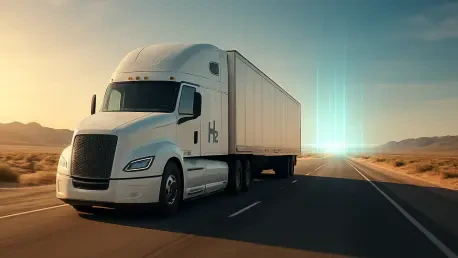

Hyundai Glovis and Hyundai Mobis are partnering with specialized AI firms like Mars Auto and RideFlux to refine the technical foundation of self-driving trucks. This strategic realignment marks a decisive moment in the evolution of the transportation industry, as the focus shifts from the complex unpredictability of urban passenger travel toward the structured efficiency of heavy-duty logistics. By mobilizing a comprehensive ecosystem that includes vehicle manufacturers, software innovators, and supply chain experts, Hyundai is moving beyond theoretical pilots to establish a functional blueprint for autonomous freight. The initiative prioritizes Level 4 autonomy, a standard where the vehicle assumes complete control within specific operational domains, effectively removing the requirement for a human safety driver. This shift is a response to the growing global demand for resilient supply chains. As labor shortages challenge the logistics sector, the integration of autonomous heavy-duty vehicles offers a pragmatic solution that leverages controlled highway transit to bypass the hurdles stalling consumer cars.
Strategic Implementation: Testing the Xcient Fuel Cell Fleet
Real-World Testing on Mixed and Long-Distance Routes
The cornerstone of this deployment involves the integration of Hyundai’s Xcient Fuel Cell trucks, which represent a synergy between zero-emission propulsion and advanced machine learning. These hydrogen-powered vehicles are currently navigating two primary operational profiles designed to test the limits of their internal software. The first route covers approximately 100 kilometers of mixed-use infrastructure, requiring the AI to negotiate the transition between high-speed highway merging and the dense, multi-variable environments of urban delivery hubs. Simultaneously, a longer 400-kilometer corridor focuses on sustained high-speed operations, where the system must maintain precision and safety over several hours of continuous transit. By operating these heavy-duty units in real-world scenarios, the partnership is successfully gathering massive datasets that reflect actual traffic patterns, weather interference, and unexpected road debris. This empirical approach ensures that the control algorithms are hardened against the physical realities of the open road.
Collaborative Innovation with Specialized AI Startups
Securing this operational data is essential for building a technological foundation that can eventually support the mass commercialization of heavy-duty autonomous vehicles across international borders. The collaboration emphasizes the importance of a closed-loop development cycle, where every anomaly detected during a long-distance run is analyzed and used to update the software stack across the entire fleet. This iterative process allows the engineering teams to refine the sensor fusion protocols, ensuring that Lidar, Radar, and camera systems work in perfect concert even during challenging lighting conditions. Furthermore, the partnership with specialized firms like Mars Auto provides a unique software edge, as these companies focus exclusively on the deep learning models required for heavy-vehicle dynamics, which differ significantly from passenger car physics. As these trials progress from 2026 to 2028, the objective remains the creation of a standardized autonomous driving platform for logistics that can be integrated into existing networks without requiring a complete overhaul.
Structural Advantages: Why Trucks Lead the Autonomous Race
Environmental Predictability and High-Definition Mapping
One of the most compelling reasons for the faster adoption of Level 4 technology in trucking is the inherent predictability of commercial freight routes compared to the randomness of passenger car travel. Consumer vehicles must be designed to navigate any road, from rural dirt paths to unmapped suburban driveways, creating a nearly infinite number of edge cases that baffle even the most advanced AI. In contrast, heavy-duty trucks typically follow fixed, well-documented corridors between distribution centers and ports. This environmental consistency allows engineers to create high-definition digital maps that are much more detailed and reliable than standard GPS systems. By specializing in these specific corridors, the autonomous system can achieve a level of mastery that is currently impossible for a general-purpose passenger vehicle. This reduction in environmental variables translates directly into increased safety and a lower probability of system disengagement, making the commercial sector the ideal proving ground for true driverless technology.
Economic Incentives and the Evolution of the Workforce
Beyond the technical advantages, the economic incentives for autonomous trucking are driving the industry toward a rapid transformation of the workforce. Automation addresses the critical shortage of long-haul drivers while simultaneously optimizing fuel consumption through precise throttle control and platooning—a technique where multiple trucks follow each other to reduce aerodynamic drag. However, this shift does not signify the end of human involvement but rather a strategic reallocation of labor. Successful global examples, such as the partnership between Gatik and PepsiCo, have demonstrated that when autonomous systems handle the repetitive long-haul segments, human employees can transition into high-value roles. These roles include logistics management, customer relationship building, and the oversight of complex final-mile delivery tasks that require human intuition. By automating the most hazardous and fatiguing parts of the job, companies can improve driver retention and safety while lowering the cost per mile, creating a more sustainable economic model.
Overcoming Barriers: The Path to Full Commercialization
Bypassing the Level 2.999 Passenger Vehicle Bottleneck
The current landscape for consumer vehicles is often described as being stuck at Level 2.999, a term that highlights the persistent gap between advanced driver assistance and true autonomy. Even the most sophisticated passenger cars today require the driver to remain vigilant, creating a dangerous handoff problem where a distracted human must suddenly regain situational awareness during a critical event. The legal and technical liabilities associated with this transition have stalled the commercial release of Level 3 systems in many regions. In contrast, the Level 4 autonomous trucking model avoids this ambiguity by operating in specific design domains where the software is legally and operationally responsible for the vehicle at all times. This clear boundary eliminates the confusion inherent in shared-control systems and allows for a more straightforward regulatory framework. By focusing on industrial applications first, manufacturers can demonstrate the reliability of their systems in controlled environments, building the public trust needed.
Developing a Resilient and Automated Logistic Infrastructure
The transition toward Level 4 autonomous trucking provided a clear roadmap for how the broader automotive industry stabilized its approach to self-driving technology. By prioritizing the commercial sector, developers addressed the most pressing economic challenges while refining the software in structured environments. For fleet operators, the focus shifted toward investing in hydrogen infrastructure and digital twin mapping, which proved essential for supporting long-haul autonomous routes. The successful integration of these systems required a proactive stance on workforce development, ensuring that existing personnel were trained to manage automated systems rather than being replaced by them. Policymakers also recognized the need for harmonized safety standards that spanned across different jurisdictions to facilitate cross-border freight. Ultimately, the industry moved toward a hybrid model where technology and human expertise worked in tandem to create a more resilient logistics network. This progression solved specific industrial problems.