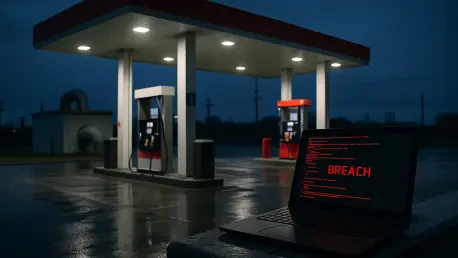

A silent digital intrusion into the localized fuel systems that power millions of American commutes has effectively turned standard gas pumps into potential liabilities for national security. While most cyberattacks involve stolen credit cards or leaked emails, the recent infiltration of U.S. gas station infrastructure by Iranian-linked groups represents a far more tangible threat to the physical world. By exploiting overlooked gateways in fuel management technology, foreign adversaries have moved beyond the realm of data theft and into the direct control of critical national assets. This breach reveals that the systems keeping vehicles moving and the environment safe are currently operating with the digital equivalent of an unlocked front door.
The infiltration targets the very core of Operational Technology, utilizing vulnerabilities that have persisted for years. These are not merely digital glitches but rather sophisticated attempts to gain leverage over the physical distribution of energy. As the boundaries between virtual commands and physical outcomes continue to dissolve, the ability of a hostile actor to manipulate a gas pump from thousands of miles away becomes a sobering reality. This incident signals a new chapter in hybrid warfare, where the convenience of connected infrastructure is weaponized against the population it serves.
The Digital Skeleton Key to America’s Fuel Supply
The recent wave of unauthorized access into fuel management systems highlights a disturbing trend in how foreign state actors approach American infrastructure. Unlike previous campaigns that sought to exfiltrate sensitive government data, these Iranian-linked groups are focusing on the silent sentinels of the retail energy sector. By gaining access to these control interfaces, hackers have essentially acquired a digital skeleton key that can unlock various levels of the supply chain. This access provides more than just a window into fuel inventory; it offers a foothold for potential large-scale disruption that could bypass traditional military defenses.
This breach demonstrates that the security of a nation is only as strong as its least protected endpoint. Many gas stations, often viewed as simple retail outlets, are actually complex nodes in a massive logistical network. When these nodes are compromised, the ripple effects can extend far beyond a single city block. The ability to monitor, alter, or halt the flow of fuel provides adversaries with a low-cost, high-impact method of psychological and economic pressure. It is no longer a question of if an attack will occur, but rather how much control the adversary has already quietly established within these vital systems.
Why the Vulnerability of Fuel Infrastructure Matters Today
The security of gas station infrastructure is not merely a concern for retail owners; it is a matter of national safety and environmental stability. Automated Tank Gauges and distribution monitoring systems are the primary tools used to manage everything from underground storage levels to hazardous leak detection. As the line between digital commands and physical consequences continues to blur, a compromise in these systems can lead to localized fuel shortages or environmental contamination. The risk is particularly acute in residential areas where a fuel spill could have immediate and devastating effects on the local ecosystem and public health.
This incident serves as a stark reminder that as legacy industrial hardware is connected to the global internet, all the risks of a borderless digital battlefield are inherited. These systems were often built with a focus on durability rather than cybersecurity, making them easy targets for modern hacking tools. The vulnerability is compounded by the fact that many of these sensors are responsible for preventing catastrophic failures. If the systems tasked with detecting a leak are themselves compromised, the physical safeguards intended to protect the community become essentially useless, leaving the environment vulnerable to undetected damage.
Anatomy of an Infiltration: From Open Ports to False Realities
The primary driver behind this successful breach was not a sophisticated new piece of malware, but a systemic failure to implement fundamental security protocols. Many of the targeted fuel management systems were directly accessible via the public internet, protected only by weak default passwords or no passwords at all. This technical debt has been documented for over a decade, yet a significant portion of the fuel infrastructure remains exposed to any actor with a basic port scanner. This lack of basic hygiene allowed attackers to walk through the front door of industrial networks without triggering a single alarm.
The most insidious aspect of these breaches is the manipulation of the Human-Machine Interface to feed false telemetry to operators. Rather than shutting down pumps immediately, attackers can create a digital hallucination where systems appear normal despite underlying failures. This could lead to overfilling hazards where hackers mask rising fuel levels during replenishment, or suppressed alarms where critical leak detection sensors are silenced. By distorting pressure data, adversaries can induce equipment failures that require expensive repairs. This shift in strategy suggests these breaches are a test run to gauge the effectiveness of interfering with other sectors like water treatment and power grids.
Expert Perspectives on the Vulnerability Crisis
Industry analysts note that the current crisis is a result of persistent negligence despite repeated advisories from federal agencies. Denis Calderone, CTO of Suzu Labs, noted that the industry has ignored warnings regarding exposed tank gauges for a significant period. He emphasized that the current situation is the predictable outcome of failing to act on well-documented risks. The persistence of these vulnerabilities suggests that voluntary compliance has not been sufficient to protect the public from state-sponsored cyber threats.
Louis Eichenbaum, Federal CTO at ColorTokens, added that in Operational Technology environments, situational awareness is the only line of defense. He argued that if the data presented to an operator is a lie, the operator becomes powerless to prevent a disaster. Furthermore, John Gallagher of Viakoo Labs pointed out that the burden of security often falls on small-business owners who lack the expertise to manage complex industrial firewalls. This highlights a massive gap in manufacturer accountability, as security is often treated as an optional add-on rather than a fundamental requirement of the hardware.
Strategic Frameworks for Securing Critical Infrastructure
The first step in securing fuel infrastructure is removing industrial control systems from the public-facing internet entirely. If remote monitoring is essential for logistics, access must be restricted to encrypted Virtual Private Networks that require multi-factor authentication. This simple act of network isolation would prevent the majority of automated scans from ever reaching the sensitive control interfaces of the fuel tanks. By creating a hard barrier between the internet and the machine, operators can significantly reduce their attack surface and protect their physical assets from remote interference.
Operators should also implement a Zero Trust architecture, which operates on the assumption that the network is already compromised. By utilizing granular microsegmentation, a breach in a single gas pump or tank gauge can be isolated, preventing the attacker from moving laterally to reach more sensitive safety or payment systems. Furthermore, the industry must move away from manual updates and toward automated security. Manufacturers must integrate automated tools for firmware patching and password management, ensuring that security is a built-in feature that does not rely on the technical proficiency of the end-user.
Enhanced Detection and Indicator Monitoring
Proactive defense requires the deployment of lightweight scanning tools capable of identifying indicators of compromise in real-time. Without improved visibility into the internal state of these systems, operators remained unaware of latent threats until they manifested as physical failures. The recent Iranian infiltration demonstrated that the ability to detect unauthorized changes in system configurations was severely lacking across the sector. Developing a standard for real-time monitoring would allow for the immediate identification of anomalous behavior, such as a sudden change in sensor reporting or unauthorized access attempts from foreign IP addresses.
The response to this crisis required a fundamental shift in how the nation viewed the intersection of the digital and physical worlds. Moving forward, the focus shifted toward establishing a more resilient framework where security was prioritized at the point of manufacture. Regulatory bodies began to consider mandatory security standards for any industrial device connected to public networks. The industry recognized that the era of treating cybersecurity as a secondary concern had ended. These actions established a new baseline for infrastructure protection, ensuring that the critical systems supporting daily life were better prepared for the evolving tactics of global adversaries.