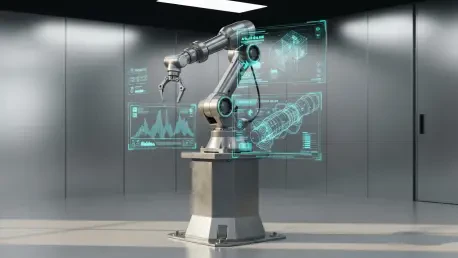

The traditional industrial landscape once relied on rigid, pre-programmed machines that struggled to adapt to even the slightest variations in their physical environment. This static approach is rapidly becoming obsolete as Physical AI integrates high-level cognitive intelligence directly into the mechanical execution of robots. By combining advanced sensors with large language models and real-time processing, modern robotic systems are gaining the ability to perceive, reason, and act with a level of autonomy previously confined to science fiction. FANUC CORPORATION recently solidified this shift by announcing a strategic collaboration with Google to embed sophisticated AI capabilities across its entire fleet of industrial robots. This partnership marks a pivotal moment where digital intelligence and physical labor converge, allowing machines to interpret complex verbal instructions and navigate unpredictable factory floors without manual intervention. As manufacturers face increasing pressure for customization and speed, this technology serves as the essential bridge between abstract data and the heavy-duty demands of global production.
The implementation of Physical AI relies heavily on the synergy between Google’s Intrinsic robotics group and FANUC’s robust hardware engineering. By utilizing the Robot Operating System (ROS) as a foundational standard, these entities are creating an ecosystem where robots can learn from digital simulations before ever touching a physical component. This “sim-to-real” pipeline enables a robotic arm to practice a task millions of times in a virtual environment, refining its grip and movement patterns until it achieves near-perfect precision. Once deployed, the robot uses its onboard sensors to adjust for real-world variables, such as shifted parts or changing lighting conditions, which would have stalled a traditional machine. This level of adaptability ensures that the transition from a digital design to a finished physical product is smoother and more efficient. Consequently, the reliance on specialized programming is decreasing, as Physical AI allows for more intuitive interactions between human operators and their mechanical counterparts on the factory floor.
Integration of Open Platforms and Cognitive Flexibility
A critical component of this technological evolution is the shift toward open platforms that prioritize interoperability and ease of use for diverse engineering teams. FANUC has expanded its system compatibility to include the Python programming language and high-speed communication interfaces, which allows for seamless integration with external controllers and Programmable Logic Controllers. This technical openness is essential for Physical AI because it permits the rapid deployment of custom algorithms and third-party AI models directly onto the factory floor hardware. Instead of being locked into proprietary, closed-loop systems, manufacturers can now leverage a wider array of software tools to enhance the cognitive capabilities of their machines. This flexibility ensures that a single robot can be repurposed for different tasks throughout its lifecycle, significantly increasing the return on investment for large-scale industrial operations. By lowering the barrier to entry for advanced software integration, the industry is fostering a more collaborative environment where hardware and software evolve in lockstep.
The versatility of this approach is most evident in its application across a vast spectrum of hardware, ranging from lightweight collaborative robots to massive industrial lifters. For instance, the CRX series, which handles payloads as small as three kilograms, utilizes the same underlying AI framework as heavy-duty models capable of moving over two tons. This consistency across the product line means that a factory can implement a unified intelligence strategy regardless of the specific mechanical requirements of an individual workstation. Physical AI enables these machines to perform delicate assembly work with the same cognitive logic used for material handling in a shipyard or automotive plant. This democratization of intelligence across different scales of machinery allows smaller enterprises to adopt sophisticated automation that was once the exclusive domain of industry giants. As these systems become more prevalent, the focus of industrial robotics is shifting from simple repetitive motion to complex, multi-stage decision-making that mirrors human problem-solving abilities in real-time.
Market Adoption and the Shift Toward Autonomous Operations
The market response to these advancements has been remarkably swift, signaling a profound change in how global manufacturers perceive the value of artificial intelligence. Since the latest technological showcases at major international exhibitions, thousands of units equipped with Physical AI capabilities have already been shipped to facilities worldwide. This rapid uptake indicates that the industrial sector is moving past the experimental phase and is now focused on the practical, floor-level implementation of autonomous systems. Leaders at FANUC America have observed that the primary concern for manufacturers is no longer whether AI works, but how quickly it can be integrated into existing production lines to solve labor shortages and improve throughput. This shift in mindset is driving a surge in demand for robots that do not require constant oversight or complex recalibration. The goal has moved toward creating “lights-out” manufacturing environments where robots can manage their own workflows and troubleshoot minor issues without human assistance.
This transition toward autonomous operations is redefining the relationship between human labor and mechanical automation in the modern workforce. While robots handle the repetitive, dangerous, or highly precise tasks, human workers are being elevated to roles that focus on system oversight, strategic planning, and creative problem-solving. Physical AI facilitates this by providing a more communicative interface, where workers can use natural language to describe a new task, and the robot can autonomously determine the best physical path to complete it. This reduces the time required for setup and changeovers, which is vital in a market that increasingly demands small-batch, customized production. As the gap between digital intelligence and physical execution continues to narrow, the industrial sector is witnessing a significant boost in overall productivity and resilience. The result is a more responsive manufacturing ecosystem that can pivot quickly to meet changing consumer needs while maintaining the highest standards of safety and operational reliability.
Strategic Considerations for Future Robotic Implementation
To successfully navigate the integration of Physical AI, organizations must move beyond simple hardware procurement and focus on building a robust data infrastructure. The effectiveness of an autonomous robot is directly tied to the quality of the information it receives; therefore, establishing high-speed, low-latency networks within the factory is a necessary prerequisite. Decision-makers should prioritize systems that offer long-term compatibility with evolving AI models to avoid the pitfalls of technical obsolescence. It is also beneficial to invest in cross-disciplinary training for the workforce, ensuring that technicians understand both the mechanical aspects of robotics and the fundamental logic of the AI driving them. By fostering a culture of continuous learning and data-driven decision-making, companies can ensure that their investment in Physical AI delivers maximum value. This proactive approach allows for the gradual scaling of automation, starting with specific high-impact tasks before expanding to full-scale autonomous production lines that can adapt to any market condition.
The long-term success of industrial robotics depended on the move from rigid automation to the fluid, intelligent systems currently being deployed across the globe. Strategic partnerships between hardware manufacturers and AI research leaders provided the necessary framework for robots to perceive and interact with the world in a human-like manner. This evolution simplified the deployment process, making it possible for machines to handle diverse tasks without extensive manual programming. As these systems matured, they demonstrated that the synergy between high-level cognitive models and physical execution was the key to unlocking new levels of factory efficiency. Manufacturers who embraced this shift early found themselves better positioned to handle the complexities of modern supply chains and varied production requirements. The focus then shifted toward refining these autonomous capabilities to ensure that robots could operate safely and effectively alongside human workers in increasingly dynamic environments. Ultimately, the integration of Physical AI transformed the industrial landscape into a more adaptable and productive sector.