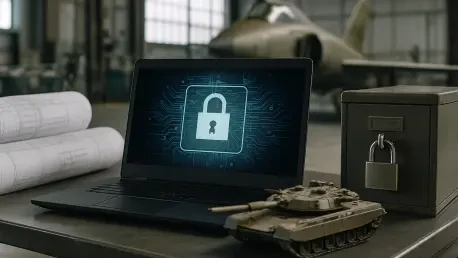

Cloud-based solutions like FedRAMP-authorized environments offer a pathway for secure collaboration while meeting the rigorous standards of DFARS 252.204-7012. The modern defense contractor exists in a state of constant tension between the demand for unprecedented production speed and the uncompromising requirements of national security protocols. As the complexity of modern weapon systems increases, so does the volume of technical data that must be shared across sprawling supply chains. This Controlled Unclassified Information, or CUI, represents the intellectual lifeblood of the defense industrial base, encompassing everything from high-fidelity digital twins to precise manufacturing instructions. Failing to secure this data does not merely result in a regulatory fine; it risks the technological advantage of the armed forces. Consequently, organizations must transition from viewing security as a secondary IT concern to recognizing it as a fundamental pillar of engineering excellence and program success today.
Navigating the Regulatory Landscape: Compliance and Beyond
While the rollout of the Cybersecurity Maturity Model Certification has evolved through various phases and temporary pauses, the underlying mandate to protect sensitive defense information has never wavered. Current federal requirements, specifically those embedded in DFARS 252.204-7012, place the burden of proof squarely on the contractor to demonstrate that their internal systems and cloud-based tools meet stringent security baselines. Many firms mistakenly believe that the absence of a final certification audit grants them a reprieve, but the reality is that the legal obligation to protect CUI is active and enforceable today. This regulatory environment demands a proactive stance where security is treated as an ongoing operational cost rather than a one-time project. Contractors who fail to align their internal processes with these standards risk exclusion from high-value programs as the Department of Defense continues to prioritize supply chain resilience and technical data integrity across the board.
The potential loss of intellectual property remains a more immediate threat to a contractor’s viability than the specter of a compliance audit. When engineering data is compromised, the competitive advantage gained through years of research and development can be erased in a single data exfiltration event. Adversaries frequently target mid-tier and smaller suppliers within the defense industrial base, recognizing them as softer targets compared to the major prime contractors who have more robust defenses. Protecting technical specifications requires more than just a firewall; it necessitates a deep understanding of how data flows from the initial design phase through to final assembly. By prioritizing the security of CAD models and assembly instructions, companies not only fulfill their contractual obligations but also safeguard their proprietary methods. This strategic focus ensures that the specialized knowledge that defines a company’s market position remains secure from foreign interference and industrial espionage.
Solving the Connectivity Gap: Integrating Systems and Security
Engineering data is inherently dynamic, undergoing constant revisions and being shared across multiple internal departments and external partners. This fluidity creates numerous opportunities for data leakage, particularly when traditional application inventories are used to manage security. While an organization might have a list of approved software, it often lacks granular visibility into what happens to a file once it is exported from a secure design environment. For example, when an engineer downloads a technical drawing to send to a machine shop, a new and often unmanaged copy of that CUI is created. If this file is shared via standard email or stored on an unencrypted portable drive, the chain of custody is broken. These invisible gaps in the data lifecycle represent the most significant risk to the defense industrial base, as they bypass the standard security controls that IT departments work so hard to maintain and monitor during daily operations.
The intersection of security and engineering efficiency is most visible when considering the impact of version control failures on the production floor. When communication channels are unmanaged, there is a high probability that a supplier or a manufacturing team will inadvertently work from an outdated version of a design. This lack of a synchronized source of truth leads to costly rework, scrapped materials, and significant delays in program timelines. In the context of defense manufacturing, such errors have cascading effects on mission readiness and national security. A secure environment must, therefore, do more than just lock data away; it must ensure that the right people have access to the correct, most recent information at exactly the time they need it. Effective data management strategies eliminate the ambiguity surrounding design revisions, thereby reducing the operational risks that arise from manual file handling and fragmented communication between different project stakeholders.
Strengthening the Supply Chain: Actionable Pathways for Resilience
The migration toward cloud-based infrastructures offers defense contractors significant advantages in terms of scalability and security, yet it requires a nuanced understanding of shared responsibility models. Utilizing a FedRAMP-authorized cloud service provider is an essential step, as it ensures that the underlying infrastructure meets rigorous federal standards for data protection. However, the contractor remains responsible for the configuration of the software, the management of user identities, and the protection of any data that is moved out of the cloud environment. A common mistake is assuming that a cloud provider’s certification covers all aspects of compliance. In reality, the security of engineering data depends on how the contractor implements access controls and monitors user activity within that cloud space. Successful organizations treat the cloud as a secure extension of their own perimeter, applying the same level of scrutiny to digital identities and data movement as they would in a local data center.
The most effective organizations adopt a workflow-first approach that prioritizes the most vulnerable points of data exchange throughout the lifecycle. By mapping the journey of a single technical drawing, teams identify where unmanaged copies are created and implement immediate safeguards. They establish a clear division of responsibility between internal staff and cloud service providers, ensuring that security configurations are audited regularly. These manufacturers do not wait for regulatory updates but instead build a culture of continuous improvement that integrates security into the very fabric of the design process. This proactive stance allows them to maintain a competitive edge in an increasingly volatile global market. Ultimately, these steps ensure that program execution remains resilient, protecting the critical innovations that sustain national security and domestic manufacturing excellence. This integrated strategy transforms security from a burden into a functional advantage for the defense sector.