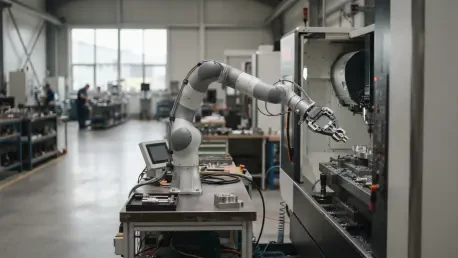

Using 3D vision technology allows robotic arms to handle disorganized or varying raw material formats that would baffle traditional automation systems. In the current industrial landscape of 2026, the manufacturing sector is navigating a period of intense transformation driven by persistent labor shortages and the demand for higher efficiency. At the forefront of this shift is a collaborative effort between Techman Robot and Guorui Automation. Their partnership has resulted in an advanced robotic machine-tending solution that integrates artificial intelligence and collaborative robotics to optimize Computer Numerical Control (CNC) machine utilization. The primary objective is to automate the repetitive tasks of loading workpieces, allowing human operators to focus on more complex, high-value responsibilities. By bridging the gap between manual labor and full-scale industrial automation, this solution targets specific bottlenecks found in precision machining environments, ensuring production lines stay active.
Advanced Vision: Intelligent Part Handling
Central to this innovation is the TM AI Cobot platform, which distinguishes itself through its native integration of AI vision technology. Unlike traditional robotic systems that rely on rigid mechanical fixtures and precisely positioned parts, this system utilizes 3D vision capabilities to identify, locate, and orient workpieces dynamically. This vision-guided approach is transformative for facilities where raw materials are presented in disorganized formats. The AI vision system functions as the eyes of the operation, allowing the robot to adjust its grip and movement patterns based on the real-time physical state of the components. Beyond handling, the optical configuration can be calibrated to perform post-machining inspection tasks. By conducting dimensional and visual checks immediately after a part exits the machine, the system integrates a layer of quality assurance directly into the workflow. This ensures only parts meeting exact specifications proceed to the next stage.
The integration of inspection directly into the robotic cycle provides a proactive method for maintaining high standards without slowing down the production line. By moving quality control activities upstream, manufacturers can identify defects or process drifts much earlier than they would with traditional batch testing. This consistent monitoring helps establish a more reliable production baseline and minimizes the risk of significant waste. The synergy between AI vision and robotic handling reduces the number of times a part must be touched, which fundamentally lowers the risk of manual handling damage and surface contamination. Furthermore, the data collected during these visual inspections can be fed back into the manufacturing execution system to provide real-time insights into tool performance and material quality. While these systems require careful calibration for lighting and geometry, they offer a level of vigilance that manual inspection cannot match over an extended production shift.
Machine Utilization: Maximizing Shop Output
One of the most critical metrics in machining is spindle time, which represents the duration a CNC machine is actively cutting material. Traditional manual tending often results in significant idle time while machines wait for an operator to clear a finished part and load a new blank. The automated system developed by Techman and Guorui addresses this by ensuring a consistent, uninterrupted flow of materials. By automating the exchange of workpieces, the robot eliminates the variance associated with human labor, maintaining a steady cycle that persists throughout the day. This level of consistency allows for more accurate production scheduling and predictable output levels, which are essential for meeting tight delivery deadlines. Moreover, the robotic system can interface directly with the machine door and clamping mechanisms, reducing the transition time between parts to a matter of seconds. This optimization ensures that the machinery is utilized to its maximum potential during every shift.
The solution also offers the potential for multi-machine tending, where a single cobot manages the workloads of several CNC units depending on the layout and machining cycles. This arrangement facilitates longer periods of unattended or “lights-out” production, enabling manufacturers to increase their output without a corresponding increase in overhead. By utilizing a single robotic asset to service multiple machines, facilities can achieve a much higher return on investment while minimizing the footprint of the automation cell. This capability is particularly advantageous for shops operating with high-volume production requirements, as it allows for a dramatic increase in throughput during overnight hours. However, implementing such a configuration requires careful planning regarding the robot’s reach and the logistics of material supply. When successfully deployed, these multi-machine cells transform the economics of the machine shop, turning previously idle evening hours into highly productive and profitable periods.
Integration Strategies: Safety and Flexibility
Modern manufacturing is characterized by high-mix, low-volume production cycles that require machines to be frequently transitioned to produce different parts. Traditional industrial robots often struggle here due to the complexity and time required for reprogramming. The Techman platform mitigates this through a user-centric design that includes hand-guided teaching and a graphical programming interface. These features allow shop-floor personnel to teach the robot new paths by physically moving the arm or using intuitive software, removing the need for specialized robotics engineers. This democratization of programming reduces the technical barrier to entry and shortens the downtime associated with production changeovers. By empowering machinists to control the automation, companies can leverage the deep process knowledge of their workforce to refine the robotic movements. This flexibility ensures that the automated system remains an asset rather than a hindrance when production requirements shift.
The implementation of these robotic cells required a rigorous approach to safety that went beyond simple collaborative hardware features. Engineers conducted extensive risk assessments that accounted for the speed of movement, the sharp edges of the workpieces, and the proximity of human staff. This resulted in a balanced deployment strategy where collaborative functions were often paired with area scanners to ensure total workspace protection. Companies that adopted these AI solutions realized immediate benefits in throughput and consistency. They transitioned their skilled workforce into supervisory roles, where the focus shifted toward optimizing the overall manufacturing process rather than manual labor. For those looking to implement similar systems, the path forward involved a clear audit of existing bottlenecks and a commitment to iterative training. The success of these initiatives proved that the integration of intelligent vision and flexible robotics is no longer a luxury but a necessity for competitive survival.