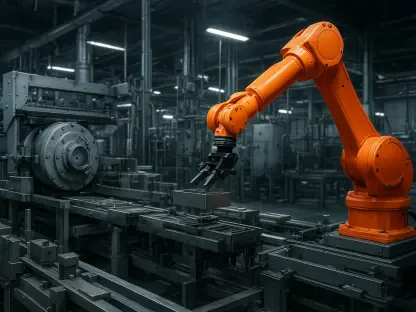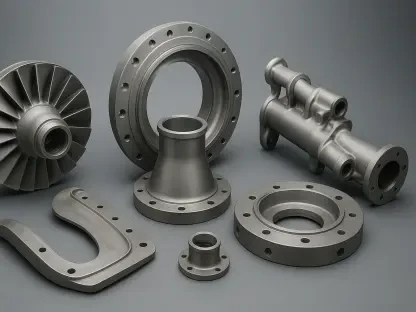

Backed by a 2.75 million pound grant from Innovate UK, the University of Bradford is leading a high-powered consortium to modernize the regional industrial landscape. This initiative, known as the Yorkshire Robotics Adoption Hub, commands a total budget of 3.67 million pounds and serves as a direct intervention into the traditional manufacturing workflows that have defined the North of England for decades. By focusing on small and medium-sized enterprises, the program addresses a vital segment of the economy that often lacks the internal research and development capital to experiment with high-end automation. The project provides a structured pathway for these businesses to integrate robotics and artificial intelligence, effectively lowering the barrier to entry for cutting-edge technology. It is not merely a financial injection but a comprehensive support system designed to shift the industrial culture toward a more resilient and data-driven future through specialized guidance. The objective remains clear: to ensure that local firms do not just survive but lead in an increasingly digital global marketplace by providing the tools and expertise necessary for a complete technological overhaul.
Part 1: Bridging the Productivity Gap in Regional Industry
The establishment of this hub comes at a critical juncture for British manufacturing, as the nation currently faces a significant adoption gap compared to its international peers. Research indicates that while many small and medium-sized enterprises express a desire to modernize, the actual implementation of robotic systems remains stalled. Statistically, the United Kingdom operates roughly 104 robots per 10,000 manufacturing employees, a figure that remains notably lower than the global average of 177. This disparity suggests that without a concerted effort to facilitate technology transfers, the regional industrial base risks falling further behind competitors in Europe and Asia. The Yorkshire Robotics Adoption Hub is designed to close this gap by identifying the specific operational bottlenecks that prevent local manufacturers from scaling their production. By focusing on the high-density industrial corridors along the M62 and M1 motorways, the project targets the heart of the regional economy where automation can deliver the most immediate and profound improvements in output and efficiency.
Beyond simple statistics, the primary obstacles to modernization are often psychological and logistical rather than purely financial. Many business owners cite a lack of specialized expertise and the perceived risk of high capital investment as the main reasons for their hesitation. The hub addresses these concerns by providing a risk-mitigated environment where manufacturers can test solutions before making a full-scale commitment. It acts as a bridge between curiosity and deployment, offering the technical confidence required to navigate the complexities of machine vision and automated assembly. By demystifying the technology, the initiative transforms robotics from an intimidating prospect into a practical tool for daily operations. This shift in mindset is essential for creating a sustainable ecosystem where innovation is viewed as a continuous process rather than a one-time upgrade. Through consistent engagement and the provision of technical resources, the consortium aims to foster a culture of technological readiness that will define the region’s economic character for years to come.
Part 2: Strategic Alliances: Merging Academic Research with Practical Application
The success of the hub is rooted in a diverse consortium that combines academic rigor with hands-on industrial experience. Led by the University of Bradford, the partnership includes the University of Huddersfield and its acclaimed Centre for Precision Technologies, alongside West Yorkshire Manufacturing Services. This collaboration ensures that the solutions developed are not just theoretically sound but are also optimized for the specific, gritty realities of the shop floor. Industry partners like Olympus Technologies bring practical knowledge of robotic implementation, ensuring that the technology is accessible and reliable for non-specialists. This synergy between higher education and private industry allows for a rapid exchange of ideas, where academic breakthroughs in artificial intelligence are quickly translated into functional tools for manufacturers. By housing these operations in a central regional hub, the consortium provides a localized point of contact for businesses that might otherwise feel disconnected from the national innovation landscape, ensuring that expert advice is always within reach.
The demand-led nature of the project is further reinforced by the involvement of major industrial players such as Myton Food Group and Groupe Atlantic. these organizations provide real-world use cases and access to extensive supply chains, allowing the hub to test automation strategies in high-stakes environments. This approach ensures that the technological interventions are grounded in actual market needs rather than abstract goals. For instance, the use of digital twins and advanced simulation allows manufacturers to visualize their future production lines without interrupting current workflows. This practical focus is what sets the initiative apart, as it prioritizes the immediate needs of the manufacturing community over pure research. By aligning with regional government bodies and programs like Made Smarter, the hub integrates itself into the broader economic strategy of the region. This alignment guarantees that the project remains focused on long-term growth and supply chain resilience, creating a robust framework that supports the entire manufacturing lifecycle from initial design to final production.
Part 3: Operational Excellence: Implementation and Regional Scalability
The Yorkshire Robotics Adoption Hub utilized a rigorous stage-gated model to guide manufacturers through the complexities of technological transition. This structured approach was designed to minimize financial and operational risks, moving companies through feasibility studies and return-on-investment modeling before any physical hardware was deployed. The project successfully established a network of lighthouse sites and demonstrators, which functioned as physical centers where business owners saw robotics in action within environments that mimicked their own production facilities. These demonstrators played a crucial role in validating the technical and economic viability of automation for small-scale operations. By the conclusion of the initial phase, the hub had facilitated dozens of successful deployments, proving that advanced technology could be integrated into existing supply chains without causing major disruptions. The initiative served as a vital catalyst, moving regional manufacturers away from traditional manual processes and toward a more sophisticated, automated future that enhanced both productivity and worker safety.
Moving forward, manufacturers should prioritize the conducting of internal audits to identify specific high-repetition tasks that are most suitable for robotic intervention. Utilizing the frameworks established by the hub, businesses are encouraged to engage with regional technical advisors to develop robust business cases that account for long-term maintenance and software updates. It is essential for company leadership to invest in workforce upskilling alongside equipment acquisition, ensuring that employees are prepared to operate and maintain the new systems. Future success in the region will depend on the continued collaboration between small firms and academic centers to keep pace with rapid advancements in artificial intelligence. Businesses should also explore the potential for replicating this adoption model across other facilities to create a unified, tech-enabled production network. By remaining proactive and seeking out feasibility assessments early, regional manufacturers can maintain their competitive edge and ensure their operations remain resilient against shifting global economic demands and labor shortages.