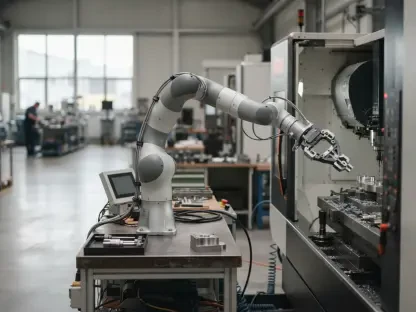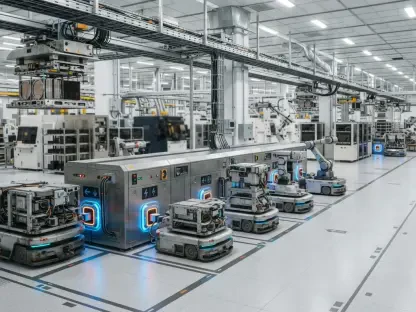

NEXCOM cybersecurity expert KC Chen emphasizes that modern industrial robots require a holistic approach to risk management rather than a siloed focus. The transition into 2026 has seen a dramatic shift as factories move away from traditional, fenced-off machinery toward dynamic humanoid robots and autonomous mobile units. This change creates a sprawling digital landscape where every joint and sensor represents a potential entry point for unauthorized access. Manufacturers often underestimate the complexity of these interconnected systems, treating them as simple hardware upgrades rather than fundamental shifts in network architecture. When robots share data across cloud platforms for predictive maintenance or real-time optimization, they bridge the gap between physical production and the digital world. This connectivity necessitates a mindset where security is not an afterthought but a core component of the design. Achieving this requires understanding that a breach does not just compromise data; it threatens the physical safety of every worker on the floor and the structural integrity of the facility.
Strengthening the Digital and Physical Perimeter
Establishing a robust defense begins with the realization that modern robotics has significantly expanded the attack surface within the industrial environment. Unlike the isolated systems of the past, today’s autonomous units rely on persistent network connectivity to receive updates, coordinate tasks, and report performance metrics. This ongoing communication creates vulnerabilities that hackers can exploit to traverse the corporate network, making strict network segmentation a critical necessity. Organizations must implement granular access controls, ensuring that only authorized personnel can modify controller settings or access sensitive diagnostic data. By adopting a least-privilege model, manufacturers can limit the potential damage from a single compromised node. Managing vendor-specific accounts and credentials before deployment is equally vital, as generic factory settings often provide an easy path for malicious actors. This proactive security posture ensures that the digital perimeter remains as formidable as the physical barriers once used to keep unauthorized visitors off the assembly line.
The physical consequences of a digital security breach in a manufacturing context are far more severe than the data losses typical of standard IT environments. If a malicious actor gains control over a robotic arm, they could subtly alter the machine’s operational parameters, such as speed, torque, or range of motion, without triggering immediate alarms. These small changes can lead to massive equipment failures, ruined product batches, or catastrophic accidents involving human colleagues working in close proximity. To mitigate these risks, the industry has turned toward the use of Software Bills of Materials to track every software component within the machine’s operating system. By maintaining a clear inventory of firmware versions and third-party libraries, maintenance teams can quickly identify and patch upstream vulnerabilities. This level of transparency is essential for maintaining long-term operational integrity and ensuring that the software governing the hardware remains untampered. Monitoring these components ensures that the physical movements of the robot align perfectly with safety protocols.
The Evolution of Software-Defined Safety
In the current industrial landscape, the traditional reliance on physical cages and light curtains is rapidly giving way to a more flexible model known as software-defined safety. This approach utilizes high-fidelity sensors and real-time data processing to allow robots to work safely alongside humans in less structured environments. While this shift significantly enhances floor efficiency and allows for more complex collaborative tasks, it moves the burden of protection from steel bars to computing logic. This transition creates a unique vulnerability where the safety functions themselves could be targeted by sophisticated cyberattacks. To prevent such scenarios, safety-critical logic must be hardened through the use of digital signatures and encrypted communication channels between sensors and controllers. Manufacturers are now prioritizing independent verification systems that monitor the robot’s physical output against its programmed intent. This ensures that even if the primary control system is compromised, a secondary, hardened layer can intervene to prevent unsafe motions, thereby maintaining a secure environment for all human workers.
Artificial Intelligence has emerged as a cornerstone of modern safety verification by acting as an impartial digital observer of robotic behavior on the plant floor. AI-enabled vision systems are now deployed to monitor physical movements in real-time, cross-referencing actual limb positions and velocities with the data streams generated by the robot’s internal encoders. If a discrepancy is detected—perhaps due to a mechanical glitch or a cybersecurity intrusion—the AI system can trigger an immediate emergency stop or transition the robot into a safe operating mode. This provides an essential layer of redundancy that traditional safety systems cannot match, as the AI operates outside the primary control loop. However, it is imperative that these automated defense layers do not become unmanaged points of failure themselves. Manufacturers must establish rigid boundaries and maintain consistent human oversight to ensure that AI systems are correctly calibrated and secure from manipulation. By balancing automated monitoring with human expertise, organizations can create a resilient safety ecosystem that adapts to new threats while protecting the workforce from the inherent risks of automation.
Implementing a Unified Strategy for Resilience
The successful integration of robotics across the manufacturing sector relied on a departure from the siloed thinking that once separated IT professionals from operational staff. Experts and managers recognized that a unified implementation philosophy was the only way to balance the conflicting demands of high-speed automation and rigorous safety protocols. This shift prompted organizations to prioritize integrated planning, where cybersecurity and production teams worked together to map every potential point of failure before deployment. They established predefined thresholds for robotic behavior, ensuring that any deviation from normal operational parameters resulted in an immediate, controlled response. These strategies moved beyond simple hardware installation, focusing instead on the long-term resilience of the entire industrial ecosystem. By treating every robot as a critical node within a larger digital infrastructure, manufacturers successfully mitigated the risks associated with increased connectivity. This holistic preparation ensured that the adoption of advanced automation did not come at the cost of worker safety or systemic security.
In the final analysis, the transition to highly automated plant floors proved that cultural alignment was just as important as technical sophistication. Leaders provided transparent communication and comprehensive training programs that reframed robots as supportive tools rather than threats to job security. This proactive approach to workforce management fostered a culture of acceptance that smoothed the path for the adoption of humanoid and collaborative systems. On the technical side, the use of software-defined safety and AI-driven monitoring provided the necessary visibility to detect and neutralize threats before they escalated into physical harm. Maintenance teams utilized Software Bills of Materials to manage the complexities of modern firmware, ensuring that every component remained secure and up to date. These combined efforts created a robust framework for innovation, where digital and physical safety were treated as inseparable priorities. Ultimately, the industry moved toward a model of continuous improvement, where lessons learned from early implementations informed the secure and efficient scaling of robotics throughout the global manufacturing landscape.