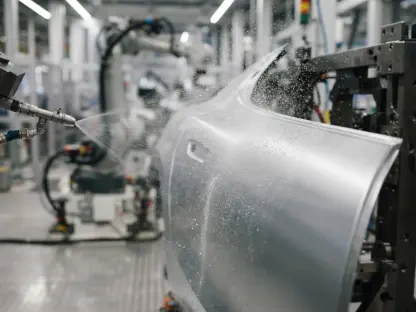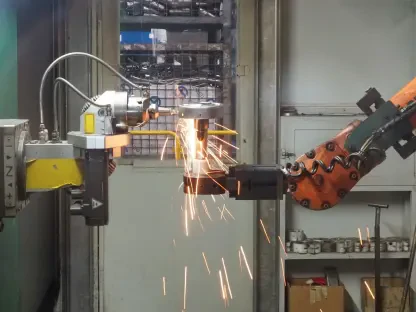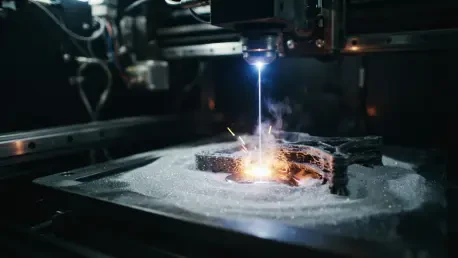

Building nuclear components layer-by-layer allows for the consolidation of multiple parts into a single unit, eliminating the risk of failure at welded joints. This paradigm shift in manufacturing is no longer a theoretical pursuit but a necessity as global energy strategies pivot toward Generation IV nuclear reactors between 2026 and 2030. These advanced systems, including Molten Salt Reactors and Sodium Fast Reactors, operate at temperatures and radiation levels that push conventional materials to their breaking points. In this high-stakes environment, the integrity of structural steels like grades 304 and 316 becomes the literal backbone of safety and efficiency. As the nuclear industry transitions from traditional light water reactors to these more aggressive thermal and chemical environments, the primary concern is whether additively manufactured alloys can truly survive. Researchers are diving deep into the microscopic world of 3D-printed metals to determine if the unique cellular structures formed during the rapid cooling process act as a shield against particle bombardment or if they harbor hidden structural flaws that could lead to catastrophic failure. This inquiry represents the intersection of digital manufacturing and the next frontier of carbon-free energy production, where the success of a reactor design hinges on a material’s ability to withstand hundreds of displacements per atom over decades.
The Strategic Shift: Advancing Nuclear Infrastructure
The adoption of additive manufacturing in the nuclear sector is driven by the urgent need for complex geometries that traditional machining simply cannot produce. Techniques such as Laser Powder Bed Fusion and Directed Energy Deposition allow engineers to create intricate, consolidated components like heat exchangers and specialized valves without the need for joints or welds. Since welds are often the primary sites of failure in high-stress environments, eliminating them enhances the overall integrity of the reactor. This transition represents more than a manufacturing shortcut; it is a fundamental redesign of nuclear architecture. By 3D-printing components, researchers at facilities like Idaho National Laboratory are streamlining the supply chain and reducing the lead time for specialized parts that would otherwise take months to forge and machine. This capability is vital for the deployment of advanced reactors through 2028, where speed and precision are paramount for reaching energy goals. The ability to iterate designs rapidly means that performance optimizations can be integrated directly into the physical structure of a part, allowing for better coolant flow and thermal management.
The shift toward these advanced manufacturing methods is not merely about geometric freedom but also about economic viability and localized production. Traditional nuclear components often require massive casting and forging facilities that are limited in number and prone to logistical delays. In contrast, 3D printing allows for decentralized manufacturing, where parts can be produced closer to the reactor site, reducing the risks associated with transporting large, sensitive structures. This localized approach is becoming a cornerstone of the energy strategy for 2026 and beyond, as it enables a more responsive and resilient supply chain. Furthermore, the reduction in material waste inherent in additive processes aligns with broader sustainability goals within the energy industry. By using only the metal powder necessary to build the final part, manufacturers can lower the environmental footprint of nuclear construction. However, the move toward these technologies requires a rigorous re-evaluation of material standards, as the rapid solidification process produces a metal that is fundamentally different from the wrought steel that has been used in reactors for the past sixty years.
Internal Architectures: Sinks and Radiation Resistance
Additive manufacturing does not just change the external shape of the metal; it fundamentally alters its internal architecture through rapid melting and solidification cycles. This process creates fine cellular sub-grain structures and high dislocation densities that act as “sinks,” potentially trapping and neutralizing the defects caused by radiation. In traditional wrought materials, radiation creates clusters of vacancies and interstitials that eventually coalesce into large loops, causing the metal to swell and become brittle over time. However, the unique micro-features of 3D-printed alloys provide a pre-existing network of traps that can absorb these particles before they do significant damage. Some printed steels even include intentionally introduced nano-oxide particles that further manage the accumulation of damage at the atomic level. This engineered microstructure serves as a sacrificial defense system, where the density of boundaries and defects is so high that new radiation damage finds nowhere to settle. This intrinsic resistance could be the key to extending the operational lifespan of reactors by several decades, assuming these features remain stable under extreme heat.
While these microscopic features suggest a natural resistance to radiation, they also create a complex paradox where the same structures that protect the alloy might become failure points under specific thermal or radiation loads. The stability of these cellular structures is a primary concern for materials scientists, as the high temperatures inherent in next-generation designs—reaching up to 600 degrees Celsius—could cause the grains to recrystallize or grow, erasing the protective “sinks” and leaving the material vulnerable. Furthermore, the high density of pre-existing dislocations might actually accelerate certain types of embrittlement if they become pinned by radiation-induced precipitates. This means that a printed material that performs exceptionally well at low doses might undergo a sudden and catastrophic loss of ductility once a certain radiation threshold is crossed. Understanding this “sink saturation” point is essential for engineers who are designing the next fleet of reactors to operate safely. The challenge lies in balancing the initial protective benefits of the printed microstructure with long-term structural stability in an environment that is constantly trying to rearrange the atoms of the metal itself.
Performance Challenges: Hardening and Anisotropy
Radiation hardening is a significant concern for nuclear materials, as it often leads to brittle failure that can compromise the containment and structural integrity of a reactor. Comparative studies have shown that 3D-printed 304L stainless steel exhibits significantly less hardening than its traditionally manufactured counterparts when subjected to ion irradiation. For instance, under xenon ion irradiation, printed samples showed a much lower percentage increase in hardness compared to wrought materials at similar damage levels. This is largely attributed to the printed alloy’s sub-grain structures, which prevent the formation of large, damaging dislocation loops by providing a high density of grain boundaries that stop loop growth in its tracks. This resistance to hardening is not just a laboratory curiosity; it has profound implications for the durability of components that must withstand constant bombardment in the heart of a sodium-cooled reactor. By maintaining a degree of ductility even under high radiation doses, 3D-printed steels could reduce the risk of sudden cracking in critical pipework and structural supports that are difficult to inspect or replace once the reactor is active.
A unique hurdle for 3D-printed components is anisotropy, which describes how a material’s physical properties vary depending on the direction of the build and the orientation of the grain structure. Unlike traditional wrought metals, which are generally uniform due to extensive rolling and forging, printed parts show different levels of radiation hardening and ductility based on the laser’s path and the stacking of layers. Research indicates that hardening is lowest when force is applied parallel to the build direction, while perpendicular loads often result in higher stress concentrations and reduced performance. This variation is linked to the crystallographic texture and the way individual grains align during the solidification process. In a nuclear environment, where components are subjected to multi-axial stresses and fluctuating temperatures, this lack of uniformity introduces significant engineering challenges. It means that the mechanical response of a complex 3D-printed valve or heat exchanger cannot be predicted using a single standardized test; instead, every orientation must be accounted for to ensure that no hidden weak points exist within the part’s geometry.
Future Qualification: Bridging the Experimental Gap
A significant portion of the current data on 3D-printed steel comes from ion-beam irradiation, which provides results quickly but does not perfectly replicate the environment inside a real nuclear reactor. Ion beams operate at much higher intensities, allowing researchers to simulate years of damage in just a few days, but this speed comes at a cost of accuracy. Ion beams fail to produce the transmutation gases, such as helium and hydrogen, that occur during actual neutron bombardment in a functioning core. These gases are critical because they often get trapped in the microscopic voids of the metal, acting like a pressurized gas that accelerates material degradation and swelling. Consequently, there is a risk that current experiments provide a more optimistic view of material longevity than what would be experienced during decades of actual reactor operation. To address this, laboratories are now moving toward multi-beam experiments that simultaneously bombard samples with ions and inject gas atoms to more closely mimic the complex chemistry of a neutron-rich environment, providing a more realistic assessment of material durability.
The research community established that the path to qualifying additively manufactured steels required a fundamental shift in how material life cycles were evaluated and managed. By analyzing the unique sub-grain structures of 3D-printed 304 and 316 alloys, engineers identified specific microstructural “sinks” that successfully absorbed radiation damage during the initial years of exposure. These insights led to the development of hafnium-doped variants that showed remarkable stability in pilot tests, providing a clear roadmap for future material design. To move these technologies into the commercial sector, the industry prioritized the synchronization of digital manufacturing twins with real-world sensor data from operating test reactors. Actionable steps were taken to standardize the use of Hot Isostatic Pressing as a mandatory post-processing phase to mitigate the risks of stress corrosion cracking. This comprehensive strategy focused on bridging the data gap between ion-beam simulations and actual neutron exposure, ensuring that every printed component met the highest safety benchmarks. By integrating these advanced metallurgical techniques with rigorous regulatory frameworks, the nuclear sector paved the way for a more resilient and efficient energy infrastructure that utilized the full potential of 3D-printing technology.