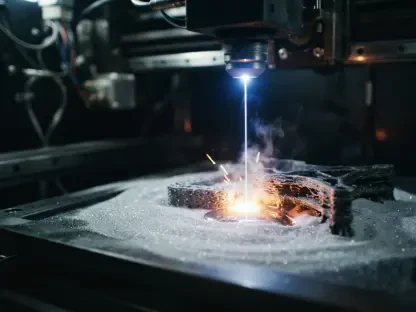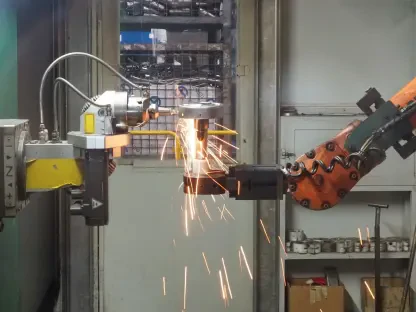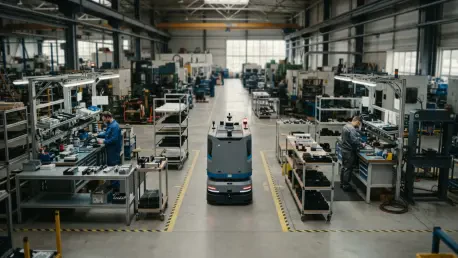

Embodied AI’s latest development focuses on a cage-free automation system that integrates seamlessly into existing human-centric production workflows. For decades, the industrial sector has operated under a rigid separation between carbon-based workers and silicon-based machines, primarily due to the physical dangers inherent in high-torque mechanical limbs. Conventional industrial robots generally require expansive safety cages, light curtains, and restricted zones that fundamentally interrupt the flow of a modern factory floor. However, the emergence of the AIR system signifies a departure from these traditional barriers, offering a collaborative solution that prioritizes inherent mechanical safety over external shielding. By reimagining the physical relationship between humans and machines, this Swiss startup, which originated as a spinoff from the technical university EPFL, has introduced a mobile platform capable of navigating shared spaces. This transition allows manufacturers to maintain high-density production lines without the spatial overhead of protective fencing, effectively bridging the gap between manual labor and automation.
Mechanical Innovation: The Architecture of Safety
Part 1: The Tendon-Driven Advantage
The core innovation that distinguishes AIR from its predecessors lies in a sophisticated tendon-driven architecture that mimics biological structures. In standard industrial design, heavy electric motors are placed at the joints, creating significant rotational inertia that makes any accidental contact potentially catastrophic. The engineering team at Embodied AI successfully bypassed this limitation by relocating the bulky actuators and power components into the central torso of the robot. Movement is then transmitted through the limbs via a network of high-tensile cables, effectively decoupling the mass of the power units from the operational reach of the arms. This distribution of weight ensures that the limbs themselves remain incredibly light, while the low center of gravity provides the necessary stability for mobile operations. By centralizing the heavy hardware, the robot achieves a level of grace and safety that was previously unattainable in high-speed manufacturing environments, ensuring that human colleagues remain safe during every interaction.
Part 2: Compliance and Physical Design
This mechanical shift represents a fundamental consensus within the physical AI community that safety cannot be solely dependent on software algorithms or vision sensors. While digital proximity detection has improved, hardware failures or software glitches in traditional robots can still lead to dangerous outcomes if the physical build is inherently rigid. The AIR platform addresses this by ensuring that the machine is physically incapable of delivering a lethal blow even if a sensor fails during operation. Each arm weighs approximately 4.4 pounds but retains a lifting capacity of 11 pounds, a ratio that allows the limbs to be “compliant.” This means the arms naturally give way if they strike an object or a person, absorbing kinetic energy rather than transferring it. This inherent mechanical safety allows the robot to function in the same physical space as human employees without the psychological or physical burden of constant danger. Consequently, the integration process for facility managers becomes significantly less complex.
Intelligence and Operational Deployment: Training for Success
Part 3: Teleoperation as a Learning Model
Rather than requiring weeks of complex code and pre-programming, the AIR system utilizes a progressive learning model that begins with human-guided teleoperation. During the initial deployment phase, human operators remotely supervise the robot, guiding it through the specific nuances of a task in a real-world setting. This training period serves as a data collection phase where the AI observes environmental variables, material handling requirements, and the natural flow of human movement around its station. Within approximately one month of this collaborative oversight, the robot typically masters the routine and transitions to full autonomy. This method has already demonstrated remarkable efficacy in pilot programs within the automotive and consumer electronics sectors. By learning from humans in situ, the AIR unit bypasses the limitations of rigid programming, allowing it to adapt to slight variations in part placement or environmental lighting that often baffle traditional automated systems, reaching a task success rate of 95%.
Part 4: Future Considerations for Global Industry
The final step for many manufacturers involved an assessment of long-term operational efficiency and the practicalities of floor mobility. Designers chose a wheeled base over bipedal legs to prioritize stability and speed within the flat, predictable environments of modern factories. This decision streamlined the robot’s ability to move between workstations, effectively allowing one AIR unit to handle the workload of three human workers across different shifts. Looking forward, the official presentation at the Humanoid Europe event in Munich solidified the transition toward a more integrated workforce. Strategic leaders examined these developments as a blueprint for reducing workplace injuries while maintaining competitive production speeds. The successful implementation of these pilot programs indicated that the future of factory work rests not on replacing humans, but on creating tools that can safely exist alongside them. Industrial organizations evaluated their existing floor plans and identified immediate opportunities to remove cages, choosing instead to invest in flexible, compliant automation.