
The landscape of global manufacturing is currently undergoing a massive structural transformation as major additive manufacturing players move beyond the mere production of hardware to establish comprehensive industrial ecosystems. This evolution is particularly visible in the Chinese additive manufacturing sector, where firms like Farsoon are fundamentally altering their strategic trajectories ahead of major industry events like Formnext. The core of this transition lies in a pivot from being traditional original equipment manufacturers to becoming fully integrated service providers that manage the entire lifecycle of industrial production. This trend is driven by the maturation of metal additive manufacturing for high-stakes industrial applications, where the previous boundaries separating hardware vendors, material science experts, and specialized service bureaus have begun to dissolve into a singular, cohesive market force. By focusing on holistic solutions, these companies are effectively addressing the complexities of large-scale production, ensuring that additive technology remains a central pillar of the modern global supply chain rather than a niche prototyping tool.
Standardizing High-Performance Systems for Global Series Production
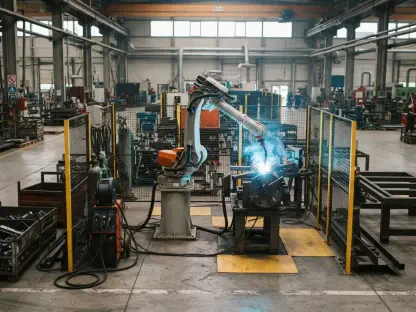
The introduction of the FS722M metal system and the HT1002P-CAMS polymer platform represents a clear departure from the modular, optional-feature sales tactics of previous years. Historically, features such as beam-shaping technology or expanded Z-axis capabilities were offered as premium upgrades, but current market demands for reliability have forced these elements to become baseline standards. The FS722M now comes equipped with eight synchronized lasers and sophisticated software architecture designed specifically for automated process control in rigorous environments. This standardization is a direct consequence of extensive field feedback from industrial partners who require consistent, high-yield results for daily series production rather than experimental research projects. By integrating these high-performance components into the default configuration, the hardware is no longer just a machine but a robust manufacturing asset capable of operating with minimal downtime. This shift ensures that clients are not just buying a box of parts but a refined production capability that can compete with traditional subtractive methods in terms of both speed and structural integrity.
In tandem with advancements in metal technology, the HT1002P-CAMS polymer system has undergone a significant expansion to accommodate the massive build volumes required for modern industrial logistics. By doubling the laser count of its predecessors and enhancing the thermal management systems, this platform can handle continuous manufacturing cycles that were previously impossible for polymer-based additive machines. This move is indicative of a broader strategy to saturate the market with hardware that is inherently designed for high-throughput environments where speed and volume are the primary metrics for success. The focus has shifted from the novelty of 3D printing to the cold reality of industrial output, where the efficiency of the build process determines the commercial viability of the final product. Furthermore, the inclusion of sophisticated software for real-time monitoring and data analysis allows for a level of precision that mirrors traditional automotive assembly lines. This level of technical sophistication serves as the bridge between the digital design phase and the physical reality of mass production, providing a seamless workflow for industries that cannot afford the inaccuracies often associated with older additive manufacturing techniques.
Reimagining Economic Foundations Through Service-Based Platforms
Supporting these technological leaps is a robust financial strategy that highlights the aggressive move toward a service-oriented business model across the Chinese industrial landscape. Farsoon recently secured a private placement of shares totaling approximately 3 billion yuan, which translates to roughly 450 million dollars, signaling strong investor confidence in this new direction. While a portion of these funds is naturally earmarked for headquarters construction and localized hardware refinement, a massive 1.5 billion yuan has been specifically allocated to the development of a dedicated services platform. This platform represents a paradigm shift because the company plans to utilize roughly 90% of the 650 new machines funded by this capital for its own internal production operations. This indicates a growing consensus among top-tier manufacturers that the most profitable and stable long-term revenue streams are found in operating the equipment on behalf of the customer. By maintaining control over the machines, the manufacturer can guarantee quality standards and operational efficiency that independent service bureaus might struggle to achieve, effectively internalizing the value chain and creating a more dependable product for the end user.
Industrial leaders that navigated this transition successfully focused on integrating their material science capabilities directly into high-growth sectors like artificial intelligence infrastructure and mass automotive manufacturing. These organizations moved beyond the simple purchase of equipment and instead developed comprehensive partnerships that guaranteed large-scale, industrial-grade manufacturing solutions. They implemented standardized production protocols across their internal fleets, which allowed for the rapid deployment of complex designs into existing vehicle platforms and server hardware. By prioritizing the delivery of finished components over the maintenance of raw hardware, these companies significantly reduced their operational risks and accelerated their time-to-market. Stakeholders who adopted this service-centric approach achieved greater supply chain resilience by creating localized production hubs that responded dynamically to shifting market demands. The shift effectively transformed the additive manufacturing landscape from a hardware-heavy competition into a service-driven ecosystem that redefined the parameters of global production and long-term industrial efficiency.