
High-resolution 3D printing of structural batteries is becoming increasingly feasible through the use of photocurable resins and structural electrolytes. This evolution marks a significant departure from conventional methods that often struggle to maintain structural integrity while incorporating active electronic components. For years, engineers faced a binary choice between the high-speed extrusion of viscous pastes and the high-precision polymerization of liquid resins. However, the emergence of Direct Ink Additive Lithography, commonly known as DIAL, suggests that these two formerly distinct worlds are merging into a singular, highly efficient workflow. By utilizing specialized yield-stress fluids, this method enables the creation of intricate internal geometries that can house energy storage capabilities directly within the load-bearing frame of a device. This capability represents a fundamental shift in how complex robotic systems and aerospace components will be built from 2026 to 2030. This approach ensures that the resulting parts are not only aesthetically pleasing but also robust and fully functional.
Technical Synergy: The Mechanics of Direct Ink Additive Lithography
Engineering Precision: The Layering and Curing Process
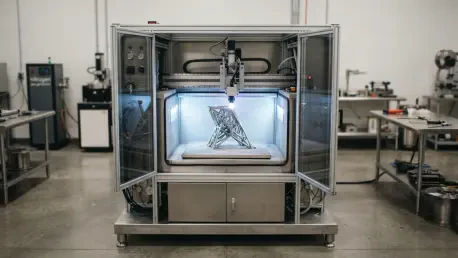
The technical execution of DIAL involves a sophisticated interaction between hardware and software, beginning with a specialized slot-die nozzle that deposits functional inks onto a print bed. Unlike standard fused deposition modeling, which relies on a single point of contact, this system utilizes a recoater mechanism to smooth the material into uniform layers as thin as 50 microns. Once a layer is perfectly leveled, the system prepares for the next phase of the printing cycle without the usual delays associated with cooling or chemical drying. The slot-die architecture is particularly advantageous for handling high-viscosity materials that would clog a traditional circular nozzle. This ensures a consistent flow rate, which is critical for maintaining the structural density of the final product. By controlling the extrusion speed in tandem with the movement of the recoater, the process achieves a layer of uniformity that serves as a stable foundation for the subsequent light-based polymerization step.
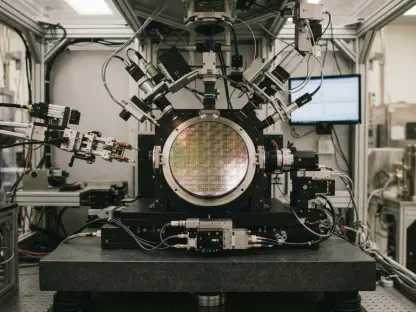
Following the deposition and smoothing of each ink layer, a high-resolution Digital Light Processing projector selectively targets specific areas of the ink to induce hardening. This hybrid approach allows for the use of materials that are far too thick for traditional vat polymerization but require more precision than standard material extrusion can provide. By balancing the rheological properties of the ink with the intensity of the light source, the system achieves a level of fidelity previously reserved for small-scale prototypes, now making it possible to produce durable, high-performance parts at a much faster rate. The light effectively pins the desired geometry within the surrounding fluid, creating a sharp boundary between the solid part and the liquid residue. This precision is vital for applications requiring tight tolerances, such as microrobotics or intricate aerospace ducting. The integration of light-based curing ensures that the structural integrity of the part is maintained throughout the entire build process.
Structural Support: Leveraging Yield-Stress Fluids for Complexity
A defining characteristic of this methodology is the ingenious use of unhardened ink as a temporary support structure. In traditional 3D printing, complex overhangs and delicate internal voids require the printing of secondary, sacrificial materials that must be laboriously removed through chemical baths or manual sanding. DIAL sidesteps this inefficiency because the yield-stress fluid that is not exposed to light remains in a semi-solid state, physically supporting the solidified sections above it. This state allows the ink to hold its shape under its own weight while remaining soft enough to be displaced by the recoater or eventually washed away. The absence of traditional supports means that the geometry of the part is limited only by the designer’s imagination rather than the physical constraints of the printer. This self-supporting nature is a breakthrough for creating complex internal channels that were once considered impossible to manufacture without damaging the final part during post-processing.
The transition to Direct Ink Additive Lithography necessitated a strategic shift in how industrial designers approached the creation of multifunctional components. Manufacturers who successfully integrated this technology focused on the development of proprietary ink formulations that combined structural strength with electrical conductivity. This research established that the most effective way to utilize DIAL involved a holistic view of the part’s lifecycle, from the initial chemical synthesis to the final automated wash cycle. Professionals in the field determined that the next logical step was the implementation of multi-material extrusion heads to allow for even more complex internal architectures. These insights demonstrated that the true value of the technology resided in its ability to eliminate the assembly phase for complex sensors and batteries. Ultimately, the industry realized that the combination of light-based precision and high-viscosity extrusion provided a more sustainable and cost-effective alternative to traditional manufacturing methods.