
The military aviation maintenance sector is shifting away from simple part replacement toward complex metallurgical restoration of high-stress components. This transformation is currently unfolding at the Fleet Readiness Center Southwest, where specialized engineering teams have successfully implemented a robotic laser-based repair for the F/A-18 Super Hornet. Central to this effort is the braking torque tube assembly, a high-value component that serves as the anchor for the aircraft’s braking system during high-velocity carrier landings. Historically, the tabs on these assemblies were subjected to such extreme mechanical and thermal loads that they eventually wore down past the point of safe operation. In the past, this wear necessitated the complete disposal of the $46,000 assembly, leading to significant waste. By developing a method to restore these tabs precisely, the Navy has effectively moved into a new era where the inherent value of heavy hardware is preserved through additive technology and robotic precision.
Technical Precision and Rigorous Validation
Engineering the Additive Manufacturing Process: Directed Energy Deposition
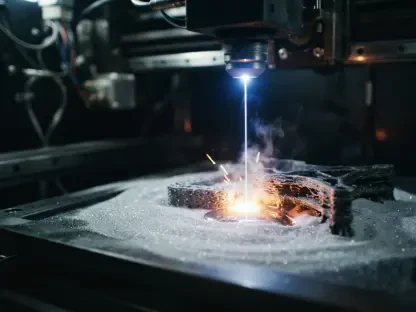
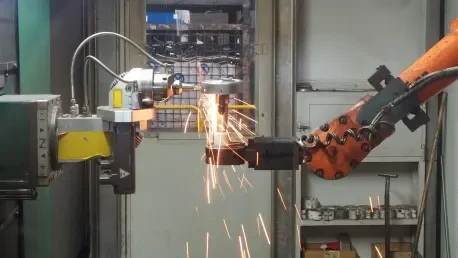
The process centers on Directed Energy Deposition, or DED, which utilizes a high-powered robotic laser to melt metal powder directly onto the worn surface of the torque tube tabs. This technique allows for the additive build-up of material with microscopic precision, effectively reconstructing the metal to its original geometric specifications without the need for manual welding or traditional material removal. By focusing the energy only where it is needed, the system minimizes the heat-affected zone, preserving the structural integrity of the surrounding alloy. This capability represents a significant leap over older thermal spray methods that lacked the necessary bonding strength for high-load aviation parts.
Advanced sensors integrated into the robotic arm monitor the melt pool in real-time, providing a continuous stream of data that ensures metallurgical consistency across every repair. This data-driven approach allows engineers to refine parameters for different alloy compositions, ensuring that the repaired tab is not just a patch but a fully integrated extension of the original component. This level of control is essential for components that must perform reliably under the most demanding conditions imaginable in modern naval aviation. By capturing and analyzing this data, the maintenance team can guarantee a level of repeatability that traditional manual repairs could never achieve, ensuring every part meets flight-critical safety standards.
Survival Testing in Extreme Environments: Mechanical and Thermal Stress
Before this robotic repair was authorized for flight operations, it had to survive an exhaustive series of mechanical and thermal evaluations designed to simulate the violent environment of an aircraft carrier deck. Technicians subjected the restored tabs to a 1,500-pound shear test and a 7,500-pound compression test, confirming that the bond between the new material and the substrate could handle the extreme weight and deceleration of a Super Hornet during a high-impact trap. These tests were vital to prove that the additive material would not shear off or deform when the pilot engaged the brakes at high speed, which is a common failure point for less advanced repair techniques.
Because the friction of braking generates intense thermal energy, the components were also placed in environments reaching 1,200 degrees Fahrenheit to ensure the repair would not delaminate or soften under heat. Metallurgical analysis proved that the laser deposition created a grain structure that matched or exceeded the performance of the original part. These rigorous validation protocols provided the necessary evidence to move the technology from a laboratory curiosity into a standard operational capability for the active fleet. The success of these tests confirmed that robotic additive manufacturing is robust enough for frontline combat aircraft, paving the way for broader implementation across other airframe structures.
Economic Efficiency and Future Fleet Readiness
Achieving Massive Cost Reductions: Financial and Logistical Impact
The financial implications of transitioning from replacement to repair are profound, as the cost to purchase a new torque tube assembly is approximately $46,000, while the recurring cost for a robotic laser repair is only $4,000. Given that the Navy identifies roughly 12 to 18 units requiring this specific maintenance every quarter, the potential savings scale into the millions of dollars annually. This represents a reduction of over 90 percent in the cost of maintaining this specific part of the landing gear system. By reclaiming parts that were previously considered scrap, the military is effectively extending the lifecycle of its existing fleet while significantly lowering the long-term sustainment costs.
Beyond the immediate budgetary benefits, this capability enhances overall fleet readiness by shortening the maintenance cycle significantly. Instead of waiting months for new parts to be manufactured and shipped through a complex global supply chain, technicians can restore existing components in a matter of days. This agility ensures that more aircraft remain mission-capable at any given time, providing a strategic advantage that is just as valuable as the literal millions of dollars saved by avoiding the procurement of entirely new hardware. As the military moves toward a more self-sufficient maintenance model, the ability to perform high-precision metallurgical repairs on-site reduces dependence on external vendors and long lead times.
Advancing Sustainable Defense Logistics: Forward Looking Insights
The implementation of robotic laser deposition at the Fleet Readiness Center Southwest marked a turning point in how the military managed the lifecycle of advanced weapon systems. By successfully qualifying an additive repair for a high-stress structural component, the Navy proved that this technology provided a viable alternative to the costly cycle of part replacement. Decision-makers recognized that the data-driven precision of Directed Energy Deposition allowed for a level of reliability that was previously unattainable through manual restoration techniques. As this capability matured, it encouraged a shift in logistics strategy, focusing on on-site refurbishment rather than the accumulation of massive spare parts inventories.
Stakeholders were advised to continue investing in the training of specialized technicians and the expansion of robotic infrastructure to maintain this competitive edge. Looking ahead, the focus shifted toward applying these robotic methods to even more complex structures, such as engine components and airframe launch bars. This achievement ultimately established a new standard for sustainable defense operations, ensuring that the fleet remained modernized while significantly reducing the long-term financial burden on the taxpayer. The transition to additive sustainment not only addressed the immediate needs of the Super Hornet fleet but also created a scalable framework for maintaining the next generation of multi-role combat aircraft.