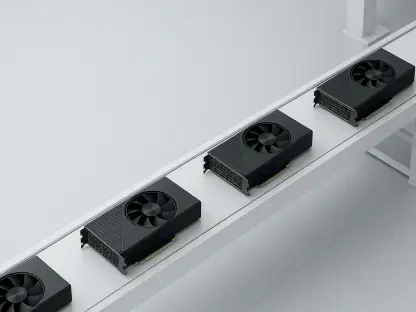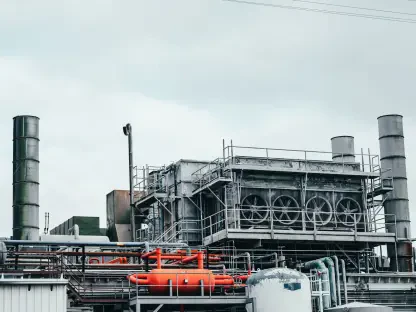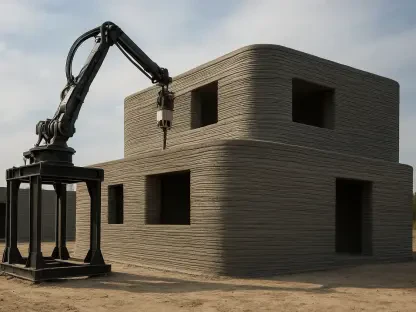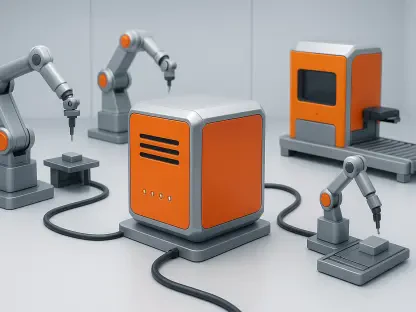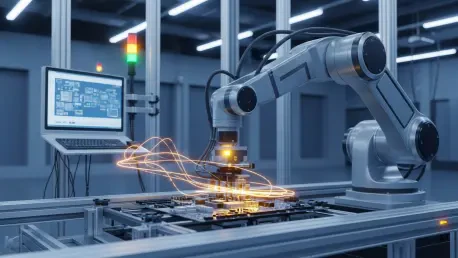

The modern smart factory has become a digital ecosystem where thousands of sensors generate petabytes of data every single hour, rendering traditional cloud-based processing models increasingly obsolete. This data surge stems from the deployment of high-resolution vibration sensors on turbine shafts, 4K thermal imaging cameras monitoring blast furnaces, and LIDAR systems guiding autonomous mobile robots through crowded aisles. While the cloud once promised a centralized brain for all industrial logic, the physical reality of latency and bandwidth has forced a massive paradigm shift toward localized intelligence. Moving the computation to the edge of the network means that the decision-making process happens right at the source of the data, on the factory floor itself, rather than in a data center located hundreds of miles away. This evolution allows machines to react with near-biological speed, processing complex visual and sensory inputs in milliseconds to prevent defects or catastrophic failures before they have the chance to propagate. By localizing compute power, manufacturers are no longer tethered to the variable speeds of external internet connections, ensuring that their most critical operations remain resilient, secure, and incredibly efficient even in the face of network outages.
Economic Growth and Robotics
Market Drivers: The Shift Toward Localized Intelligence
The economic momentum fueling the transition to localized intelligence is staggering, with the global market for these specialized systems projected to surge from roughly $6 billion in 2026 to over $41 billion by 2033. This growth is not merely a result of technological curiosity but a direct response to the intense pressure on manufacturers to improve yield and lower the cost of quality in an increasingly competitive global landscape. As the density of industrial robots in major manufacturing hubs continues to double every few years, the sheer volume of data they produce has made the cost of cloud storage and egress fees prohibitively expensive for many large-scale operations. Companies are finding that by processing data locally, they can filter out the noise and only transmit the most vital insights to central management systems, effectively slashing their operational expenditures related to data infrastructure. This financial incentive is a primary driver behind the rapid adoption of edge-capable industrial PCs and smart cameras that can handle complex machine learning models without requiring a constant link to a remote server.
Furthermore, the pressure to optimize asset utilization has reached a fever pitch, making the elimination of unplanned downtime a top priority for executive leadership. High-speed production lines in the semiconductor and electronics industries generate a constant stream of telemetry that must be analyzed in real-time to be of any practical use. If a robotic arm begins to show signs of micro-wear that could lead to a misalignment, waiting for a cloud-based server to process that data and send back a command could result in thousands of dollars in wasted materials before the machine is finally stopped. Edge AI provides the necessary reflexes for these high-density environments where every second of performance can be measured in significant revenue gains or losses. The ability to perform high-fidelity inference at the point of action ensures that equipment is always running at its peak theoretical capacity. As manufacturers look toward 2028 and beyond, the integration of these smart systems will likely become the standard baseline for any facility hoping to remain economically viable in a world where margins are thinner than ever.
Robotics Evolution: High-Density Environments and Performance
As the global operational stock of industrial robots continues to climb at an unprecedented rate, the demand for local processing power grows in direct proportion to the complexity of the tasks these machines are expected to perform. In previous generations, robots were largely blind and followed pre-programmed paths, but the current wave of automation relies heavily on dynamic vision and tactile sensing. This shift requires immense computational resources to process spatial data and adjust movements on the fly, a task that is fundamentally incompatible with the inherent delays of cloud computing. By deploying machine learning models directly onto the hardware controllers of these robots, manufacturers are achieving a level of “machine-speed” decision-making that was previously the stuff of science fiction. These localized reflexes allow robotic systems to handle delicate or high-variability tasks, such as sorting irregular organic materials or assembling intricate electronic components, with the same precision and speed as traditional repetitive labor.
The transition to high-density robotic environments also introduces new challenges regarding fleet management and synchronization across the factory floor. When dozens or even hundreds of autonomous mobile robots share the same workspace, the need for real-time collision avoidance and path optimization becomes a critical safety and efficiency concern. Edge AI enables these machines to communicate with one another and the local infrastructure directly, creating a swarm intelligence that can adapt to changing floor conditions without waiting for instructions from a central hub. This localized coordination minimizes bottlenecks and ensures that the flow of materials remains constant, even when unexpected obstacles are introduced into the environment. By reducing the reliance on external networks, these systems also become much more robust against the localized electromagnetic interference often found in heavy industrial settings, which can frequently disrupt wireless signals and cause cloud-dependent systems to stall.
Technical Architecture
Responsiveness: Sub-Millisecond Control Loops
Traditional digitalization efforts in the industrial sector often focused on simple connectivity and long-term observation, which served well for reporting but lacked the responsiveness required for active machine control. Most cloud-integrated systems operate on latencies ranging from tens to hundreds of milliseconds, which is an eternity when a high-speed press is cycling multiple times per second. Edge AI facilitates a transition to truly responsive factories by eliminating the round-trip delay to the cloud, allowing industrial systems to achieve sub-millisecond response times. This level of performance is critical for maintaining precision in fast-moving operations where even a minor deviation in synchronization can lead to mechanical failure or a ruined product. By embedding the AI directly into the local control loop, the system can adjust motor torques, change tool paths, or trigger emergency stops with a level of immediacy that ensures the highest possible safety and quality standards are met.
Beyond the immediate speed benefits, moving intelligence to the edge also addresses the significant challenge of bandwidth conservation within the industrial enterprise. A single high-resolution industrial camera used for defect detection can generate several gigabits of data per second, and multiplying that by dozens of cameras across a facility would quickly overwhelm even the most advanced internal networks. Instead of saturating the local area network with raw video feeds, an edge-powered system processes the frames locally and only transmits a small packet of metadata when a specific event or defect is identified. This approach not only saves on infrastructure costs but also ensures that the most critical information is prioritized, preventing the network congestion that can lead to delayed signals and operational instability. This technical architecture represents a shift from “send everything and analyze later” to “analyze everything and send only what matters,” which is the only sustainable way to manage the massive data outputs of the modern era.
Operational Resilience: Security and Continuity
One of the most compelling technical arguments for localized AI is the inherent boost it provides to operational resilience and site-wide security. In an era where cybersecurity threats against industrial infrastructure are becoming more sophisticated, a factory that relies on a constant connection to an external cloud is inherently more vulnerable to disruptions and attacks. Edge AI allows for a “disconnected” mode of operation where the most critical decision-making processes are shielded from the public internet, reducing the attack surface available to malicious actors. Even if the primary wide-area network connection is severed due to a provider outage or a cyber incident, the local machines continue to operate safely and intelligently. This autonomy is vital for industries like chemical processing or metal smelting, where an unexpected loss of control could lead to dangerous pressure build-ups or the solidification of molten materials within the equipment.
Furthermore, the localized nature of this technology ensures that data sovereignty and privacy are maintained at the highest levels. Many manufacturers are hesitant to send proprietary process data or images of their latest product designs to the cloud, fearing intellectual property theft or industrial espionage. By keeping the raw data within the physical confines of the facility, companies can ensure that their competitive secrets remain protected while still reaping the benefits of advanced machine learning. This architectural choice also simplifies compliance with increasingly strict data protection regulations that govern where and how sensitive information can be stored. The edge acts as a secure perimeter, where data is processed, insights are extracted, and only non-sensitive, aggregated summaries are ever allowed to leave the site. This layered approach to security and continuity makes edge intelligence an essential component of any long-term strategy for industrial stability.
Core Industrial Applications
Predictive Maintenance: Eliminating Reactive Repairs
Predictive maintenance has emerged as perhaps the most impactful application of localized AI, fundamentally changing how manufacturers manage the lifecycle of their most expensive assets. In the past, maintenance was either reactive—fixing things after they broke—or based on rigid schedules that often led to the replacement of perfectly good parts. By deploying edge models that continuously monitor high-frequency vibration, acoustic emissions, and thermal signatures, manufacturers can now detect the subtle, early-stage patterns of wear that precede a breakdown. Research consistently shows that these proactive strategies can reduce defects and unplanned downtime by nearly 80% compared to traditional methods, saving millions of dollars in lost production time. The localized nature of the AI is key here because it allows for the analysis of high-frequency data that would be too voluminous to send to the cloud, capturing transient anomalies that occur in the blink of an eye.
The real-world benefits of this approach extend beyond simple cost savings; they also contribute to a much more sustainable and predictable production environment. When a machine can signal its own need for service days or weeks in advance, the maintenance team can schedule the repair during a natural break in production, ensuring that all necessary parts and personnel are on hand. This prevents the “firefighting” mentality that often characterizes industrial maintenance, where emergency repairs are carried out under intense pressure and with higher risks of error. Furthermore, by keeping machines in optimal working condition, companies can significantly extend the operational life of their equipment, reducing the environmental impact of manufacturing new heavy machinery. This level of foresight allows for a more streamlined supply chain, as spare parts can be ordered exactly when needed rather than being held in expensive, depreciating inventory for years at a time.
Quality and Safety: Real-Time Assurance and Protection
Beyond the realm of maintenance, localized intelligence is drastically enhancing real-time quality assurance and worker safety across the factory floor. Edge-powered vision systems are now capable of inspecting parts for microscopic flaws or surface imperfections at speeds that far exceed human capability, all while the items are moving at high velocity along an assembly line. These systems do more than just identify a bad part; they can trigger an immediate pause in production or an automatic diversion of the defective item to prevent it from reaching the next stage of the process. This prevents the accumulation of “scrap” and ensures that every finished product meeting the end customer is within strict tolerance limits. In industries like pharmaceutical manufacturing or aerospace, where the cost of a single defective component can be astronomical, the peace of mind provided by 100% automated inspection is an invaluable asset.
The same underlying technology is also being used to create safer working environments for the humans who operate alongside these powerful machines. In hazardous industrial settings, edge-powered cameras and sensors monitor restricted zones in real-time, automatically slowing down or shutting down machinery if a person enters a dangerous area. These systems can also monitor thermal limits on high-pressure vessels or detect the presence of specific gas leaks, triggering emergency protocols long before a human operator might notice a problem. Because these safety decisions are made at the edge, there is no risk of a network delay causing a critical safety mechanism to fail during a crisis. The integration of AI into safety systems represents a transition from passive protection—like physical fences and hardwired stops—to active, intelligent monitoring that can anticipate and prevent accidents before they occur, ultimately making the industrial workplace a much more humane and secure environment.
Integration and Long-Term Strategy
Sector Patterns: The Automotive and Chemical Divide
While the adoption of edge intelligence is spreading across all manufacturing sectors, the automotive industry currently leads the way due to its heavy reliance on high-precision robotic coordination and just-in-time manufacturing. Car manufacturers were among the first to realize that the complexity of modern vehicle assembly, especially with the rise of electric vehicles and their complex battery packs, required a level of real-time monitoring that only the edge could provide. In these facilities, hundreds of robots must work in perfect synchrony to weld, paint, and assemble components, and a single second of lag can disrupt the entire flow. This has led to the development of highly sophisticated local networks that prioritize low-latency AI inference at every workstation. The automotive sector’s success has served as a blueprint for other industries, demonstrating the massive scalability of localized models when integrated into a mature digital twin framework.
In contrast, the chemical and process industries represent the fastest-growing segment for this technology, driven by the unique challenges of sprawling, remote sites and the critical importance of safety and process flow. These sectors often operate in environments where connectivity is inconsistent or where the sheer scale of the facility makes high-speed centralized networking difficult. For a chemical refinery, the ability to have local intelligence at every valve and sensor means that the system can maintain stable operating parameters even if the central control room loses communication with a specific wing of the plant. Moreover, as AI becomes a more central part of production, it is falling under increased regulatory scrutiny, particularly from frameworks like the European Union’s AI Act. Manufacturers must now ensure that their localized models are transparent, secure from cyberattacks, and subject to clear human oversight. Navigating this regulatory landscape has become a core strategic pillar for industrial leaders, as failure to implement proper governance can lead to significant legal liabilities and operational risks.
Implementation: Scaling Ecosystems and Future Optimization
The market is currently undergoing a significant shift away from standalone “smart gadgets” toward integrated platform ecosystems that allow manufacturers to manage thousands of edge devices from a single, unified interface. Major industrial players are now offering comprehensive software suites that simplify the deployment and updating of machine learning models across a global network of factories. This platform-based approach is essential for scaling the technology, as it allows a single data science team to push out a new “predictive maintenance” model to every identical machine in the company’s fleet with just a few clicks. This simplifies the management of the technology and ensures that improvements made at one site can be immediately realized across the entire organization. Successful implementation now requires a careful evaluation of data sovereignty, hardware compatibility, and the specific latency requirements of each unique application.
The transition to edge-driven automation demonstrated that successful implementation required a holistic view of the factory floor rather than isolated technology pilots. Leaders who prioritized high-impact assets—those with the highest cost of failure—saw the most immediate returns on their investment as they moved away from generic cloud models toward specialized local inference. As these systems matured, the focus shifted from simple anomaly detection to autonomous optimization, where machines experimented with their own operating variables to find the most energy-efficient parameters. This progress played a central role in helping manufacturers meet their 2026 sustainability targets by drastically reducing material waste and electricity consumption through precision control. Looking back at the initial challenges of integration, it became clear that the most resilient companies were those that treated edge intelligence not as a luxury, but as a fundamental infrastructure requirement for the modern era. The long-term strategy for any industrial entity now rests on the ability to seamlessly blend human expertise with the tireless, localized precision of autonomous digital systems.