
Digital sampling reduces material waste and shortens time-to-market by providing a standardized reference for brands and manufacturers during approval. The production of medical compression hosiery is currently undergoing a profound shift, moving away from traditional manual methods toward a fully integrated digital ecosystem. For years, the sector has been defined by high complexity, as manufacturers struggle to balance therapeutic efficacy with rising material costs and the demand for faster development cycles. By leveraging digital twins and artificial intelligence, the industry is now finding ways to replace trial and error sampling with data-driven workflows. These innovations ensure that the precise pressure profiles required for medical garments are achieved with greater speed and significantly less waste. In this landscape, the integration of hardware and software becomes the primary driver for progress, allowing for a level of consistency that was previously unattainable through mechanical adjustments alone.
Engineering Precision: The Rise of Digital Simulation
Engineering precision in the modern era relies heavily on the ability to simulate physical outcomes before the first stitch is ever cast on a machine. This shift toward digital simulation allows for the creation of intricate garment structures that meet the rigorous medical standards required for compression therapy. In the past, achieving the correct pressure gradient was a matter of constant mechanical fine-tuning, but the advent of connected manufacturing has centralized this process within the design phase. By integrating mechanical constraints directly into the design software, engineers can predict how different yarn types will interact under tension. This proactive approach ensures that the structural integrity of the hosiery is maintained across various sizes and styles. Furthermore, the transition to digital-first engineering reduces the overhead costs associated with physical experimentation. As manufacturers adopt these sophisticated modeling techniques, they establish a more reliable foundation for high-performance production.
The Role of Digital Twins: Precision in Design
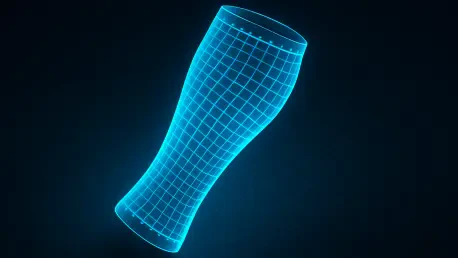
A major advancement in this field is the implementation of integrated programming environments like Orion, which create a high-fidelity digital twin of the knitted product. Unlike basic design software, this system links graphical layouts directly to the mechanical instructions of the knitting machine. This allows technicians to visualize a three-dimensional representation of how stitches and yarn arrangements will behave in reality. For medical textiles, where different zones of a garment must exert specific levels of compression, this 3D modeling is vital for refining elastic properties before production begins. The software interprets the specific tension of yarns and the density of the knit, providing a virtual preview that is mechanically accurate. This technical depth ensures that any structural flaws or pressure inconsistencies are identified and corrected in the digital space. Consequently, the reliance on physical prototypes decreases, allowing engineers to focus on optimizing the therapeutic benefits of the hosiery through precise digital manipulation.
Virtual Prototyping: Reducing Waste and Time
The use of digital sampling serves as a bridge between the conceptual phase and the physical factory floor, streamlining communication between brands and manufacturers. By establishing a standardized digital reference, stakeholders can approve designs without the need for multiple physical iterations. This transition not only shortens the time-to-market but also promotes sustainability by drastically reducing the amount of yarn consumed during the prototyping phase. In an era where resource efficiency is paramount, the ability to finalize a design virtually represents a substantial reduction in the environmental footprint of textile manufacturing. Furthermore, this digital continuity ensures that the intent of the designer is perfectly preserved as the project moves into the production stage. It eliminates the ambiguity often found in traditional manufacturing setups where paper-based instructions or low-resolution designs can lead to misinterpretation. The result is a more agile and environmentally conscious manufacturing process.
Enhancing Manufacturing: Predictive Intelligence and AI
Enhancing manufacturing efficiency requires more than just better design tools; it necessitates the integration of predictive intelligence directly into the production cycle. Artificial intelligence now plays a critical role in interpreting vast amounts of operational data to optimize machine performance in real time. By analyzing historical production trends and material behaviors, these intelligent systems can anticipate potential issues before they manifest as defects in the final product. This level of oversight is particularly important in the medical sector, where even minor variations in compression can render a garment ineffective for patient use. The movement toward an AI-driven factory floor allows for a more responsive manufacturing environment that can adapt to changing requirements with minimal human intervention. As these technologies continue to evolve, they provide manufacturers with the insights needed to maintain a competitive edge while ensuring the highest standards of quality and repeatability across every single production run.
AI-Driven Calibration: Accuracy Through Analysis
Building on the foundation of digital twins, the introduction of predictive AI tools is further narrowing the gap between design and physical output. Systems such as Orion Predictive analyze yarn characteristics and target dimensions to suggest optimal machine settings on the first attempt. This predictive capability minimizes the need for manual calibration, which has traditionally been a time-consuming hurdle in achieving accurate sizing. By using algorithms to anticipate how materials will react under specific tensions, manufacturers can ensure that the finished product matches the digital blueprint with unprecedented accuracy. The AI considers various factors, including the elasticity of the specific batch of yarn and environmental conditions in the factory, to adjust the knitting parameters. This reduces the learning curve for new designs and allows for a more seamless transition between different product lines. Ultimately, this leads to a higher rate of first-time-right production, which is essential for maintaining high margins.
Dimensional Verification: Ensuring Continuous Performance
The final piece of this digital transformation was the move toward automated verification and predictive maintenance through intelligent monitoring. Automated measurement devices like the DSC EVO provided high-speed, camera-assisted data that fed back into the central management platform, ensuring every garment adhered to strict tolerances. By recognizing patterns in historical data, these systems identified abnormal machine behavior that suggested potential faults before they led to downtime. This shift from reactive repairs to proactive upkeep ensured that hardware remained at peak efficiency, preventing defects and maintaining quality. Organizations that adopted these connected ecosystems positioned themselves to meet evolving medical standards with unprecedented agility. The focus transitioned from merely manufacturing a product to managing a sophisticated digital lifecycle where every stitch was optimized for performance. These advancements offered a clear blueprint for stakeholders to integrate data analytics into production to ensure long-term resilience.